
Mobile Toilet M
A mobile toilet is a facility that can be moved as a whole and provides public restroom services. It consists of components such as a fecal sewage storage tank and sanitary ware, and has various classification methods with a wide range of application scenarios.
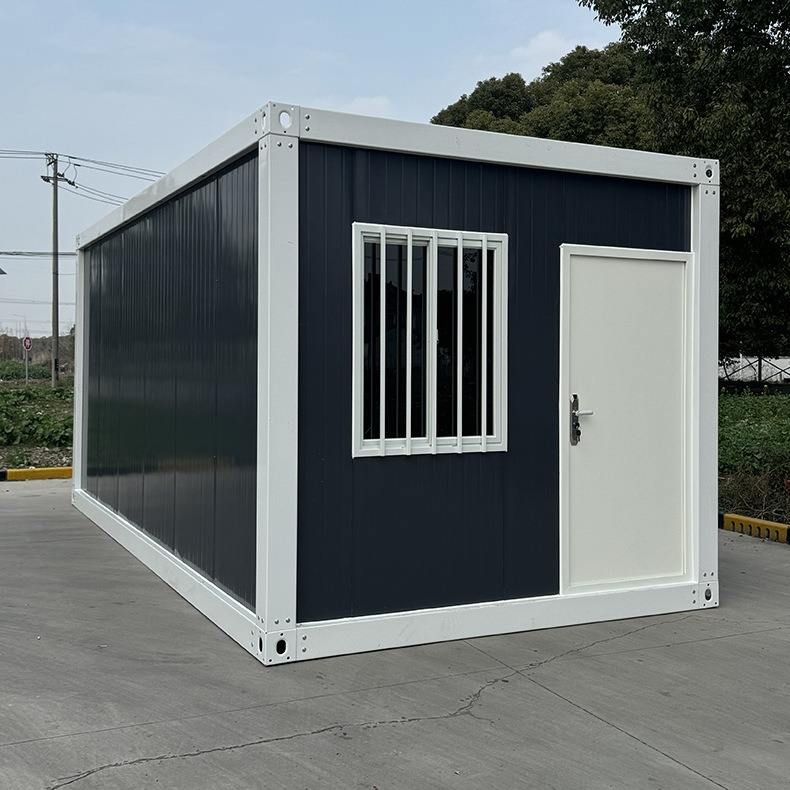
Mobile toilets are generally composed of a fecal sewage storage tank (or fecal sewage treatment device), floor slabs, sanitary ware, walls, washing equipment, water tanks, roofs, and mobile devices. Their development has evolved from initially being made of materials like wood, with simple structures and functions and being prone to absorbing odors, to gradually using materials such as fiberglass and polyethylene.
In terms of structural form, they can be divided into single-structure mobile toilets and composite-structure mobile toilets. Single-structure mobile toilets are relatively independent and simple, while composite-structure ones are more complex and may integrate multiple functional areas. According to the method of movement, there are lifting and handling-type mobile toilets, which mainly rely on lifting equipment or manual handling for movement; and powered and towed-type mobile toilets, which are equipped with power devices or can be moved by vehicles, making movement more convenient and efficient. Based on sewage treatment methods, they can be classified as water-flush and waterless suction-type mobile toilets. Water-flush types have better cleaning effects but consume more water; waterless suction types do not require water and treat feces through suction; circulating water-flush mobile toilets achieve water resource recycling, being more water-saving and environmentally friendly; and dry-packing mobile toilets package feces in a dry form.
Mobile toilets have a wide range of application scenarios. They are suitable for fixed locations such as stations, docks, tourist attractions, villa areas, newly built residential areas, large construction sites, squares, densely populated public places, and bustling commercial streets. They are also used for events like entertainment performances, sports events, opening ceremonies, conferences, exhibitions, and mass gatherings, as well as outdoor locations such as gardens, tourist attractions, parks, campsites, construction and decoration sites, and temporary factories.



