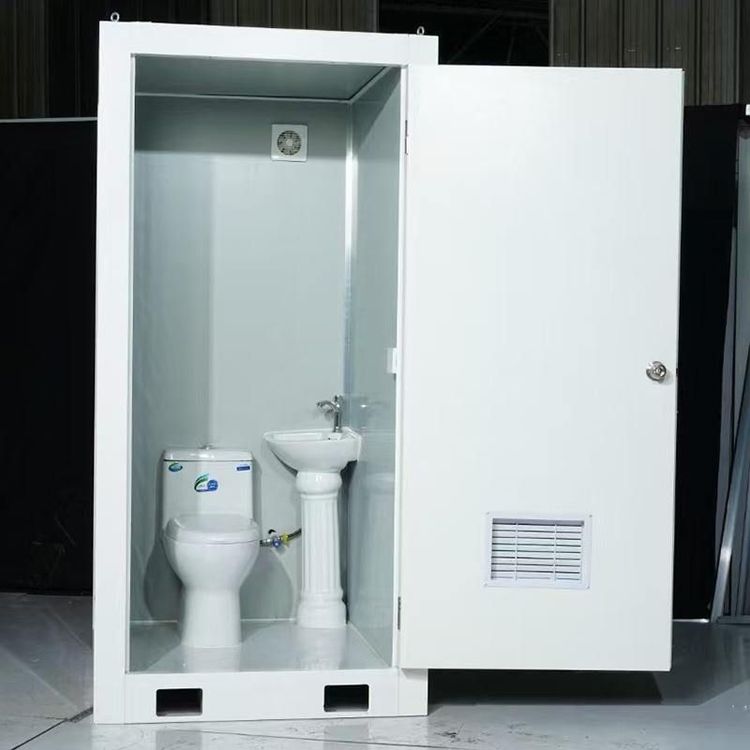
Mobile Toilet Landscape Orientation
The term 'mobile toilet landscape orientation' may involve misunderstandings or information discrepancies, as there is currently no directly corresponding professional concept or common application scenario. The following provides a popular science analysis from possible interpretations:

If referring to the screen display orientation of mobile toilets
Mobile toilets themselves typically do not come equipped with screens. However, some intelligent mobile toilets may be installed with electronic displays to show usage status, remaining capacity, environmental parameters (such as temperature and humidity), or operational instructions. The display orientation of such screens (landscape or portrait) depends on the equipment design requirements:
- Advantages of landscape orientation: Suitable for displaying multi-column data or wide-format images, such as simultaneously showing the usage status of multiple toilet stalls and environmental monitoring charts, providing a more comprehensive information presentation.
- Advantages of portrait orientation: Suitable for single-column information or text prompts, such as scrolling through usage instructions or safety warnings, saving space and aligning with reading habits.
In practical applications, the screen orientation needs to be comprehensively designed based on functional requirements, installation space, and user operational convenience, with no unified standard currently in place.
If referring to the screen orientation of monitoring or management systems for mobile toilets
Some mobile toilets are equipped with remote monitoring systems, allowing managers to view toilet operational data through computers or mobile terminals. The screen orientation of such systems is also determined by software interface design:
- Landscape orientation can expand the data display area, suitable for simultaneously monitoring the real-time status of multiple toilets;
- Portrait orientation facilitates detailed information viewing for a single device, such as energy consumption and cleaning records for an individual toilet.
System developers optimize interface layouts based on usage scenarios, with landscape or portrait orientation being merely design choices that do not affect the core functionality of the toilets.
If referring to other technology-related scenarios
If 'landscape orientation' involves scenarios such as virtual reality (VR) displays, 3D model interactions, or promotional video playback for mobile toilets, the screen orientation needs to match the content format:
- VR displays typically adopt a panoramic landscape mode to simulate real perspectives;
- Promotional videos may choose landscape or portrait orientation based on the aspect ratio of the footage, but compatibility with playback devices must be ensured.
Such applications belong to special scenarios and are not conventional functions of mobile toilets.
Conclusion
'Mobile toilet landscape orientation' may point to screen display orientation or technology-related scenarios, but the core still depends on equipment design or software functional requirements. The core value of mobile toilets lies in their convenience, hygiene, and environmental friendliness, with screen orientation being merely a design detail for auxiliary functions, requiring consideration based on specific application scenarios.