
Mobile Toilet Knowledge Popularization
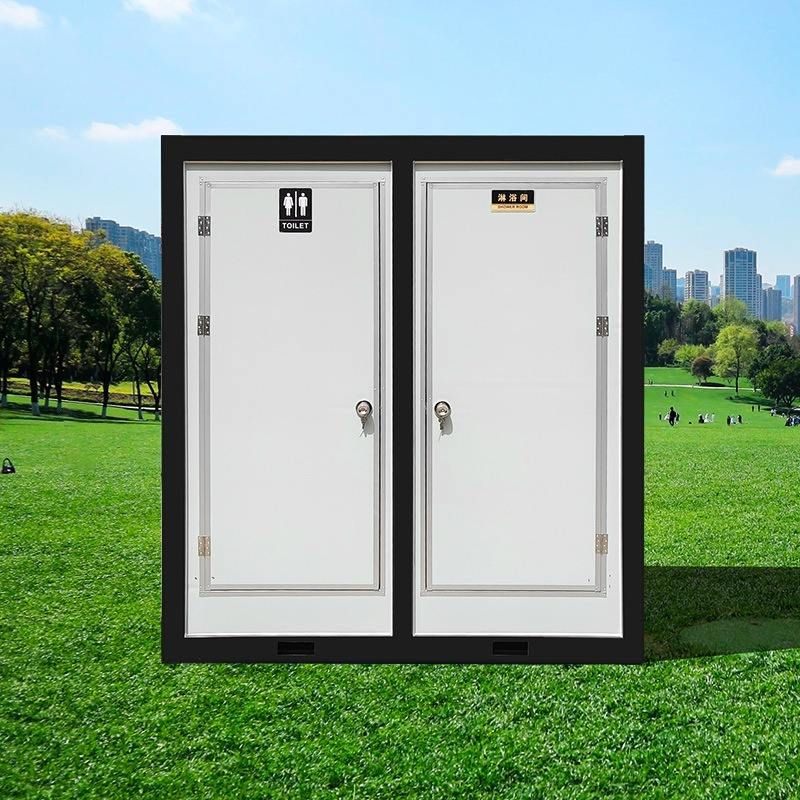
Mobile toilets are facilities that can be moved as a whole and provide toilet services to the public. They are suitable for a variety of locations and have advantages such as mobility and modularity.
Suitable Locations and Classifications
Mobile toilets are suitable for fixed or temporary demand locations such as stations, docks, tourist attractions, and construction sites. According to structural forms, they can be divided into single-unit structures (independent compartments suitable for locations with dispersed pedestrian traffic) and composite structures (modular assemblies that can be equipped with facilities such as sinks). Based on mobility methods, they can be classified as lifting and handling types and powered and towed types. According to sewage treatment methods, they can be categorized as flush types (with built-in water tanks or external water sources, suitable for locations with sufficient water supply), packing types (using plastic bags to collect excrement, commonly used in tourist attractions), non-flush types (using microbial degradation or incineration technology, suitable for water-scarce remote construction sites), and foam-sealing types (using foam to wrap waste, saving water and eliminating odors).
Composition and Design Principles
They are generally composed of fecal sewage storage tanks, floor slabs, sanitary ware, walls, washing equipment, water tanks, roofs, and mobile devices. The design follows principles of mobility, cost-effectiveness, durability, environmental protection, and improved efficiency. The overall structure is lightweight and durable, with controlled height and width, and the mobile devices are complete and reasonable.
Production and Customization Processes
The outer shells are mostly made of high-density polyethylene (HDPE), fiberglass, or stainless steel plates. The main frames are steel structures, and the exterior wall materials include galvanized steel plates. The interiors are insulated with rock wool or polyurethane. Production adopts a modular design, with sealed joints and a ventilation system that combines natural and mechanical exhaust. Customization starts with communicating needs, determining dimensions and layouts, etc. The enterprise provides a design plan, with a production cycle of 7 to 15 days. After transportation to the site, it is lifted or assembled and then put into use.
Application Scenarios and Internal Configurations
They can serve as supplementary temporary public health facilities in municipal squares and urban commercial areas, solve toilet problems during peak tourist seasons in tourist attractions, provide sanitary conditions for workers in industrial parks and construction sites, and also serve as extensions of fixed facilities in road traffic and highway service areas. Basic configurations include lighting systems, sockets, distribution boxes, and exhaust fans, and variable-frequency air conditioners can be added to enhance the experience.
Use and Maintenance
Regularly clean the sewage tanks and replenish clean water. For microbial degradation equipment, avoid pouring in strong acids, strong bases, or non-degradable items. In winter, take insulation measures for water tanks and water pipes. Place them on as level a surface as possible, and add pads or fixing devices if necessary.



