Introduction to Mobile Toilets
A mobile toilet is a facility that can be moved as a whole, providing toilet services to the public and customers, and is suitable for various locations.

Suitable Locations
Mobile toilets are highly flexible and can be placed at locations with fixed or temporary needs. At transportation hubs such as train stations and docks with high passenger traffic, mobile toilets can effectively alleviate toilet pressure. In tourist attractions, whether natural or cultural, they can be flexibly arranged according to tourist traffic to meet visitor needs. In villa areas and newly built residential communities where supporting facilities are not yet complete, mobile toilets can provide temporary toilet solutions. On large construction sites with dense personnel, mobile toilets are convenient for workers to use. In squares, densely populated public areas, and bustling commercial streets, mobile toilets can supplement public sanitation facilities at any time, enhancing public service levels.
Structural Features
Some mobile toilets with special designs have significant advantages in terms of structure. They are generally constructed with galvanized steel frames, which are very sturdy and durable, capable of withstanding certain external impacts and harsh environmental conditions, with a service life of over 15 years, greatly reducing long-term usage costs. The exterior wall panels come in a variety of styles, such as orange brick patterns, which not only look attractive but also blend in with the surrounding environment, enhancing overall aesthetics without appearing out of place.
Functional Configurations
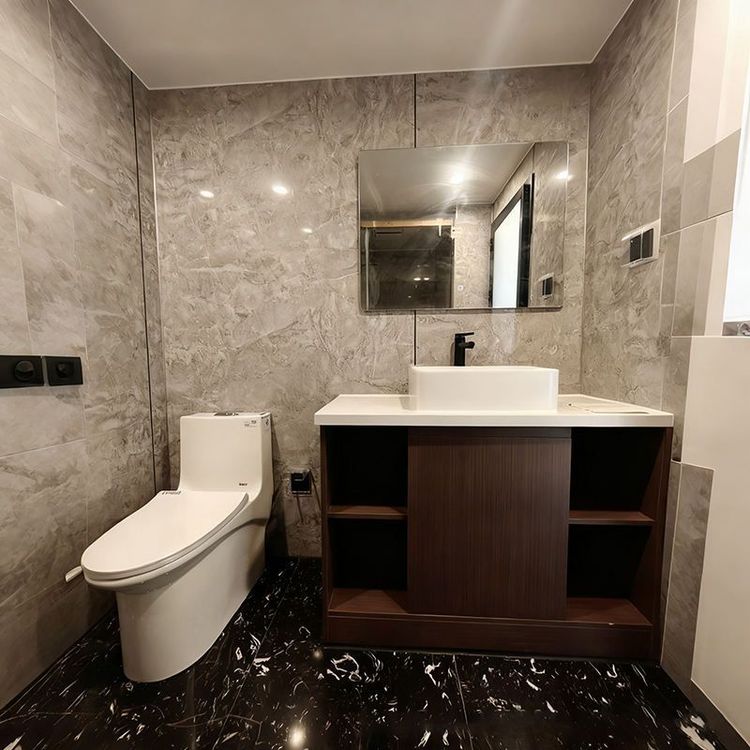
Some mobile toilets are equipped with relatively complete functional configurations. They have individual stalls that provide users with private space, ensuring personal privacy. The inclusion of flushing devices effectively maintains cleanliness and hygiene inside the toilet, reducing odors. The installation of sinks allows users to clean their hands after using the toilet, in line with hygiene practices. Lighting facilities ensure that users can safely and conveniently use the toilet at night or in low-light conditions. The integration of these functions makes the user experience of mobile toilets close to that of traditional fixed toilets, and even more advantageous in some aspects, such as the ability to adjust and upgrade functions according to different needs.