Images of Internal Keel for Mobile Toilets
Currently, images of the internal keel for mobile toilets cannot be provided directly, but a detailed description of its structural features and functions can be given.

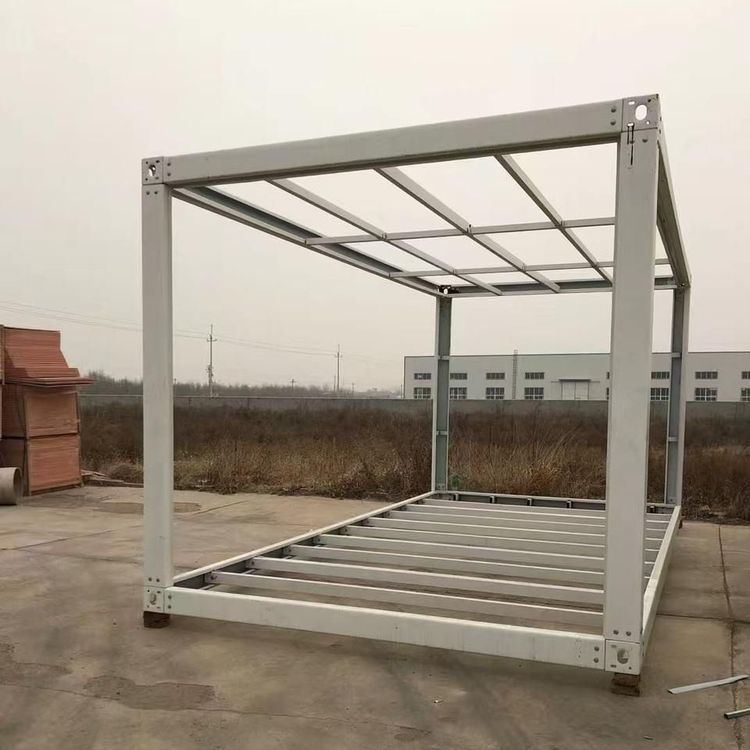
The internal keel of a mobile toilet is a crucial framework that supports the overall structure. It is typically made of metal (such as galvanized steel pipes or aluminum alloys) or high-strength engineering plastics, designed to balance lightweight properties, corrosion resistance, and load-bearing capacity. The keel system is generally divided into a main framework and a secondary framework: the main framework forms the three-dimensional skeleton of the toilet, including corner columns, top beams, and a bottom base, responsible for bearing the overall weight and distributing pressure; the secondary framework is used to secure wall panels, floors, and ceiling panels, ensuring that all components are firmly installed.
Main Framework Structure: The main framework often adopts rectangular or triangular truss designs to enhance structural stability. For example, columns may use galvanized steel pipes with diameters ranging from 50-80mm and wall thicknesses of 2-3mm, connected vertically through welding or bolts; top beams may use C-shaped steel or I-beams, with spans adjusted according to the toilet size, typically ranging from 2-4 meters, to support roof panels and possible additional equipment (such as ventilation systems). The bottom base is fixed to the ground with expansion bolts to prevent displacement.
Secondary Framework and Panel Fixing: The secondary framework is usually composed of thinner steel pipes or profiles, with spacing adjusted according to panel specifications (e.g., 300-500mm). Wall panels (such as color-coated steel sheets or aluminum-plastic panels) are fixed to the secondary framework with self-tapping screws or rivets, while floors may use non-slip steel plates or composite materials, connected to the keel with corner brackets. Some mobile toilets also fill insulation materials (such as polystyrene foam) between the keels to improve thermal insulation performance.
Special Design Considerations: To meet mobility requirements, the keel system must be detachable. For example, the main framework may adopt a modular design, assembled with quick connectors (such as clips or pins) for easy transportation and reuse. Additionally, the keel surface is often treated with anti-corrosion coatings (such as epoxy resin spraying) to extend its service life.
For further information on specific dimensions, material parameters, or installation details of the keel, it is recommended to contact mobile toilet manufacturers for technical drawings or search for relevant structural design literature on professional construction platforms (such as CNKI or Wanfang Data).