
Mobile Toilet Integral Toilet
Mobile toilets are facilities that can be moved as a whole to provide toilet services for the public and customers. The following is an introduction from several aspects including basic composition, structural form, mobility method, sewage treatment method, and specific examples.
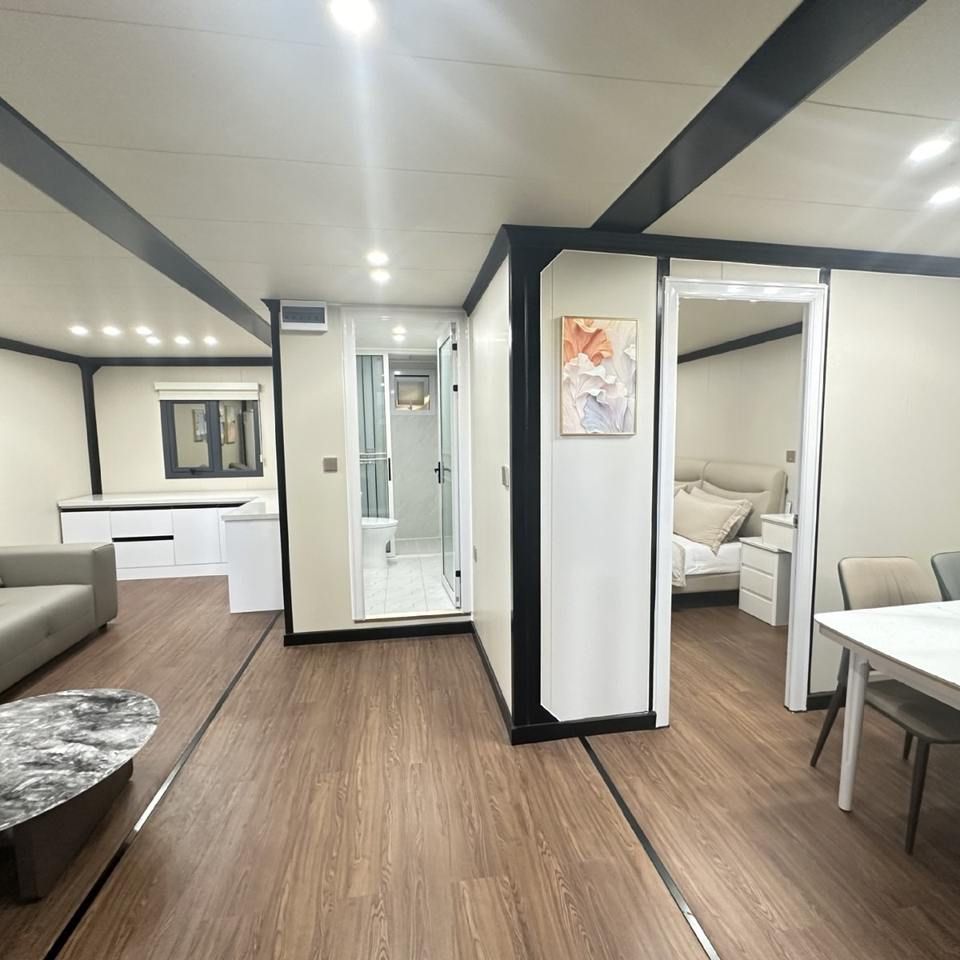
Basic Composition: Mobile toilets generally consist of a fecal sewage storage tank (or fecal sewage treatment device), floor slab, sanitary ware, walls, washing equipment, water tank, roof, and mobility device. These components work together to ensure that the mobile toilet can normally provide toilet services and achieve the treatment and storage of fecal sewage.
Structural Form: Mobile toilets can be divided into single-structure mobile toilets and composite-structure mobile toilets according to their structural forms. Single-structure mobile toilets usually have a simple structure and are easy to move and install; composite-structure mobile toilets may combine multiple materials and technologies, offering higher stability and durability.
Mobility Method: According to the mobility method, mobile toilets can be divided into hoisting and handling-type mobile toilets and powered and towed-type mobile toilets. Hoisting and handling-type mobile toilets usually require external equipment for movement and are suitable for scenarios that require frequent relocation; powered and towed-type mobile toilets may be equipped with a power system or towing device, enabling autonomous movement or convenient towing to designated locations.
Sewage Treatment Method: Mobile toilets have various sewage treatment methods, including water-flushing and waterless-flushing suction-type, circulating water-flushing type, and dry-packing type. Water-flushing and waterless-flushing suction-type mobile toilets treat fecal sewage through water flushing or suction; circulating water-flushing type mobile toilets achieve water resource reuse through a circulating water system; dry-packing type mobile toilets use dry-packing technology to package and treat fecal sewage, reducing dependence on water resources.
Specific Examples: For example, an economical and practical mobile toilet has an overall appearance with a gray and white color scheme of metal carved panels. It is designed with multiple squatting positions, separate entrances for men's and women's toilets, sliding windows and stone wall lamps on the front wall, and independent squatting positions in the toilet compartments. There is also a one-piece structured mobile toilet with an overall one-piece shell and a reinforced chassis. It uses a vacuum squatting pan inside, with pneumatic flushing. A single flush requires only 1 liter of water, saving 80% compared to ordinary toilets.



