
Mobile Toilet Insulation Room Design
The design of mobile toilet insulation rooms requires comprehensive consideration of structural stability, thermal insulation performance, environmental sustainability, and modular deployment capabilities. The specific design points are as follows:
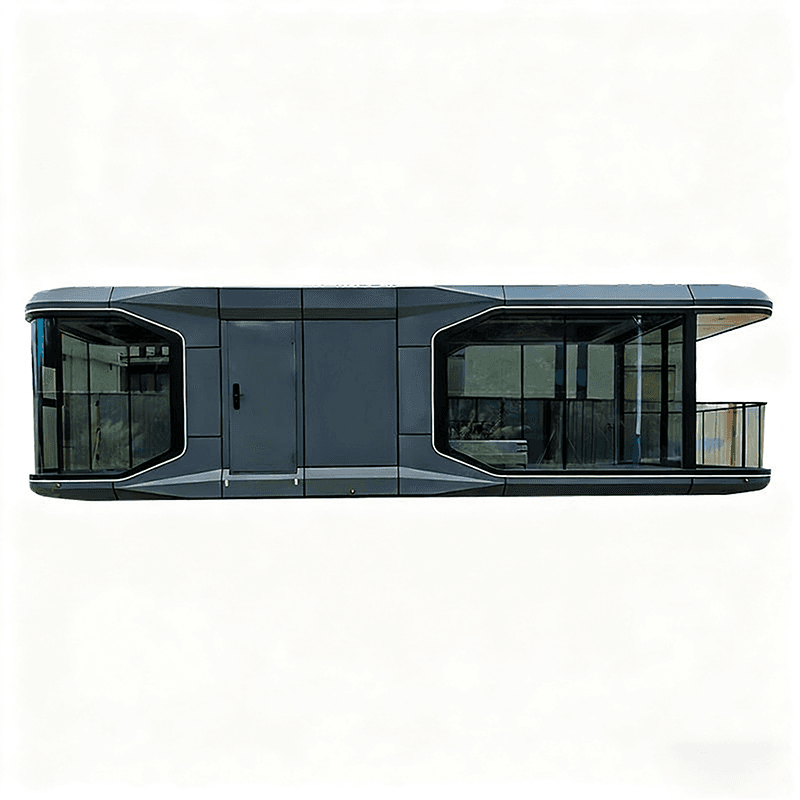
1. Structural Frame Design
The main frame must balance strength and durability, typically using galvanized sheet or lightweight galvanized steel materials. These materials are highly corrosion-resistant and can withstand long-term outdoor exposure to sunlight and rain. The frame structure must adhere to mechanical principles, such as selecting 80801.2mm square tubes and optimizing the section modulus to enhance bending resistance, effectively withstanding wind loads (e.g., strong winds in coastal areas) and snow loads (e.g., snow accumulation in high-latitude regions). At the same time, self-weight must be controlled to avoid increasing transportation and installation difficulties due to material redundancy.
2. Thermal Insulation Design
The core objective is to reduce heat transfer and maintain stable internal temperatures. In terms of material selection, low thermal conductivity materials such as polyurethane foam, rock wool, or glass wool are widely used, with thermal conductivity typically below 0.035W/(m·K), significantly reducing heat conduction efficiency. The structural design employs double-layer walls with thermal insulation layers filled in between to form a thermal resistance barrier. Some designs further enhance insulation by increasing wall thickness (e.g., over 100mm). Auxiliary measures include equipping small heating devices (such as electric heaters or solar heating systems) to cope with extreme low temperatures and using sealed doors and windows (rubber strips or magnetic seals) to reduce cold air infiltration.
3. Environmental and Sustainability Design
Material selection focuses on the environmental impact throughout the entire lifecycle, prioritizing high-recycling-rate steels (e.g., galvanized steel with a recycling rate exceeding 90%), water-based environmentally friendly coatings, and biodegradable interior decoration materials. For water resource recycling, an integrated graywater recycling system is employed, converting handwashing wastewater into toilet flushing water through multi-stage filtration, achieving a water-saving rate of over 60%. In waste treatment, biological degradation devices (such as microbial decomposition tanks) or chemical treatment units are introduced to achieve preliminary harmless treatment of feces and urine, reducing off-site pollution.
4. Modular and Rapid Deployment Design
Standardized modular design is adopted, with components such as walls, roofs, and frames prefabricated in factories and quickly assembled on-site using bolts or clips, shortening the construction period to 1-2 days without the need for large machinery. Modular design also supports flexible expansion, such as adjusting the number of toilet stalls based on foot traffic or integrating customized features like barrier-free facilities and intelligent ventilation systems (e.g., CO₂ concentration-sensing automatic air exchange) to meet diverse scenario demands in tourist attractions, construction sites, and emergency rescue operations.
5. Application Scenario Adaptation
Insulated mobile toilets are particularly suitable for low-temperature environments or temporary venues, such as winter sports events (e.g., ski resorts), ice and snow festivals, high-altitude construction sites, and remote area emergency rescues. Their core value lies in combining active insulation with passive thermal insulation to maintain internal temperatures between 5-15°C (depending on heating device configuration), preventing issues such as pipeline freezing and user discomfort due to low temperatures, and enhancing the comfort and safety of outdoor toilet experiences.



