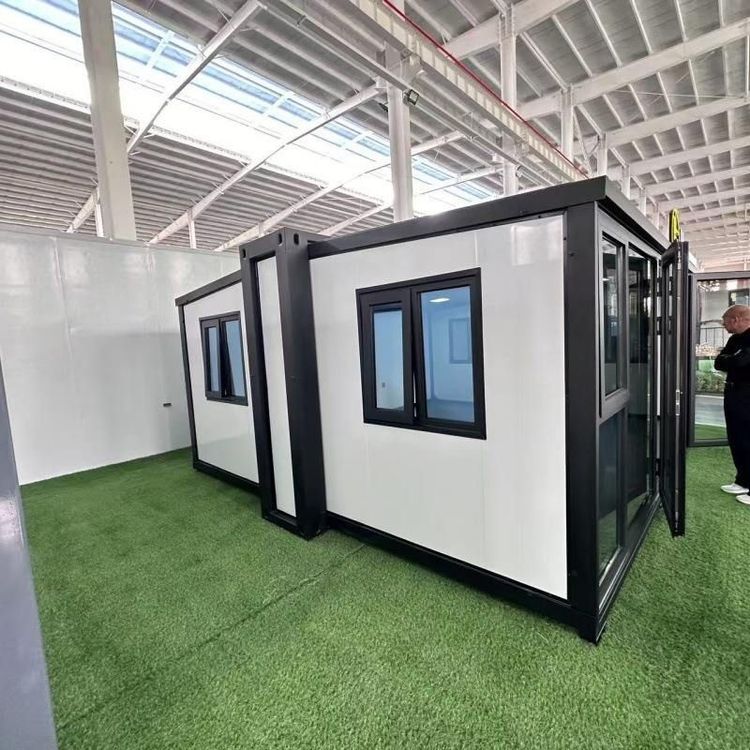
Mobile Toilet Installation Construction Illustration
Currently, there is no publicly available detailed installation construction illustration for mobile toilets, but a general installation process can be outlined based on their installation characteristics. Mobile toilets typically adopt a modular design, eliminating the need for complex civil engineering works, and the installation process is relatively simple. The following are the specific installation steps and key points:

1. Pre-installation Preparation
Ensure that the installation site has a flat and solid ground to prevent the toilet from tilting or being damaged due to uneven ground. At the same time, check whether all components of the mobile toilet are complete, including the main frame, columns, splicing panels, buckles, and fixing bolts, to ensure there are no missing or damaged parts. If the mobile toilet is equipped with water and electricity functions, it is also necessary to plan the routes of water and electricity lines in advance and reserve the positions of interfaces.
2. Main Frame Construction
Assemble the main frame of the mobile toilet according to the instructions in the manual. Generally, start by installing the bottom frame and ensure it is placed horizontally. Then install the columns, which are key components supporting the entire toilet structure. They need to be installed vertically and calibrated with a level to ensure that the verticality error is within the allowable range. After the columns are installed, connect and fix the top frame to the columns to form a complete frame structure.
3. Splicing and Fixing
Install the splicing panels onto the frame one by one according to the design requirements and fix them with buckles or bolts. During the splicing process, pay attention to keeping the gaps between the panels even and ensuring that the buckles fit tightly to guarantee the tightness and stability of the toilet. For some special parts, such as the positions of doors and windows, install them precisely according to the reserved dimensions to ensure smooth opening and closing of doors and windows.
4. Water and Electricity Connection (if applicable)
If the mobile toilet is equipped with water and electricity functions, connect the water and electricity. Connect the water inlet pipe to the reserved water source interface, ensuring a tight connection without water leakage. Connect the drainage pipe to the sewer or sewage collection device to ensure smooth drainage. For electrical connections, a professional electrician should carry out the operations. Connect the wires according to regulations and install electrical equipment such as switches and sockets to ensure electrical safety.
5. Inspection and Debugging
After the installation is completed, conduct a comprehensive inspection of the entire mobile toilet to check whether all components are firmly installed and free of looseness. Check the tightness and opening flexibility of doors and windows and whether the water and electricity functions are normal. Conduct water and electricity tests to observe whether there are problems such as water leakage and electric leakage. If any abnormalities are found, make adjustments and repairs in a timely manner.