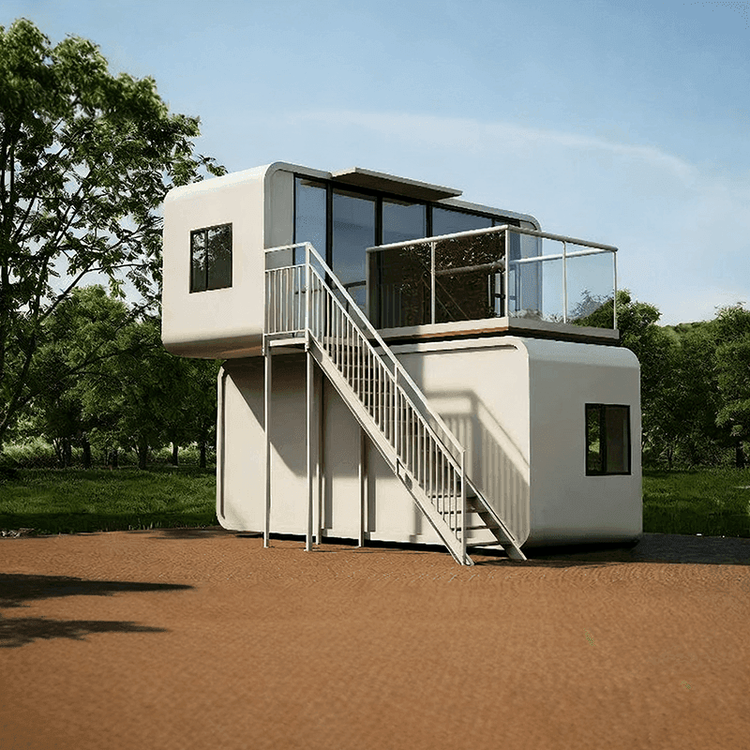
Innovative Design of Mobile Toilets
The innovative designs of mobile toilets are mainly reflected in multiple aspects such as water storage tank modifications, tidal public toilet designs, and movable public toilet designs.
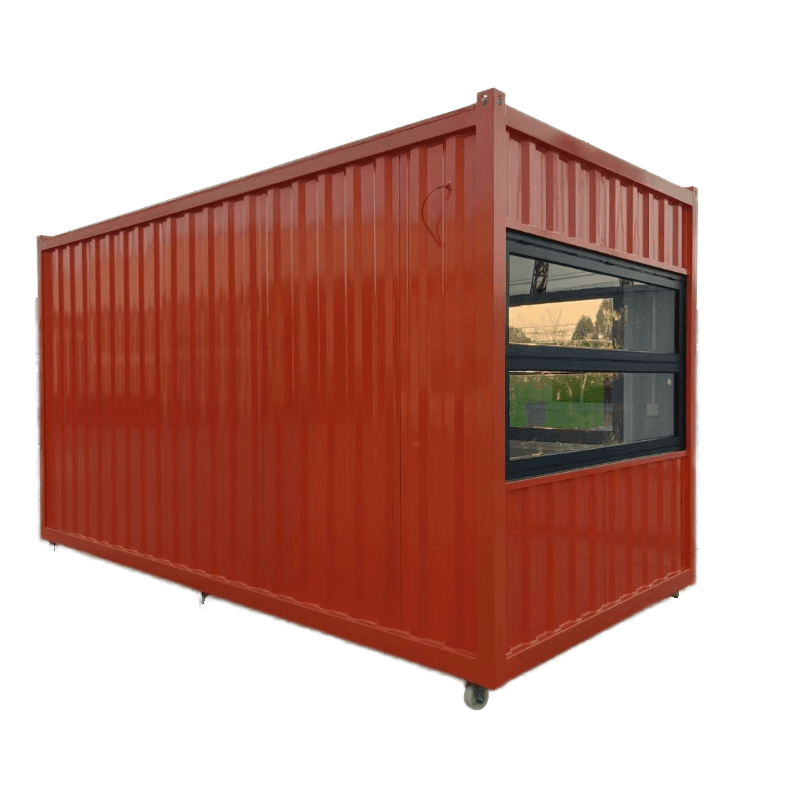
The modification of water storage tanks is a relatively basic yet creative approach. Some people split a water storage tank in half lengthwise, fix universal wheels at the four corners of a wooden board for mobility, use wooden strips to increase the height of the tank, create an opening on the side, and install door frames, walls, and a roof. They also install drainage, shower, and toilet facilities. Others have further innovated on this basis, creating solar-powered mobile toilets that utilize solar energy to power the toilet.
The design of tidal public toilets draws inspiration from the concept of tidal lanes in the transportation sector. By using physical partitions, a lockable sliding tidal door is installed between the men's and women's toilets, creating a universal toilet area that can be connected in both directions. Management personnel can adjust the allocation of toilet stalls based on actual conditions. This design has been piloted and promoted in many places, and is equipped with supporting measures such as intelligent toilet guidance systems and dedicated on-site management personnel to achieve dynamic allocation of toilet resources. Some tidal public toilets are also equipped with negative pressure exhaust systems, third toilets, and other facilities, enhancing the user experience and functionality.
The design of movable public toilets is more comprehensive and systematic. Their mobility is achieved through a chassis system that includes a load-bearing frame, a running gear, and a leveling device. Lightweight alloy materials and independently suspended wheels are used, and the leveling device can adjust the height. The layout of internal functional modules follows ergonomic principles, with a ventilation system that adopts a bidirectional air exchange mode and a water supply and drainage system that uses flexible connections. The energy supply system includes a dual configuration of solar photovoltaic panels and battery packs, while the lighting system uses low-power LED light sources. Intelligent sensors can control the automatic start and stop of lighting and ventilation and record data on toilet stall usage frequency. Material selection focuses on insulation, slip resistance, and corrosion resistance. In terms of environmental adaptability, evaporative cooling systems are provided in hot areas, and low-power electric auxiliary heating devices are installed in cold areas. Water-saving flush valves are installed, and some have gray water recycling systems. Maintenance management adopts a modular repair plan, with a fault detection system that can automatically identify problems and indicate their locations, and cleaning operations are equipped with high-pressure flushing interfaces and disinfectant dispensing ports. Spatial utilization efficiency is improved through folding and expansion mechanisms, with comprehensive barrier-free facilities and sound insulation achieved by filling with sound-absorbing materials.