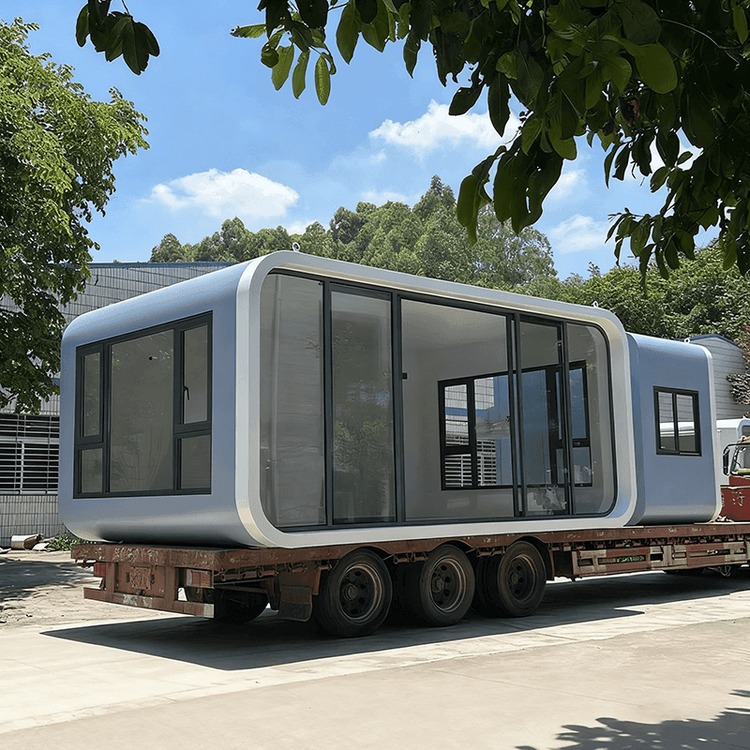
Mobile Toilet for Indoor Use
Mobile toilets can be installed indoors, but they require reasonable planning and design based on specific needs and site characteristics.

I. Applicability of Mobile Toilets The core advantage of mobile toilets lies in their mobility, allowing flexible deployment in both permanent and temporary locations. Conventional mobile toilets feature a steel frame structure paired with gray-white metal carved panels, offering insulation, heat resistance, and corrosion resistance, making them suitable for both long-term and short-term use. They are fully equipped internally, with separate male and female areas, independent squatting positions, ventilation and lighting windows, and aluminum alloy exterior doors, meeting basic sanitary needs. Cost-effective models further optimize costs by incorporating sliding windows, stone wall lamps, and other designs to enhance practicality, also suitable for indoor environments.
II. Types and Materials of Indoor Mobile Toilets Indoor mobile toilets come in various product types, including mobile toilets, container toilets, and eco-friendly toilets. In terms of materials, steel structures are the mainstream choice due to their durability, while color-coated steel, metal, and plastic materials are flexibly combined based on cost and durability requirements. For example, container toilets can be quickly assembled, suitable for temporary scenarios such as construction sites and exhibitions; eco-friendly toilets reduce sewage discharge through technologies like microbial degradation, suitable for ecologically sensitive areas. Brands such as Baitai, Mengyang, and Shiteng offer a diverse range of products, allowing users to choose based on budget and functional needs.
III. Key Considerations for Indoor Deployment
- Space Planning: Ensure that the size of the mobile toilet matches the indoor space to avoid affecting passage or functional layout. For example, conventional mobile toilets are about 1.2-1.5 meters wide, requiring sufficient space for door opening and ventilation.
- Ventilation and Lighting: Although metal carved panels offer heat insulation, additional ventilation systems (such as exhaust fans) and natural lighting (such as sliding windows) need to be designed indoors to prevent odor accumulation and moisture problems.
- Sewage Disposal: If there is no municipal sewage pipeline indoors, choose eco-friendly toilets with built-in fecal storage tanks or microbial degradation technology, and regularly clean and maintain them.
- Safety and Compliance: Comply with building fire protection, electrical safety, and other regulations. For example, steel structures need to be rust-proofed, and circuits need to be independently set up to avoid overloading.
IV. Typical Application Scenarios Indoor mobile toilets are commonly found in temporary sales offices in newly built residential areas, office areas of large construction sites, and exhibition areas of shopping malls. Their modular design allows for quick assembly and disassembly, adapting to changes in construction periods or event durations, while reducing the construction costs and time investment of traditional toilets.