
Independent Partitions in Mobile Toilets
Mobile toilets often feature independent partition designs to meet the usage needs of different groups and enhance the user experience.
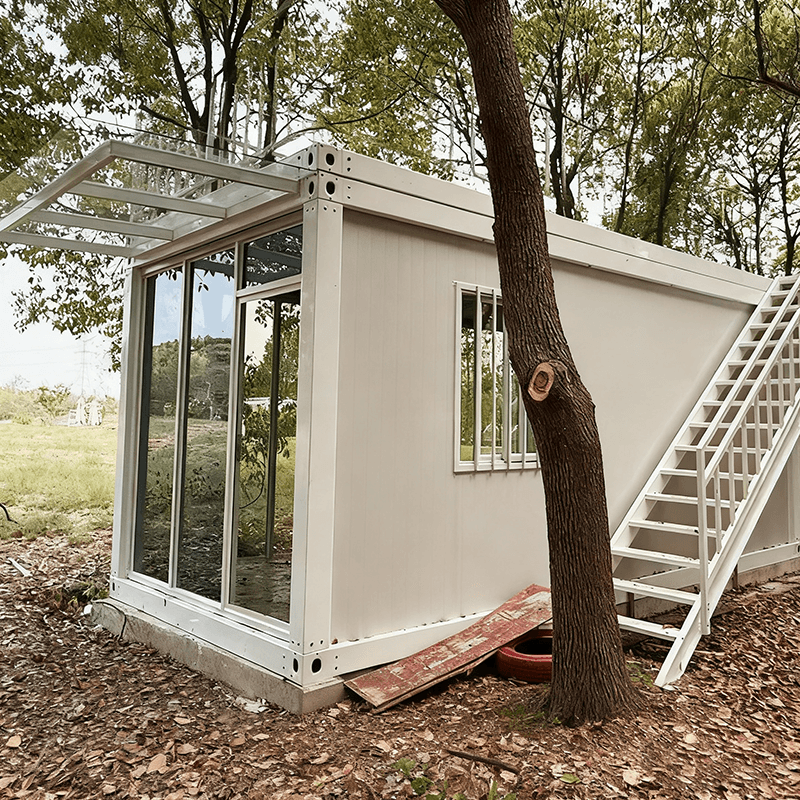
Firstly, a common independent partition design is reflected in gender-specific partitions. For example, some outdoor mobile toilets clearly divide male and female areas. Some are designed with four squatting positions, with two allocated to the men's toilet and two to the women's toilet, while the middle area serves as a communal hand-washing area. This design not only safeguards the privacy of users of different genders but also improves usage efficiency by rationally planning the space so that each functional area does not interfere with the others. Another type of gender-partitioned mobile toilet has only one squatting position each for men and women, with a hand-washing area in the middle. It has a pointed roof and walls made of heat-insulating metal materials, ensuring basic functionality while also possessing a certain degree of aesthetics and practicality, making it adaptable to various outdoor environments.
Secondly, in addition to simple gender partitions, urban smart public toilet stations exhibit more comprehensive independent partition forms. Their internal functional modules can be flexibly configured according to the site's foot traffic and usage scenarios. Common functional partitions include restrooms, which are the core areas for meeting people's basic physiological needs; baby care rooms, which provide a private and comfortable space for mothers with infants to breastfeed and change diapers; and third restrooms, which mainly serve special groups such as the elderly with mobility issues, people with disabilities, and parents with young children. These are equipped with barrier-free facilities such as handrails and sit-down toilets, fully demonstrating care for special populations.
These independent partition designs, whether simple gender partitions or comprehensive functional partitions, fully consider the needs of different users. While safeguarding privacy, they enhance the overall functionality and practicality of mobile toilets, enabling them to better serve the public.



