
Illustrated Guide to Mobile Toilets
Currently, there is no complete set of materials directly providing an 'Illustrated Guide to Mobile Toilets,' but a general introduction can be given by combining their structural components and renovation cases.
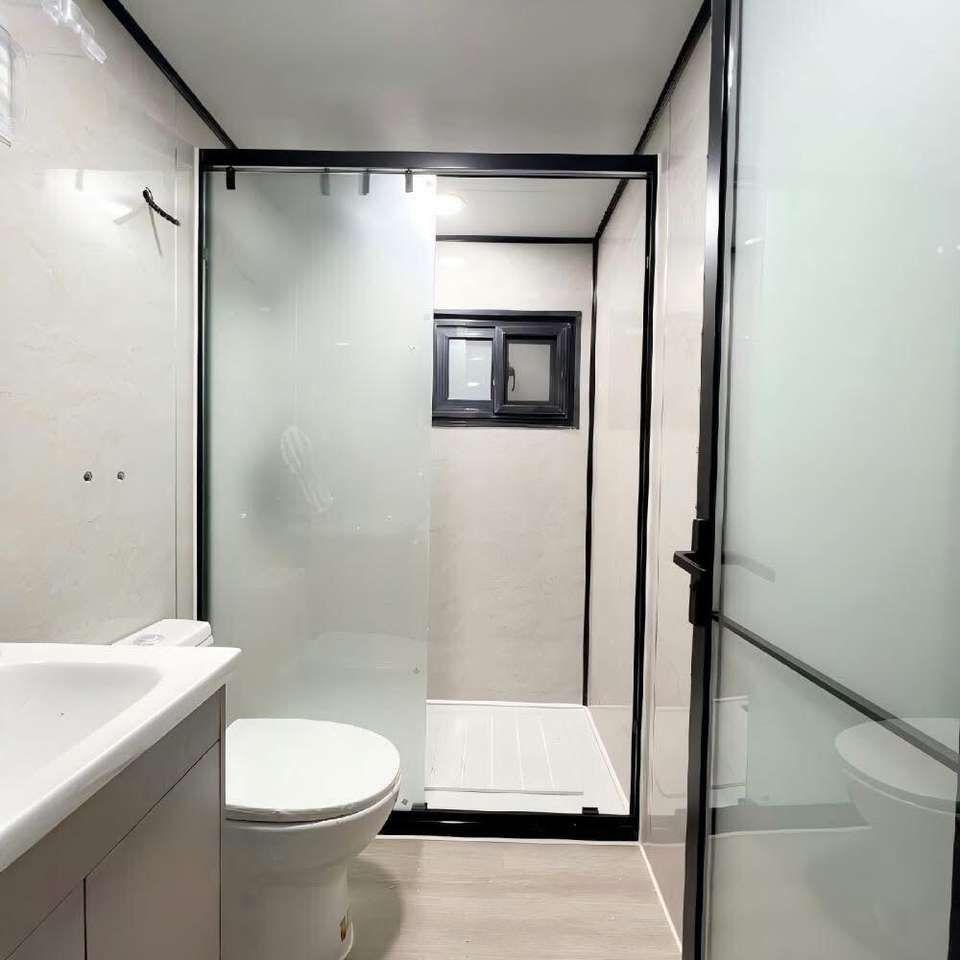
Mobile toilets typically consist of several key parts. The fecal wastewater storage tank or disposal unit is one of the core components, responsible for collecting and treating fecal wastewater generated during use. Some mobile toilets use storage tanks to temporarily hold the wastewater, which is then transported for unified treatment later; while more advanced models are equipped with fecal wastewater disposal units that can purify the wastewater on-site, reducing environmental pollution. The floor needs to be slip-resistant and easy to clean, usually laid with special slip-resistant materials to ensure the safety and hygiene of users. Sanitary fixtures include toilets or squat pans, chosen according to different design requirements and usage scenarios. The wall frame is mostly welded from steel, with channel steel or I-beams commonly used at the bottom, and square steel for columns to ensure structural stability. On the wall frame, materials such as color-coated steel plates, fiberglass-reinforced plastics, and stainless steel are installed, which have advantages such as waterproofing, corrosion resistance, and ease of cleaning. Washing facilities such as sinks and faucets provide convenience for users to clean their hands. The water tank is used to store clean water, ensuring the normal use of sanitary fixtures and washing facilities. The roof serves to shield from wind and rain, while also considering waterproofing and heat insulation properties. The mobility unit enables the mobile toilet to be easily relocated to meet the usage needs of different locations.
In addition, there are renovation cases of mobile toilets for reference. For example, seven mobile public toilets on Shiji Avenue at Weifang Road and Zhangyang Road at Miaopu Road have undergone renovations, with significant changes in appearance before and after. The renovated mobile toilets may be more aesthetically pleasing and stylish in design, better coordinating with the surrounding environment; in terms of internal facilities, they may have upgraded sanitary fixtures and washing facilities, improving comfort and convenience of use; in terms of functionality, they may have added ventilation and deodorization systems, improving the air quality inside the toilets. Although specific illustrations cannot be provided, a more comprehensive understanding of mobile toilets can be gained by learning about their structural components and renovation cases.



