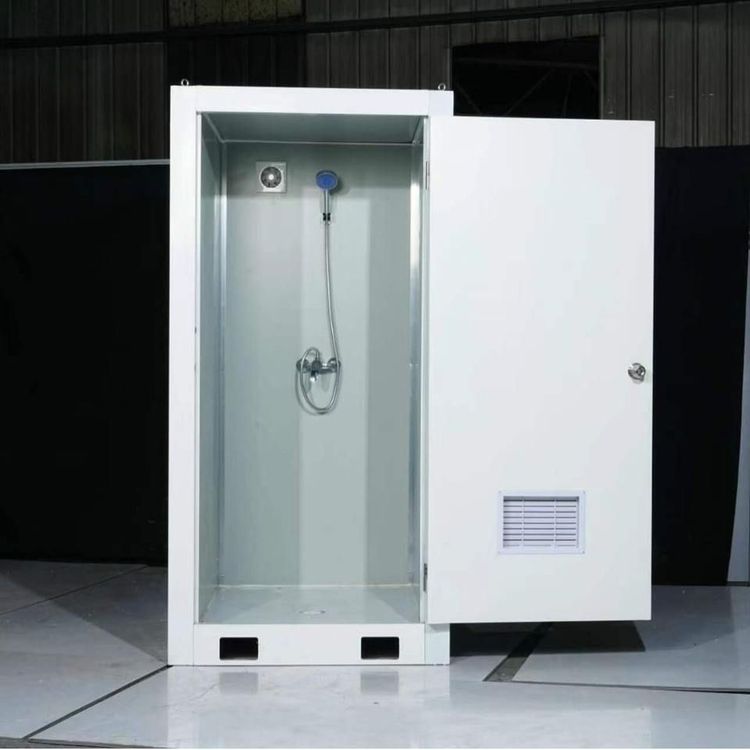
Mobile Toilet and Helicopter
The main connection between mobile toilets and helicopters lies in their ability to be flexibly deployed and adapt to complex terrains. Helicopters provide an efficient means of transporting mobile toilets to remote or terrain-challenged areas.

In remote or terrain-complex regions, such as mountainous areas and river valleys, the construction of large fixed buildings often faces numerous difficulties, including rugged terrain and poor transportation access. Mobile toilets, however, are designed with modularity in mind, being lightweight and easy to assemble, enabling them to be quickly transported to designated locations via efficient means such as helicopters.
Take tourist attractions in Tibet as an example. These areas have complex terrains, making the construction of large fixed toilets costly and challenging. Mobile toilets, on the other hand, can be easily transported by helicopter and quickly assembled on relatively flat foundations, providing convenient sanitation facilities for tourists. This deployment method not only saves construction costs and time but also reduces damage to the natural environment, reflecting the principles of environmental protection and sustainable development.
Similarly, Mount Huangshan has adopted a similar approach. Known for its steep mountains and beautiful scenery, Mount Huangshan attracts a large number of tourists but also faces challenges in sanitation facility construction. By using helicopters to transport mobile toilets up the mountain, Mount Huangshan has successfully addressed the issue of tourists' restroom needs during their climb, enhancing the overall tourist experience.
The advantages of helicopters in deploying mobile toilets are mainly reflected in the following aspects:
- Efficient transportation: Helicopters have the ability to take off and land vertically and hover in the air, enabling them to fly flexibly in complex terrains and quickly transport mobile toilets to designated locations.
- Reduced environmental impact: Compared to traditional road construction, helicopter transportation minimizes damage to the natural environment, aligning with the requirements of environmental protection and sustainable development.
- Enhanced emergency response capabilities: In the event of natural disasters or emergencies, helicopters can swiftly transport mobile toilets to disaster areas, providing emergency sanitation facilities for affected populations.