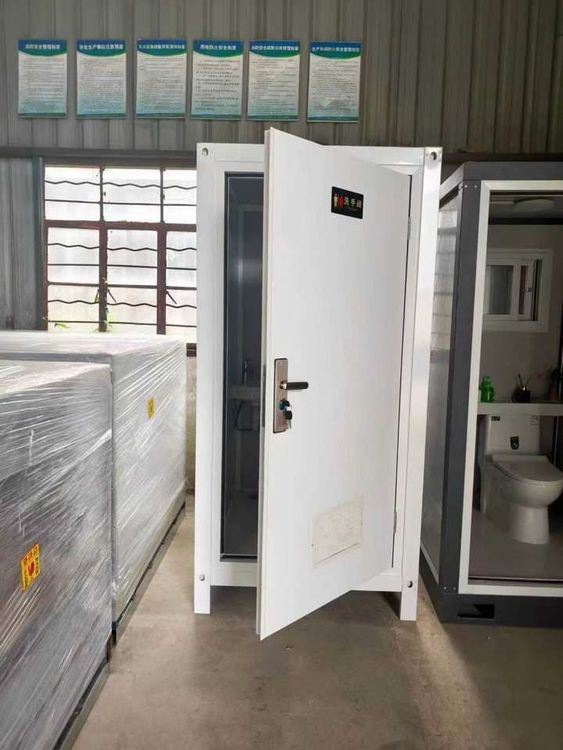
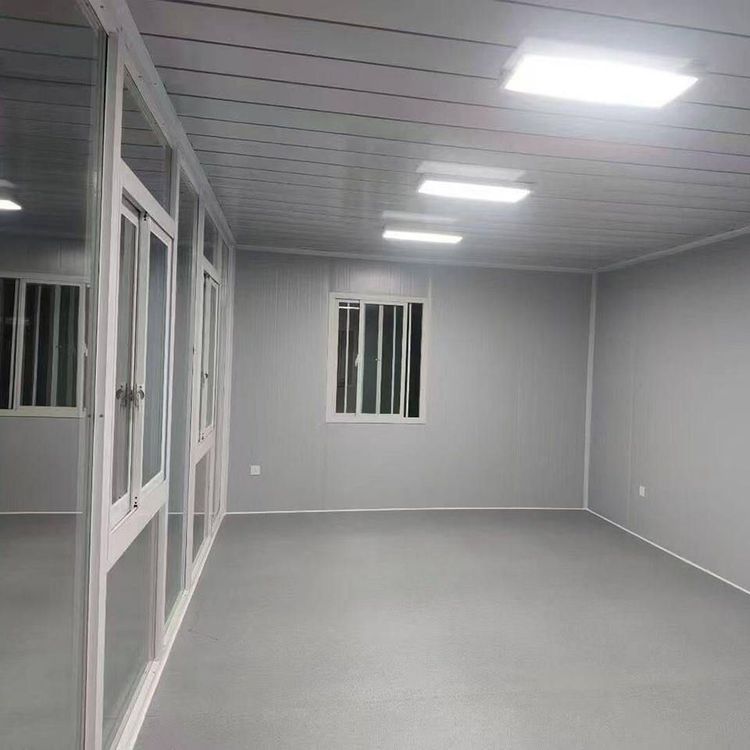
Mobile Toilet Hardened Ground
The requirements for the hardened ground of mobile toilets vary depending on the usage scenario, but generally, they need to meet basic conditions such as stability, ease of installation, and environmental adaptability.

On construction sites, the hardened ground of mobile toilets must be compatible with the overall environment. According to regulations, if water-flush or mobile toilets are installed on construction sites, the ground must be hardened to ensure stability during use and prevent toilet tilting or damage due to soft ground. Additionally, the toilets must be equipped with complete doors and windows, and the height of the partition boards between squatting positions should not be less than 0.9 meters to ensure privacy. The load-bearing capacity of the hardened ground must meet the requirements for frequent personnel access and equipment operation, typically achieved through concrete pouring, with the thickness adjusted according to geological conditions to ensure no settlement risk during long-term use.
In scenic areas and other regions without a pipeline network, the installation requirements for mobile toilets place greater emphasis on flexibility and cost. Prefabricated public toilets in such scenarios only require simple hardened ground for installation, such as laying a gravel bed or thin concrete layer, which can meet basic stability requirements while shortening the construction period. Such ground does not require complex structures but must be level to prevent water accumulation or tilting and facilitate later maintenance. Hardening treatment can also reduce land and infrastructure costs, making it particularly suitable for temporary or seasonal use scenarios, such as the deployment of temporary public toilets during the peak tourist season.
The ground hardening requirements for integrated mobile toilets focus more on convenience and relocatability. Their design allows for direct placement on simple hardened ground without damaging the original land structure, such as laying steel plates or prefabricated concrete slabs on grass or gravel ground to meet requirements. This approach offers significant advantages during project relocation or site replanning, as the toilets can be hoisted and transported as a whole, reducing repeated construction costs. Ground fixation is typically achieved using expansion bolts or counterweight water tanks, with some regions, such as Beijing, requiring that mobile toilets be able to withstand wind forces of up to Level 6 after ground fixation to ensure safety.
In different scenarios, the core goal of hardening the ground for mobile toilets is to balance stability, economy, and environmental adaptability. Construction sites require enhanced load-bearing capacity and privacy protection, scenic areas focus on flexibility and cost, and integrated toilets emphasize convenient relocation and rapid deployment. In actual implementation, comprehensive design must consider geological conditions, usage frequency, and climatic factors to ensure that the ground hardening plan meets functional requirements and is suitable for long-term use.