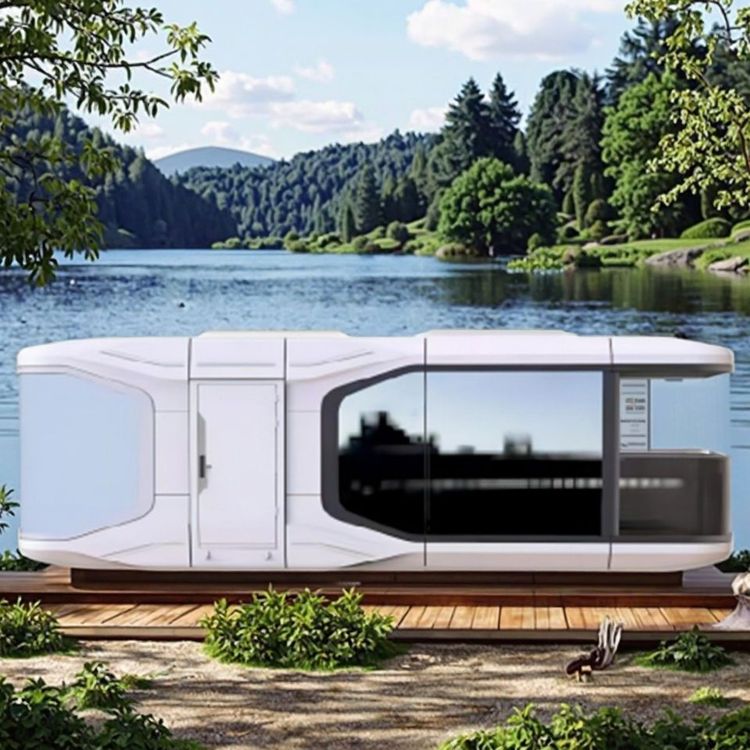
What Are the Functions of Mobile Toilets
The functions of mobile toilets cover six core areas: basic sanitation services, integrated environmental protection technologies, rapid deployment capabilities, user-friendly design, intelligent management features, and adaptability to special scenarios.

1. Basic Sanitation Services
Mobile toilets, through modular design, provide immediate restroom solutions in crowded places such as scenic spots, large-scale events, and construction sites, effectively alleviating the shortage of fixed public toilets. Their design strictly adheres to the Urban Public Toilet Design Standard (CJJ14-2016), ensuring that basic sanitation needs are met, such as individual stalls, odor control measures, and cleaning and maintenance interfaces, safeguarding users' basic health and privacy.
2. Integrated Environmental Protection Technologies
- Water-saving Systems: Utilizing vacuum suction technology (consuming 0.3-0.5 liters of water per use) or biodegradation technology (requiring no flushing), these toilets save over 90% of water compared to traditional public toilets, significantly reducing water consumption.
- Sewage Treatment: Some models are equipped with MBR membrane bioreactors, which purify sewage to the standard for reclaimed water reuse through microbial degradation and membrane filtration technologies, enabling water resource recycling.
- Solar Power Supply: Photovoltaic panels on the top supply power to lighting and ventilation systems, supporting off-grid operation and reducing reliance on traditional energy sources.
3. Rapid Deployment Capabilities
Modular steel structure boxes can be installed within 2 hours using lifting vehicles, suitable for emergency scenarios such as earthquake-stricken areas and temporary construction sites. Some models are equipped with self-propelled chassis, enabling autonomous movement without external equipment, further shortening deployment time and enhancing emergency response efficiency.
4. User-friendly Design
- Barrier-free Spaces: Stalls with a width of at least 1.5m×1.5m are provided, along with tactile guide paths for the visually impaired, meeting the needs of disabled individuals.
- Constant Temperature Ventilation: Ventilation systems with an air exchange rate of at least 20m³/h, combined with constant temperature control, maintain fresh air and a comfortable temperature inside.
- Intelligent Lighting: Sensor-based lighting with an illuminance of at least 150 lux automatically adjusts brightness, saving energy and enhancing the user experience.
5. Intelligent Management Features
Through IoT sensors, real-time monitoring of usage frequency, ammonia concentration (alarm threshold ≥20ppm), and water tank levels is conducted, with data uploaded to a remote management platform. Managers can schedule cleaning, resupply, or maintenance accordingly, achieving refined operation and maintenance and reducing manual inspection costs.
6. Adaptability to Special Scenarios
- Cold Regions: Equipped with electric tracing pipes, these toilets can withstand temperatures as low as -40°C, preventing freezing of water tanks and pipes.
- Coastal Environments: Wind-resistant models with a wind pressure rating of at least 1.5kN/m² can withstand strong winds, ensuring structural stability.
Through technological innovation and functional optimization, mobile toilets have become indispensable sanitation facilities in modern cities and emergency scenarios, balancing efficiency, environmental protection, and user-friendly needs.