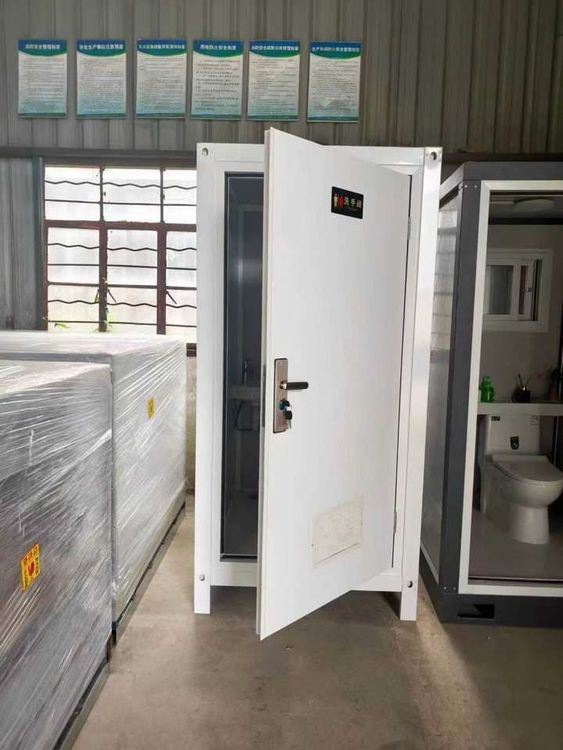
Mobile Toilet for RV
There are indeed mobile types of toilets for RVs, mainly divided into portable, fixed, and dry types, with some adopting intelligent biodegradation technology.

Portable Mobile Toilets
Portable mobile toilets are the most flexible type in RVs, typically consisting of an independent water tank and toilet, requiring no fixed installation. Their core advantage lies in their ability to be moved and cleaned at any time, making them suitable for short trips or small RVs with limited space. During use, waste is stored directly in the water tank and can be discharged to public sewage treatment points through a dedicated interface after the trip. Some models (such as the portable toilet equipped in the T6 Black Warrior RV version) also support shower functions, achieving space reuse through modular design. These toilets occupy little space and are easy to install, but the water tank needs to be cleaned regularly to avoid odors.Fixed Mobile Toilets
Although called "fixed," fixed mobile toilets are integrated systems that can be moved within the RV. They are connected to the wastewater tank at the bottom of the RV through pipes, providing a user experience closer to that of a household toilet, suitable for long-term trips or large RVs. Their advantage is that they do not require manual handling of waste, which can be disposed of by gravity drainage or pumping when the wastewater tank is full. However, installation requires reserved pipe space, and regular maintenance of pipe sealing is necessary to prevent leaks. Some high-end models are also equipped with flushing systems and odor-proof designs to enhance user comfort.Dry Mobile Toilets
Dry mobile toilets adopt a waterless design, decomposing waste through special materials (such as coconut shell charcoal and biodegradable powder), suitable for users with strong environmental awareness. Their working principle involves using desiccants to absorb liquids and solidify waste while suppressing odor generation. After use, the decomposition material packs need to be replaced regularly, which is simple to operate and has no sewage discharge issues. However, these toilets have a smaller capacity, requiring more frequent material replacement, and their initial cost may be higher than traditional types.
Intelligent biodegradation technology is an innovative direction for RV toilets in recent years. Some models (such as certain high-end vehicles) decompose waste through bacteria, keeping odors at extremely low levels, with decomposition products directly usable as fertilizer. The replacement cycle for such toilets can reach 1-2 months, significantly reducing maintenance frequency, but it is necessary to ensure bacterial activity and avoid using chemical cleaners.