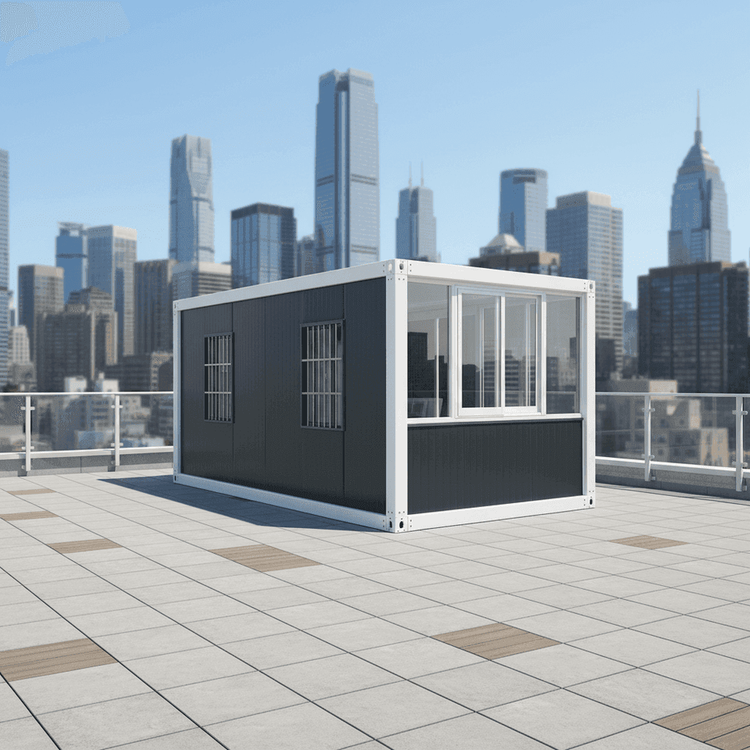
Mobile Toilet for Non-Sewage Environments
The core solution for mobile toilets in non-sewage environments is to treat or completely seal off excreta on-site through spatial or technological means, replacing traditional sewer-based排污 (discharge) systems. The following is an analysis of specific solution categories and their applicable scenarios:

I. Resource Utilization Type: Microbial Degradation Toilets
Through microbial aerobic fermentation technology, excreta are decomposed into water and carbon dioxide, with a small amount of dry residue remaining that can be used as organic fertilizer. Their core advantages lie in zero sewage discharge and high water-saving rates, eliminating the need for external water sources or frequent waste removal, and featuring a modern appearance. However, there are two major limitations: first, high construction costs, with initial investment costs higher than those of traditional toilets; second, environmental adaptability, as microbial activity is significantly affected by temperature, requiring heating devices in cold regions. Typical application scenarios include ecological protection zones, high-end scenic spots, and eco-friendly new rural construction.
II. Physical Sealing Type: Waterless Packing and Recirculating Flush Toilets
- Waterless Packing Toilets: Utilize biodegradable films to seal waste, storing it in fecal storage tanks for waterless and odorless operation. They have a simple structure and low maintenance costs but require regular replacement of films and removal of fecal storage tanks, resulting in higher consumable costs. Suitable for short-term scenarios such as temporary construction sites and emergency events.
- Recirculating Flush Toilets: Treat sewage through microorganisms or chemicals to enable recirculation of flush water. They offer significant water-saving effects and a user experience close to that of traditional flush toilets but have higher initial equipment costs and require professional operation for water quality maintenance. Suitable for fixed locations with long-term water scarcity but a desire to maintain a flush toilet experience, such as public facilities in remote areas.
III. Traditional Transitional Type: Three-Compartment Septic Tank Toilets
Preliminary treatment of sewage is carried out through three-stage anaerobic fermentation and sedimentation, with the final effluent discharged into a soakaway pit or periodically pumped out. This technology is mature and cost-effective, requiring no complex electrical equipment, but poses two major risks: first, improper site selection or delayed pumping can easily lead to groundwater contamination; second, overflow of the storage tank may cause sanitation issues. Suitable for household use by farmers or cost-sensitive locations that can arrange regular waste removal.
IV. Zero-Discharge Solution Type: Source Separation Toilets
Urine and feces are separated at the source for resource utilization. This solution maximizes resource recovery and reduces treatment difficulty but requires users to cooperate in changing their toilet habits and has low facility penetration. Currently, it is mainly applied in cutting-edge demonstration zones, research projects, or specific locations with strict requirements for resource recovery.
V. Integrated Solution: Jiahe Treatment System
This system integrates intelligent recirculating water treatment, biological enzyme degradation, and modular sewage discharge design, achieving a flush water recirculation rate exceeding 95%, saving 1.5 tons of water per tank per day, and degrading excreta into harmless organic matter within 48 hours, reducing pumping frequency by 90%. Its modular design supports对接 (docking) with sewage suction trucks, overflow alarms, and APP remote monitoring, improving operational efficiency by 400% compared to traditional equipment. The system can operate stably in extreme environments ranging from -30°C to 50°C and can be optionally equipped with solar power modules, suitable for scenarios such as field operations and large-scale events. During the 2024 Hangzhou Music Festival, 200 mobile toilet units equipped with this system served 30,000 people per day with zero complaints, verifying their reliability.