Mobile Toilet for Home
Mobile toilets for home can be achieved through three methods: portable commodes, small-scale mobile restroom equipment for rural homes, or toilet relocation. The appropriate solution should be selected based on specific needs, available space, and budget.

1. Portable Commodes
Suitable for temporary or short-term needs, such as for the elderly or pregnant women with mobility issues. Their core design features a super-strong load-bearing structure (usually capable of supporting over 150 kilograms), with a deep commode bowl (approximately 30-40 centimeters deep) to prevent spillage of waste. They are equipped with handles and lids for easy carrying and odor sealing. Made mostly of high-strength plastic or lightweight metal, they are lightweight (about 5-10 kilograms) and can be moved to bedrooms, living rooms, etc., at any time. Some models also come with non-slip bases or handrails for enhanced safety. These devices do not require pipe modifications and are plug-and-play, but regular cleaning of the commode bowl is necessary. They are ideal for families with limited space or those needing a quick solution to toilet issues.
2. Small-Scale Mobile Restroom Equipment for Rural Homes
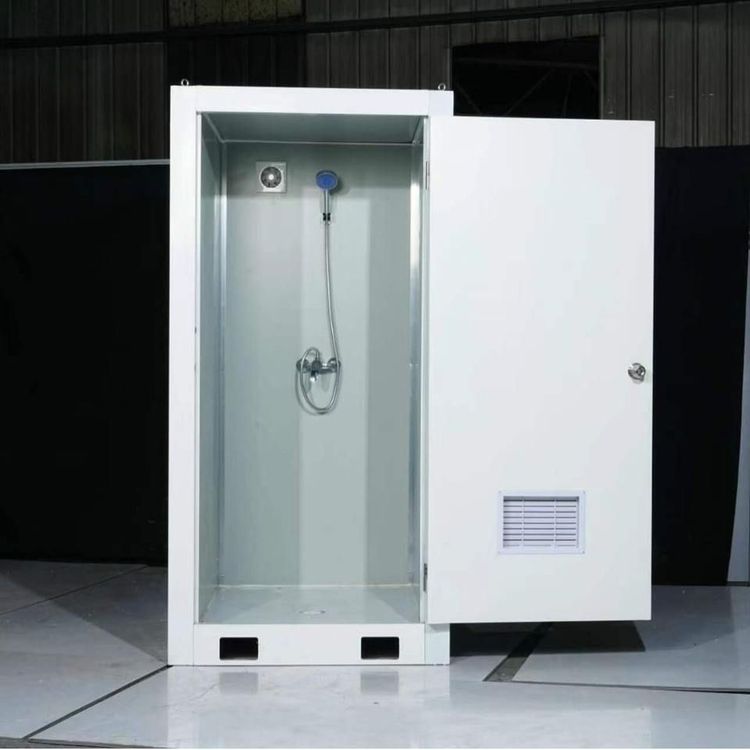
Designed for scenarios without fixed sewage pipes or requiring flexible placement (such as courtyards or temporary housing). The main structure is a steel or plastic frame with an integrated squat toilet and flush tank. Some high-end models also include shower functions. They typically measure 1-2 square meters and can be moved as a whole or disassembled and reassembled. Prices vary widely (400-5000 yuan), with differences in materials (plastic is lightweight but less durable, steel is sturdy but prone to rust), functions (basic models only include a squat toilet, while high-end models come with a septic tank and exhaust fan), and sealing (waterproof rating of IPX4 or above to prevent rain leakage). They require a water source (either through a water tank or connected to tap water) and electricity (if equipped with flushing or lighting functions), making them suitable for rural self-built houses, temporary construction site housing, etc.
3. Toilet Relocation
Suitable for scenarios requiring a permanent change in toilet position, which involves modifying the drainage pipes. Common methods include:
- Toilet Offset Connector: Suitable for short-distance adjustments (≤30 centimeters), connecting the original drainage outlet to the new position with a PVC elbow. However, it is prone to clogging (due to the small bending radius of the pipe) and requires regular unclogging.
- Raising the Floor: By elevating the bathroom floor (about 10-15 centimeters) and rerouting the drainage pipes, relocation within 1 meter can be achieved. However, a slope of at least 2% (a drop of 2 centimeters per meter) must be ensured to prevent water accumulation.
- Wall-Hung Toilet: Hiding the drainage pipes inside the wall saves space and allows for flexible relocation, but requires advance planning of the wall structure and incurs higher construction costs.
- Floor Penetration: Directly drilling a hole in the lower floor (with property management approval) to reroute the drainage pipes to the new position. There is no limit to the relocation distance, but it damages the structure and has extremely high waterproofing requirements. A new waterproof layer must be applied and a 48-hour or longer water closure test conducted.
Precautions: Toilet relocation must strictly adhere to the "Residential Decoration and Renovation Engineering Construction Specifications" to ensure the slope, sealing, and integrity of the drainage pipes, preventing leakage or odor issues.