
Mobile Toilet for Factory Workers
When selecting mobile toilets for factory workers, it is essential to focus on durability, ease of cleaning, and appropriate waste treatment methods. The following steps can guide the selection process:
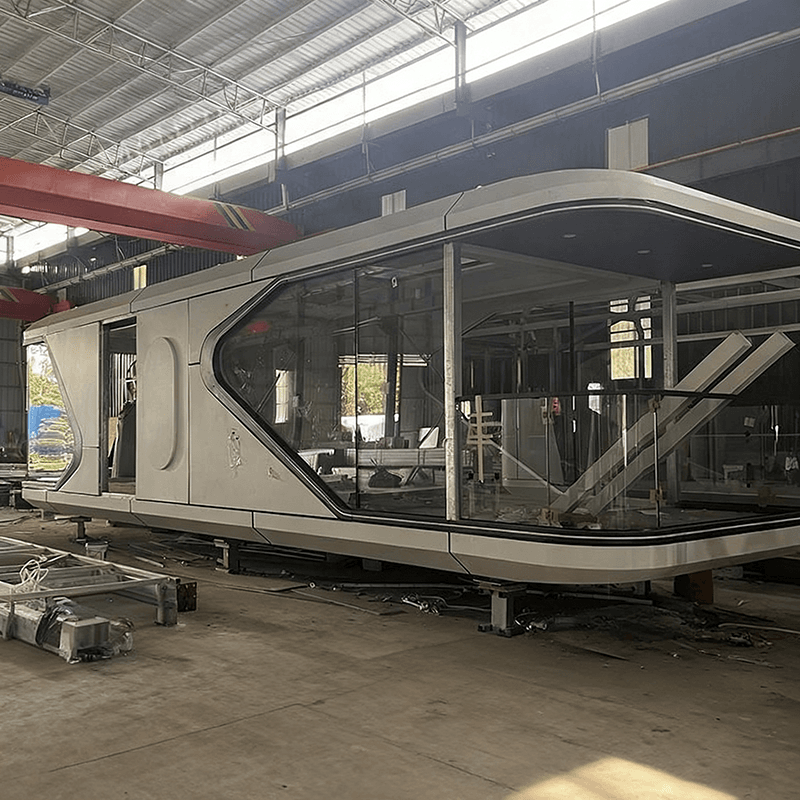
1. Prioritize Composite Structure Container Toilets
Construction sites have complex environments that require toilets that are impact-resistant and easy to relocate. Composite structure container toilets are supported by steel frames (welded I-beams or square steel) and feature metal decorative panels or color-steel plate walls, offering the following advantages:
- Sturdy and Durable: The steel frame provides strong load-bearing capacity, withstanding frequent use by workers and the impact of equipment transportation.
- Flexible Space: They support side-by-side designs, saving floor space, and come with lifting rings on top for easy relocation as construction progresses.
- Weather-Resistant: Metal decorative panels or stainless steel exteriors are corrosion-resistant and scratch-resistant, suitable for harsh outdoor conditions.
2. Strictly Control Material Standards
- Frame: Must use steel structures to avoid deformation caused by insufficient load-bearing capacity of plastic or wooden frames.
- Exterior Walls: Recommend metal decorative panels or stainless steel. The former offers both insulation and impact resistance, while the latter is more wear-resistant.
- Flooring: Must be laid with non-slip tiles or PVC non-slip layers to prevent workers from slipping, especially at toilet entrances and flushing areas.
3. Choose Waste Treatment Methods Based on Water Supply and Drainage Conditions
- With Water and Sewage: Prefer flush toilets, which are more natural to use. They require large-capacity water tanks (e.g., ≥500L) or sewage tanks to reduce the frequency of waste removal.
- Without Water or Sewage: Recommend bagging type or foam-sealing type. The bagging type uses biodegradable plastic bags to seal waste, eliminating odors and conserving water. The foam type suppresses odors by covering waste with foam, significantly saving water. Exercise caution with biodegradable types, as they have high requirements for temperature, humidity, and maintenance, and the construction site environment can easily lead to the failure of bacterial agents.
4. Reasonably Configure the Number and Size of Toilet Stalls
- Quantity Calculation: Allocate one toilet stall per 50-70 people according to the general formula. If the number of workers fluctuates significantly, add a 10%-20% redundancy.
- Gender Separation: If there are female workers, the recommended ratio of male to female toilet stalls is 1:1.5 to avoid long queues at female toilets.
- Single Stall Size: Not less than 1.2m × 1.5m to ensure space for workers to turn around and install equipment, especially considering the needs of disabled individuals or those with larger body sizes.
5. Weigh Costs to Choose Between Renting or Buying
- Short-Term Projects (<1 Year): Renting is more cost-effective, as manufacturers typically provide one-stop services for installation, cleaning, and waste removal, saving time and effort.
- Long-Term Projects (≥1 Year): Buying is more economical in the long run, saving over 50% of costs on a daily average basis. However, maintenance responsibilities must be assumed by the buyer.



