Fixed Standards for Mobile Toilets
The fixed standards for mobile toilets vary depending on the usage scenario, primarily divided into three categories: construction sites, sporting events, and general structural standards, as detailed below:

I. Fixed Standards for Mobile Toilets at Construction Sites The construction site scenario requires a balance between stability and safety. In terms of basic installation requirements, the main frame of the toilet is constructed using a welded steel structure, reinforced at the bottom with channel steel or I-beams, and the columns are made of square steel. The overall structure must meet the requirements for lifting strength to ensure no deformation occurs during transportation and installation. For fixing methods, the bottom structure must be securely connected to the ground using expansion screws or stabilized with counterweights (such as concrete blocks) to prevent tipping due to strong winds or external forces. Fixing of barrier-free facilities should focus on the entrance ramp and handrails: the ramp edges must be equipped with anti-slip strips, and the structural connections should be free of looseness; the handrail height should be set between 0.85 meters and 0.9 meters, securely connected to the wall using bolts or welding to ensure the safety of disabled users.
II. Fixed Standards for Mobile Toilets at Sporting Events The sporting event scenario requires a balance between temporariness and high occupancy. Ground preparation involves leveling the site and laying anti-slip mats to prevent wet and slippery conditions after rain and to reduce the impact of mud on the toilet entrance. The fixing methods are similar to those at construction sites, using expansion screws or counterweights for fixation, but the fixing strength should be adjusted according to the ground material (e.g., increasing the number of counterweights for soft ground). Safety passage requirements specify that the toilet installation location must reserve a passage at least 1.5 meters wide to ensure rapid evacuation in emergencies and that the passage is free of obstructions.
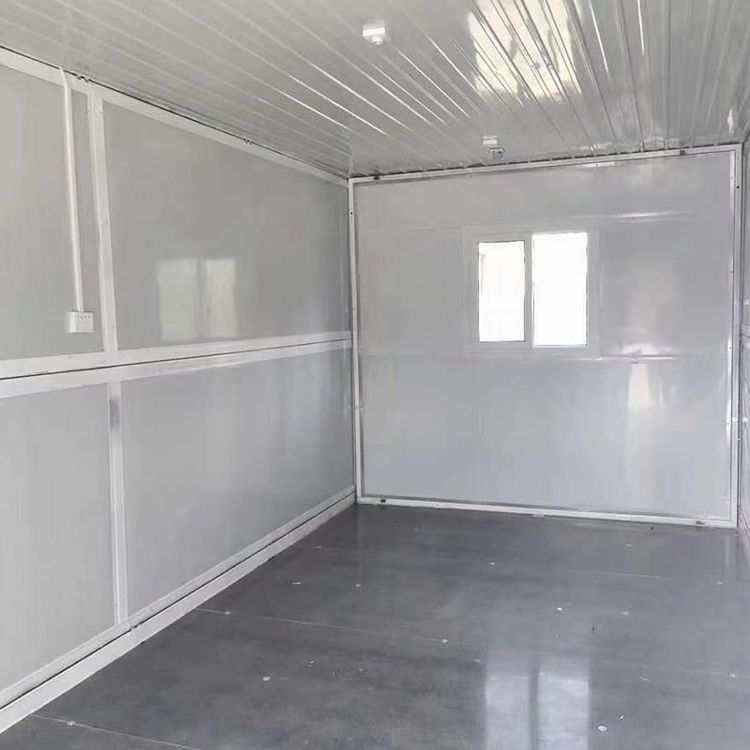
III. General Structural Standards Basic norms applicable to all scenarios include: frame design should be lightweight yet sturdy, using lightweight and durable materials (such as aluminum alloy, high-strength plastic) to reduce transportation costs while controlling height and width to fit the loading limits of mobile devices (such as trucks, cranes). In terms of material requirements, walls should preferably be made of color-coated steel plates, fiberglass-reinforced plastic, or stainless steel, which offer both corrosion resistance and ease of cleaning; frame steel must pass tensile strength tests to ensure no breakage or deformation occurs during lifting. Additionally, all connection points (such as bolts, rivets) should be regularly inspected to prevent looseness that could affect overall stability.