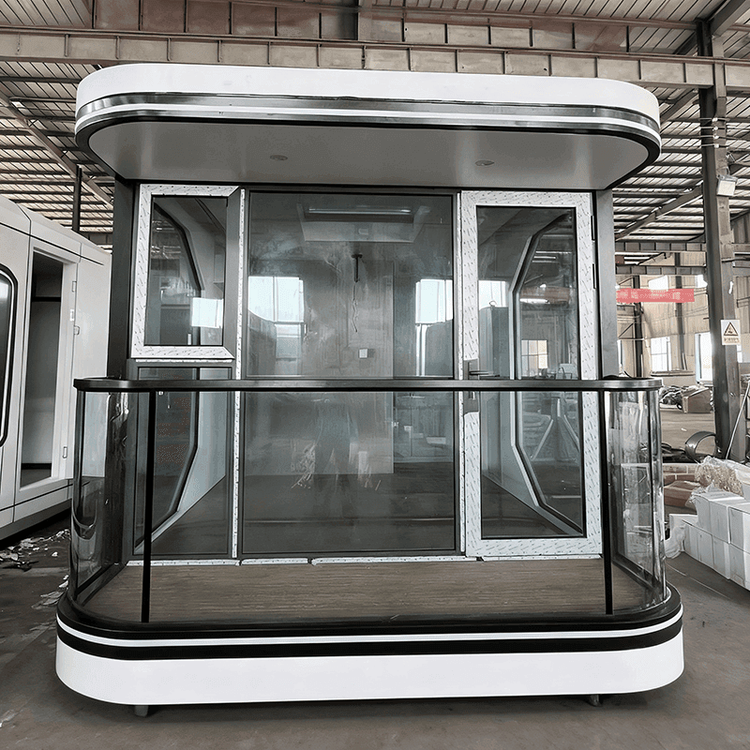
Mobile Toilet Exhaust
The design of exhaust systems for mobile toilets requires comprehensive consideration of exhaust vent location, ventilation duct routing, fan selection, and odor removal methods to ensure efficient removal of odors and maintain fresh air.

Exhaust Vent Location Selection
Exhaust vents should be positioned away from areas where people are active, typically installed at the top of the toilet or high on the side walls, at a height of more than 1.8 meters above the ground, to prevent odors from spreading into areas where people are present. At the same time, they should avoid areas exposed to direct sunlight and heavy rain to prevent equipment aging or water backflow. For example, the exhaust pipe design of the 2026 new lightweight plastic mobile toilet adopts a high-position installation at the top, effectively improving exhaust efficiency.
Ventilation Duct Routing Design
Duct layout should follow the principle of "short and straight, smooth" to reduce the number of bends and connections and lower air resistance. If the toilet has a modular structure, the exhaust fan can be installed in an independent ventilation module, and PVC ducts can be used to connect the exhaust ports of each compartment. It is recommended that the duct diameter be no less than 10 centimeters to ensure smooth airflow. For example, the 6-compartment outdoor restrooms in scenic areas, campsites, and parks use side-wall ducts connected to exhaust fans to achieve simultaneous exhaust in multiple compartments.
Fan Selection and Installation Specifications
Fans should be selected based on the number of toilet compartments, with a single compartment typically using an axial or centrifugal fan with an air volume of 15-20 cubic meters per minute. During installation, maintenance space should be reserved, the fan body should be leveled to avoid vibration noise, and rainproof louvers and insect screens should be installed to prevent water ingress and insect blockage. For example, the physical filtration stage of a three-stage treatment system requires cooperation with a fan to achieve efficient exhaust, ensuring continuous odor absorption by PP cotton and activated carbon layers.
Exhaust-Related Design in Odor Removal Methods
- Physical Odor Removal Method: Use exhaust fans or natural ventilation systems to exchange air at least 10 times per hour, quickly expelling stale air and introducing fresh air. For example, scenic area mobile toilets often use side-wall exhaust fans for basic ventilation.
- Comprehensive Odor Removal Solution: A three-stage treatment system combines physical filtration (PP cotton + activated carbon), chemical oxidation (UV photocatalysis), and biodegradation technologies, achieving an odor removal efficiency of ≥95%. The physical filtration stage relies on fans to drive airflow through filter materials for odor absorption.
By scientifically designing exhaust vents, optimizing duct layout, standardizing fan installation, and combining odor removal technologies, mobile toilets can achieve efficient and low-noise exhaust effects, meeting the sanitation needs of public places.