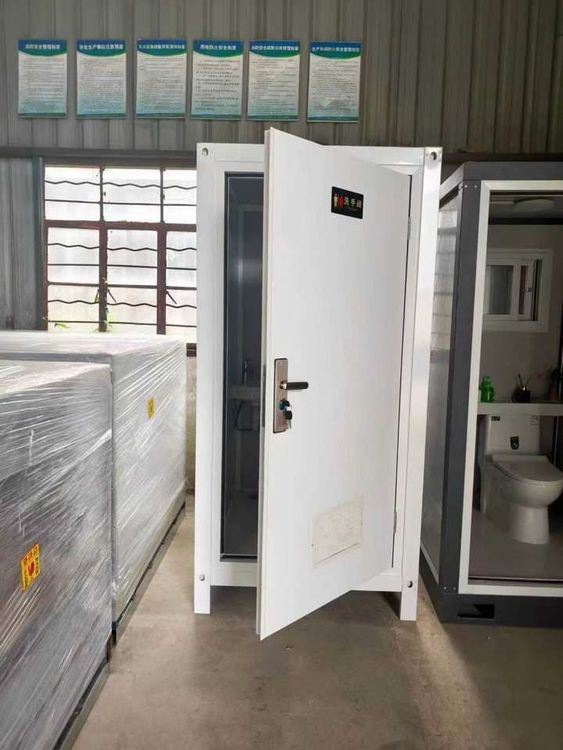
Mobile Toilet Disinfection Method Video
The disinfection method for mobile toilets should be selected based on the type of toilet. The following are common types and their disinfection methods:

Disinfection of Dry Latrines
Disinfection of dry latrines requires differentiated treatment for different structures. For the ground surface, if it is made of soil or wood, a chlorine-containing disinfectant solution with an effective chlorine concentration of 2000mg/L should be used for spraying disinfection. Such disinfectants can achieve sterilization by destroying the cell structure of microorganisms. When spraying, ensure that the ground is completely wet without any standing water, and it is recommended to maintain the disinfection effect for more than 30 minutes. For feces in the cesspool, a covering method should be used: sprinkle 50 grams of bleaching powder or 1 kilogram of quicklime per cubic meter of feces, and then seal the cesspool for more than 14 days. The calcium hypochlorite in bleaching powder reacts with organic matter in feces to generate hypochlorous acid, while quicklime inhibits microbial activity through a strongly alkaline environment, both effectively killing parasite eggs and pathogenic bacteria. This disinfection method is referenced from a Tibetan-language video released by Qingke Vision and is suitable for traditional dry latrines without flushing facilities.
Disinfection of Fully Automatic Self-Cleaning Smart Public Toilets
Modern smart public toilets employ an automated disinfection system that completes the cleaning process without manual intervention. Its core mechanisms include ultraviolet circulation disinfection, inductive spraying devices, and nanocoating technology: ultraviolet tubes are installed on the ceiling or side walls to destroy the DNA structure of microorganisms through a wavelength of 253.7nm; the spraying system automatically releases a mist of quaternary ammonium compound-containing disinfectant after each use, covering high-frequency contact areas such as toilet seats and door handles; a nano-titanium dioxide coating generates a photocatalytic reaction under light conditions to continuously decompose organic pollutants. The disinfection efficiency of such public toilets is more than 60% higher than traditional methods, and the use of chemical disinfectants can be reduced. A technical demonstration video was released by Xiaojie Science Popularization on August 8, 2026, and can be viewed on the iQIYI platform (address: http://www.iqiyi.com/v_o9th41k60w.html ). The video provides a detailed demonstration of the complete process from induction activation to disinfection completion.
Precautions
Chlorine-containing disinfectants should be prepared fresh for each use and should not be mixed with acidic cleaning agents such as toilet cleaners to prevent the generation of toxic chlorine gas; after covering with quicklime, keep it away from water sources to prevent violent heat release; the ultraviolet disinfection module of smart public toilets should be regularly tested for radiation intensity to ensure that the sterilization effect meets standards.