
Mobile Toilet Design Sketch: Glass
The application of glass materials in mobile toilet design requires a comprehensive consideration of functionality and limitations. Common application scenarios include transparent glass toilets and double-glazed partitions, but design optimizations are needed to address issues such as privacy and safety.
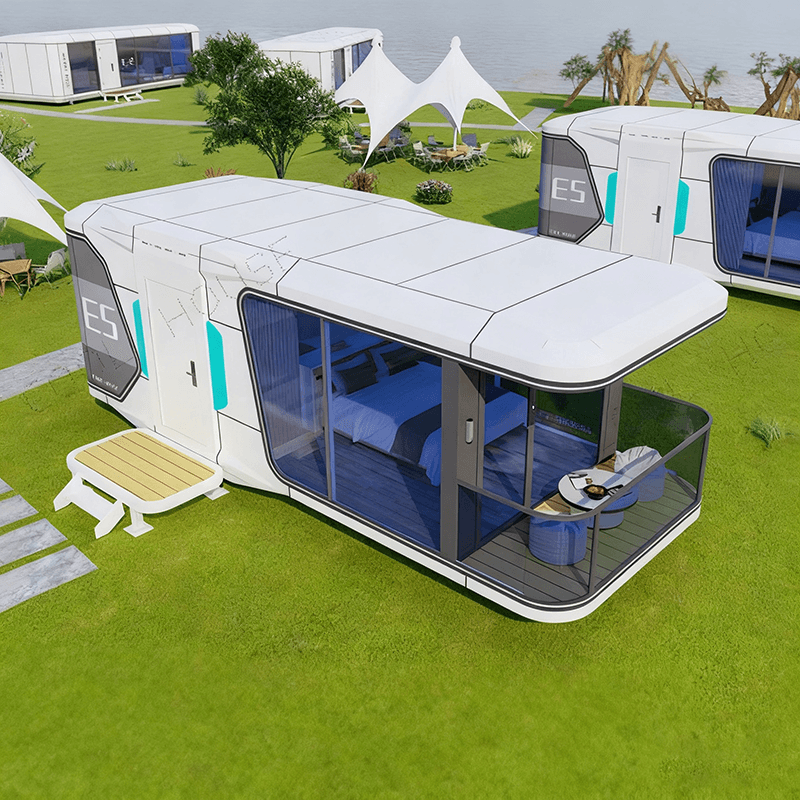
Typical Applications of Glass in Mobile Toilets
Transparent Glass Toilets Some mobile toilets use glass as the main material for the toilet body, with the core advantage of facilitating pipe unclogging. The smooth surface of glass makes it less prone to dirt adhesion, reducing the risk of blockages. Additionally, the transparent design allows for direct observation of the internal state of the pipes, facilitating maintenance. Furthermore, the novel appearance of glass toilets can enhance the overall technological and modern feel of the toilet. However, their limitations are also significant: glass is fragile and may break upon impact during movement or use; the transparent nature results in poor privacy protection, which needs to be addressed through frosting or the addition of shielding structures; cleaning requires the use of specialized cleaners to avoid scratching the surface, leading to higher maintenance costs.
Double-Glazed Partitions In mobile toilets in scenic areas, double-glazed glass is commonly used for partitions or doors and windows. Its structure involves injecting dry air or inert gas between two layers of glass to form a sealed air interlayer. This design achieves thermal insulation and cold protection by reducing heat transfer efficiency, making it particularly suitable for regions with large temperature differences. For example, it can reduce indoor heat loss in winter and block external high temperatures in summer, lowering air conditioning energy consumption. Additionally, the sound insulation performance of double-glazed glass is superior to that of single-layer glass, enhancing user comfort. However, it is important to note that the sealing of double-glazed glass needs to be regularly inspected to prevent gas leakage, which can lead to performance degradation.
Design Optimization Directions
To address the limitations of glass materials, mobile toilet design can be optimized in the following ways:
- Privacy Protection: Apply frosting to transparent glass or attach privacy films, or add movable curtains inside.
- Safety Reinforcement: Use tempered or laminated glass to improve impact resistance; round the edges to prevent scratches.
- Ease of Cleaning: Choose glass with surface coatings to reduce dirt adhesion; design inclined drainage structures to prevent water accumulation.
Glass materials offer unique value in mobile toilet design, but their advantages and disadvantages must be weighed according to the usage scenario, and technical means should be employed to compensate for deficiencies, achieving a balance between functionality and aesthetics.



