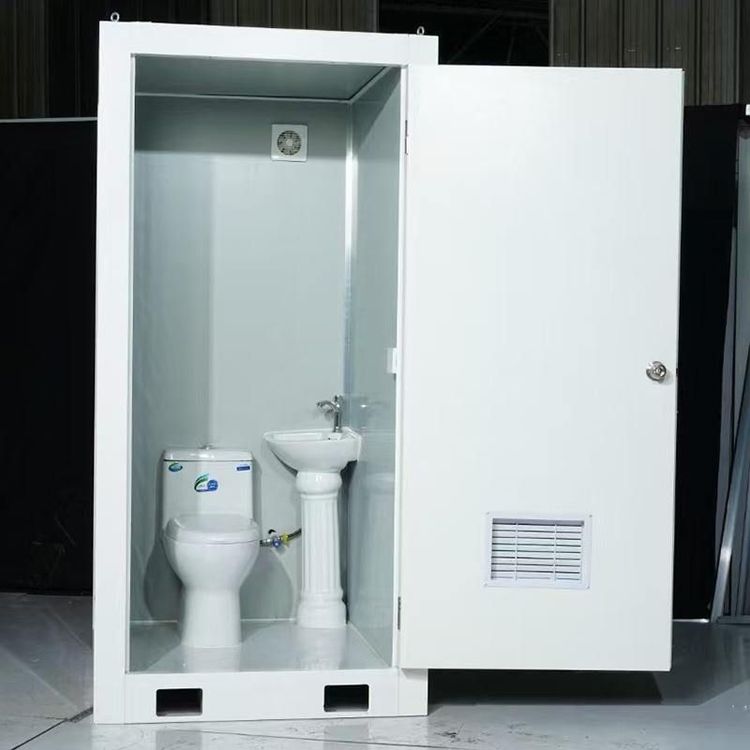
Deodorant Spraying for Mobile Toilets
The selection of deodorants for spraying in mobile toilets should be based on spatial characteristics, pedestrian density, and the type of pollution sources. The specific strategies are as follows:
1. Physical Adsorption Deodorants
These deodorants rely on the porous structures of activated carbon or diatomaceous earth to capture odor molecules. They are suitable for small, enclosed spaces with limited ventilation, such as individual mobile restrooms. Their advantage lies in the ability to quickly adsorb odors without chemical reactions, but the adsorption materials need to be replaced regularly to maintain effectiveness. When using them, note that if the space is large or well-ventilated, the adsorption efficiency will significantly decrease, so it is essential to evaluate the airtightness of the mobile toilet first.
2. Chemical Neutralization Deodorants
These deodorants transform odor sources such as ammonia and hydrogen sulfide through acid-base or redox reactions. They are suitable for areas with high pollution concentrations and short-term high impacts. For example, 30 minutes before peak hours in the morning and evening, focus on spraying the mobile toilet, targeting the air layer above urinals and toilet bowls. Use a fan-shaped nozzle to spray towards the ceiling, allowing the agent to evenly cover the surface through gravitational settling, rather than directly spraying inside the toilet bowls. At the same time, increase the frequency of the ventilation system to accelerate the contact reaction between odor molecules and the agent. Note that these deodorants may be corrosive to metal or plastic components and should avoid direct contact with facility surfaces.
3. Microbial Degradation Deodorants
These deodorants decompose organic matter by spraying bacterial agents. They require continuous action and are suitable for scenarios with stable pedestrian flow and long-term maintenance capabilities. If the mobile toilet has a low usage frequency and long cleaning intervals, these deodorants can also be used. Before use, rinse the toilet bowl surface with clean water to remove residual alkaline cleaning agents that may inhibit bacterial agent activity. Dilute the bacterial agent to 1.5 times the concentration recommended in the instructions and use a low-pressure spray bottle to evenly spray it along the edges of the squatting pit and the mouth of the sewer pipe, controlling the amount per square meter at 200-300 milliliters. After spraying, keep the floor moist for more than 4 hours and avoid immediate flushing to ensure the bacterial agent fully decomposes the organic matter.
4. Recommended Specialized Deodorants
- Anruijing Public Toilet Deodorant: It can be sprayed using an electric sprayer, effectively decomposing odors and purifying the air. It is safe and environmentally friendly, suitable for rapid deodorization in large-area mobile toilets.
- Baojiajie Deodorant: It has a neutral pH value, is soluble in water and alcohol, non-toxic, and has thermal stability and persistent deodorization effects. It can be widely used in public toilets and other scenarios and can also be considered for mobile toilets.