
Mobile Toilet Debugging
The debugging of mobile toilets is mainly divided into two parts: system inspection and operational debugging, which must be carried out strictly in accordance with standardized procedures to ensure normal functionality.
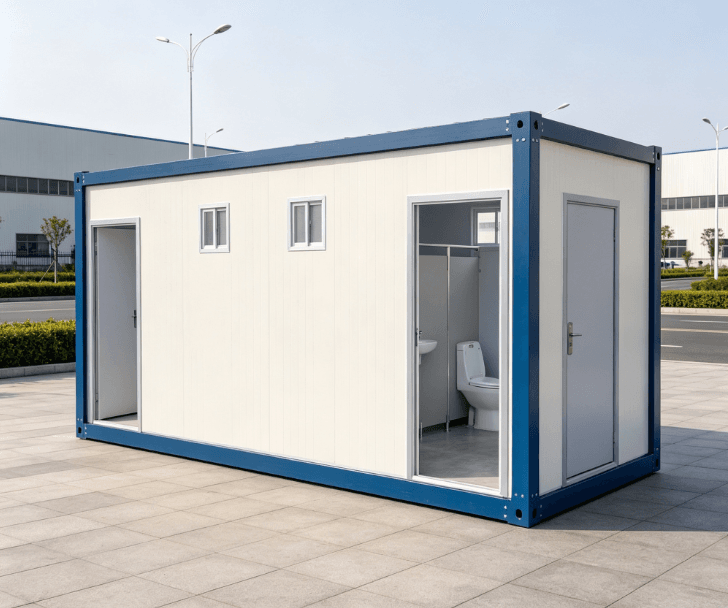
System Inspection
Drainage system inspection is a fundamental step in the debugging process. First, open the sewage tank valve to observe whether the drainage is smooth, paying special attention to checking for leaks at pipe connections. For packaged mobile toilets, a sealing function test is required: after placing test waste paper into the collection device, initiate the sealing program to check whether the seal is tight and the cut is even, preventing odor leakage or sewage overflow due to sealing failure.
Flush system testing should be conducted step by step. First, check whether the water level in the tank reaches the standard mark. If a pressure water supply system is used, confirm that the pressure value is within the range of 0.2-0.4 MPa. Then, start the flushing device to observe whether the water flow intensity is uniform and the coverage is complete, while recording the water consumption per flush (usually 3-6 liters). If weak or intermittent flushing is detected, check for blockages in the water pump, solenoid valve, or pipes.
Operational Debugging
Flush function debugging should simulate real-world usage scenarios. For foot-pedal flushing devices, step on the pedal 3-5 times with normal force to confirm that a complete flushing cycle is triggered each time; for button-type devices, check whether the button rebounds sensitively to avoid sticking. It is particularly important to note that during debugging, no foreign objects such as tissue paper or plastic bags should be thrown into the toilet to prevent pipe blockages from affecting test results.
Handwashing device debugging requires verifying sensor sensitivity. Place the palm 10-15 cm in front of the sensor to observe whether the water flow starts within 0.5 seconds and stops within 2 seconds after removal. For manual faucets, check whether the switch knob operates smoothly and whether there is any dripping after closing. After debugging, ensure the faucet is turned off to prevent water waste.
Waste disposal system debugging must ensure a closed-loop process. Check whether the garbage bag fixing device is secure. After filling the test garbage to the capacity mark, test whether the replacement process is convenient. Seal overflowing garbage bags and transfer them to designated recycling points; random disposal is strictly prohibited. If equipped with an automatic packaging device, verify whether the packaging tape adheres firmly and the cut is neat.
After debugging, conduct an overall functional review by continuously using each system 3-5 times to confirm no abnormalities. All debugging data, including water consumption per flush and drainage time, should be recorded to provide a baseline for subsequent maintenance.



