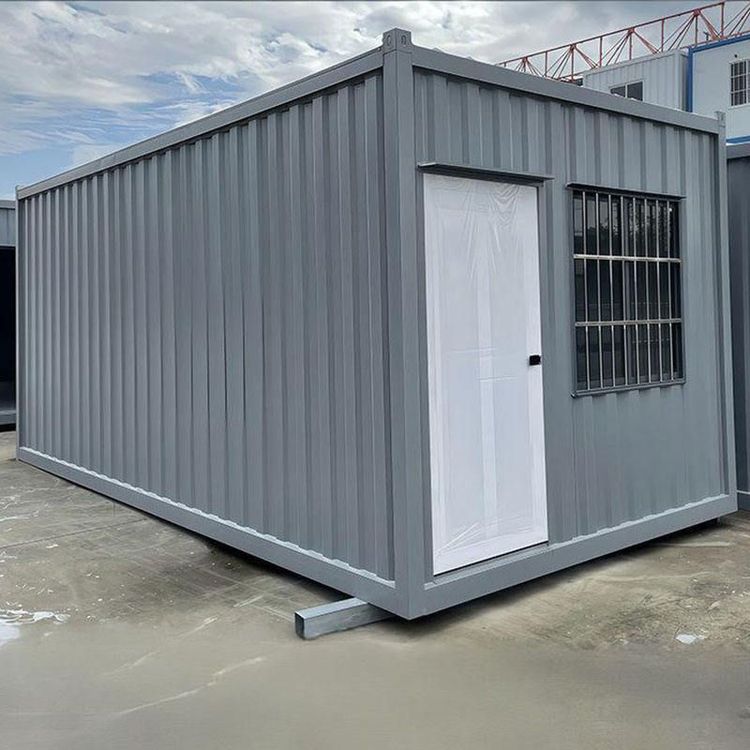
Mobile Toilet Creative Design
The creative design of mobile toilets primarily revolves around material utilization, structural innovation, and functional expansion. The following provides a popular science explanation by combining specific cases and classifications:

I. Material-Innovative Designs
Water Storage Tank Modification Plan
Utilizing discarded water storage tanks as the core material, functional transformation is achieved through physical cutting and structural reorganization. Specific steps include: splitting the water storage tank in half along the central axis, constructing a movable base using wooden planks and universal wheels; increasing the height of the tank body with wooden strips to form internal space; cutting a door opening on the side of the tank body and embedding sponge strips and plastic soft panels to create a sealed door frame; inverting the upper half of the tank body as a roof to form an enclosed space. Inside, drainage pipes, a bathroom heater, a toilet, and a sink are integrated to achieve basic sanitation functions. This design maximizes the utilization of discarded materials and reduces manufacturing costs through modular assembly, making it suitable for temporary events or emergency scenarios.Chemical Tank Composite Structure Plan
Adopting a dual-chemical tank stacking design, structural stability is enhanced through metal frame fixation. The operation process involves: removing the original steel reinforcement structure from the tank body and cutting the top to form an opening; inverting and docking the two tanks and fixing the upper and lower layers with an iron frame; cutting a door opening and sealing the gaps with iron sheets to prevent odor leakage; drilling holes in the corners of the tank body to install PVC pipes, connecting the toilet, water tank, and sink to form a water circulation system; extending the PVC pipes to create a simple showerhead for showering functions. This design expands the internal space through dual-tank stacking and improves load-bearing capacity with a metal frame, making it suitable for long-term use scenarios. However, attention should be paid to the corrosion resistance of the chemical tank material.
II. Structural and Functional Classifications
Classification by Structural Form
- Monolithic Structure: Focusing on a single container as the core, such as the aforementioned water storage tank plan, functional integration is achieved through internal modifications, featuring simple manufacturing and flexible mobility.
- Composite Structure: Employing a combination of multiple materials, such as the chemical tank plan, enhancing space utilization and structural stability through the combination of a metal frame and plastic tank body, suitable for complex functional requirements.
Classification by Mobility Method
- Hoisting/Handling Type: Relying on external equipment (such as cranes) for movement, suitable for short-term use at fixed locations.
- Powered/Trailer Type: Equipped with wheels or towing devices, capable of autonomous movement or being towed by vehicles, suitable for deployment in touring events or remote areas.
Classification by Sewage Treatment Method
- Water-Flush Type: Achieving flushing through a water tank and drainage pipes, requiring regular cleaning of the septic tank, suitable for scenarios with a water source.
- Waterless Suction Type: Utilizing a vacuum pump to suction feces, reducing water consumption, suitable for water-scarce areas.
- Dry Packing Type: Using degradable bags to collect feces, eliminating the need for water flushing and sewage systems, suitable for ecologically sensitive areas or temporary events.
III. Core Design Principles
- Material Availability: Prioritizing the selection of discarded containers (such as water storage tanks, chemical tanks) or standard building materials (such as PVC pipes, iron frames) to reduce manufacturing costs.
- Functional Integration: Integrating toilets, sinks, showers, and other facilities within limited space requires reasonable planning of pipeline layout and sealing design.
- Mobility Convenience: Ensuring rapid deployment and withdrawal of toilets through universal wheels, towing devices, or lightweight design.
- Environmental Compliance: Sewage treatment must comply with local discharge standards, and dry packing types must use degradable materials to avoid secondary pollution.
Summary: The creative design of mobile toilets must balance material innovation, structural optimization, and functional adaptation, enhancing replicability through modular assembly and standardized accessories. Simultaneously, appropriate mobility methods and sewage treatment technologies should be selected based on usage scenarios to achieve a balance between economy and practicality.