
What Category Does the Cost of Mobile Toilets Fall Into?
The classification of mobile toilet costs requires consideration of specific circumstances, primarily falling into three scenarios: engineering budgeting, accounting treatment, and cost classification disputes.
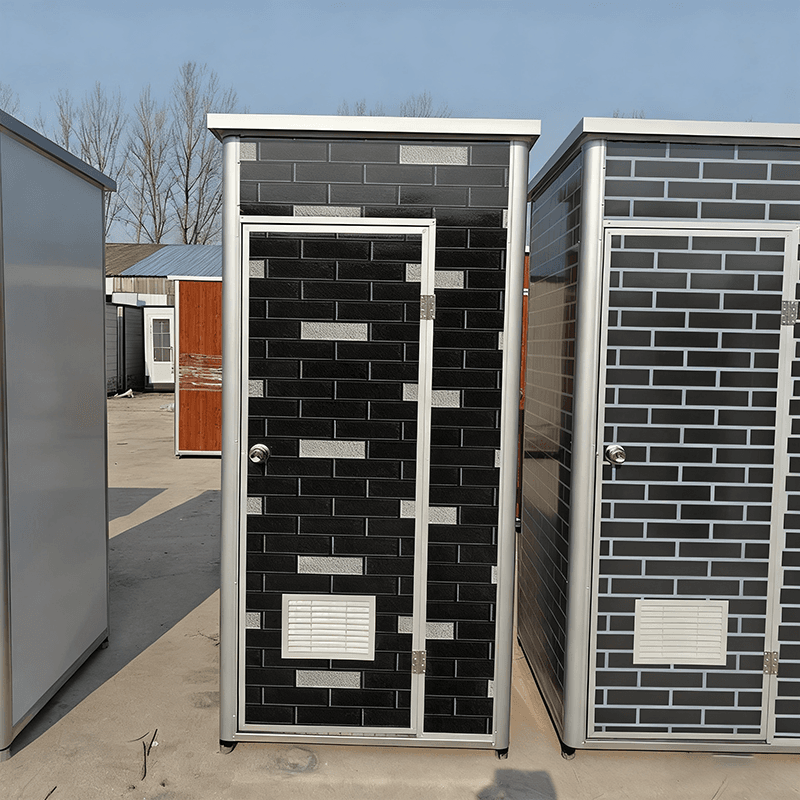
In the field of engineering budgeting, mobile toilet costs are typically included in the 'temporary facilities fee' under the civilized construction expenses. According to the 'Composition of Construction and Installation Engineering Costs' and the 2024 'Standard for Pricing of Bill of Quantities for Construction Projects' (GB/T50500-2024), after the decomposition of safety and civilized construction expenses, it is clearly specified that expenditures related to the purchase, rental, erection, maintenance, and removal of mobile toilets are classified under the 'temporary facilities fee'. This classification is based on the nature of mobile toilets as temporary facilities at construction sites, whose function is to provide basic living conditions for construction workers and serve as supporting measures for civilized construction, rather than direct safety protection or environmental protection measures.
In the field of accounting treatment, if a company purchases a mobile toilet, it needs to determine its asset attributes in accordance with accounting standards. If the mobile toilet has a relatively high value (usually exceeding the company's set threshold for fixed asset recognition) and has a service life of more than one year, meeting the definition of a fixed asset, it should be recorded under the 'fixed assets' account and depreciated as required. If obtained through leasing, the leasing expenses are amortized over the lease term and recorded under relevant cost or expense accounts.
In scenarios involving cost classification disputes, it is important to distinguish between temporary mobile toilets and safety and civilized construction expenses (safety measures expenses). Safety measures expenses mainly cover direct measures for environmental protection, civilized construction, and safe construction, such as dust control and safety nets. Although mobile toilets can enhance the level of civilization at construction sites, they are indirect supporting facilities and do not directly fall within the scope of specific measures under safety measures expenses. Therefore, they are more inclined to be classified as temporary facilities fees. However, in actual operations, the contract terms shall prevail. If the contract explicitly includes mobile toilets within the scope of safety measures expenses, the contract shall be followed.
In conclusion, the classification of mobile toilet costs requires a comprehensive assessment based on their purpose, acquisition method, and contract terms. In engineering budgeting, priority is given to classifying them as temporary facilities fees; in accounting treatment, they are classified according to their asset attributes; and in dispute scenarios, the contract terms serve as the final basis.



