
Mobile Toilet Composite Wallboard
The mobile toilet composite wallboard is a core component of mobile toilets, possessing basic functions such as waterproofing, moisture resistance, and corrosion resistance, while also taking into account lightweight design, ease of installation, and recyclability. Its materials, processes, and environmental standards continuously upgrade with technological advancements.
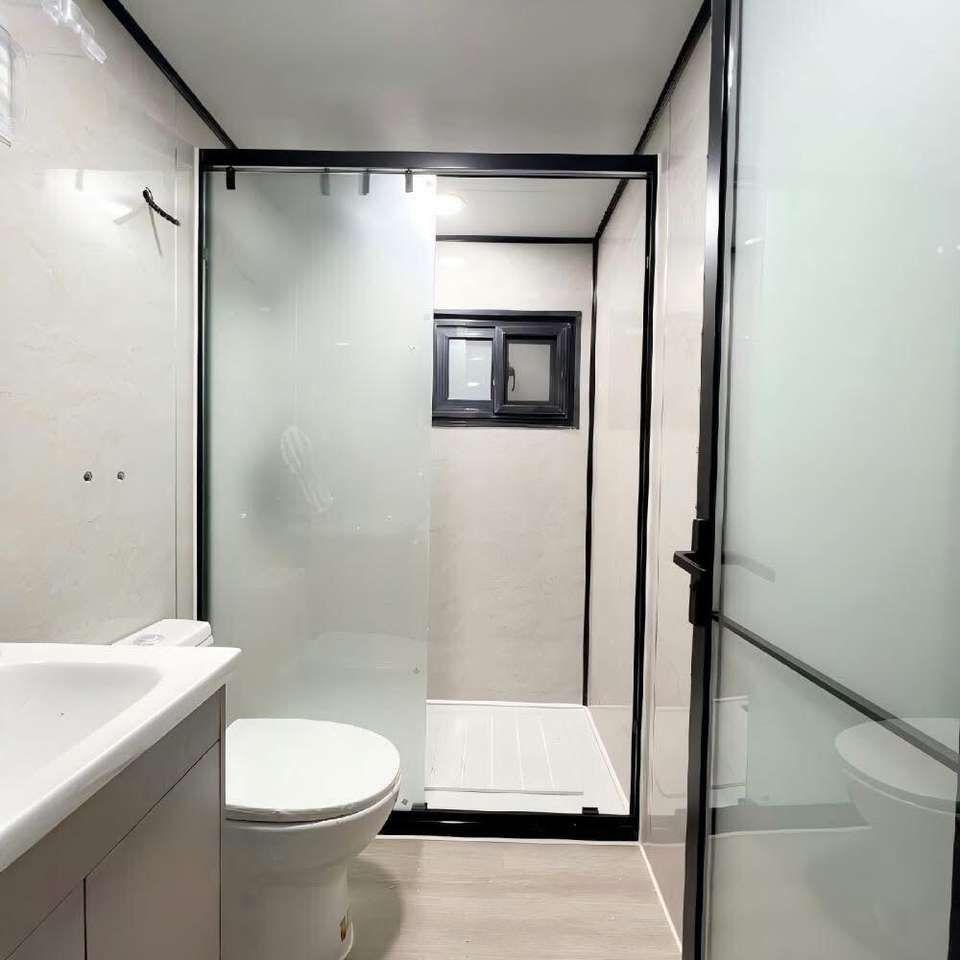
Material Selection: Iteration from Traditional to Composite Materials
Early mobile toilet wallboards were mostly made of metal or plastic materials, but these suffered from issues such as easy rusting and aging. With the increasing demand for environmental protection, composite materials have gradually become mainstream:
- Glass Fiber Reinforced Plastic (GFRP): Characterized by high strength and strong weather resistance, it is formed by mixing glass fibers with resin and molding under pressure. It is currently the most widely used material, with a stable structure that can adapt to complex outdoor environments.
- Bamboo Fiber Composite Board: Combining natural bamboo fibers with resin, it achieves a balance between degradability and low energy consumption, aligning with green building trends, although its cost is relatively high.
- Honeycomb Structure Wallboard: By incorporating internal cavity designs, it reduces weight while enhancing sound insulation and thermal insulation performance, making it suitable for scenarios with high comfort requirements.
Production Process: Combining Automation and Precision
Taking GFRP wallboards as an example, the production process includes the following steps:
- Material Mixing: Glass fibers and resin are mixed in proportion to ensure uniform material distribution.
- Molding: The materials are cured under high temperature and pressure to form a stable structure.
- Surface Treatment: Anti-fouling coatings are sprayed or antibacterial agents are added to enhance durability and hygiene. Some manufacturers have introduced automated production lines, utilizing robotic arms to precisely control cutting and assembly, reducing manual errors, improving production efficiency, and lowering defect rates.
Environmental Standards: Full Lifecycle Management
- Production Phase: Strict adherence to VOC emission standards is maintained, with water-based coatings replacing solvent-based ones to reduce air pollution.
- Recycling Phase: Modular disassembly designs are implemented, allowing wallboards to be quickly separated into metal, plastic, and fiber components for easy classification and recycling. Some companies collaborate with recycling agencies to establish a closed-loop system of 'production-use-recycling', promoting resource recycling.
Market Status: Diverse Products Meet Different Needs
There are various composite board mobile toilet products on the market, such as color-steel composite board toilets, with prices varying based on brand, specifications, and functionality. Consumers can choose appropriate products based on usage scenarios, budget, and environmental requirements.



