
How to Repair a Collapsed Mobile Toilet
The repair of a collapsed mobile toilet requires a targeted plan based on the cause and extent of the collapse. The specific steps are as follows:
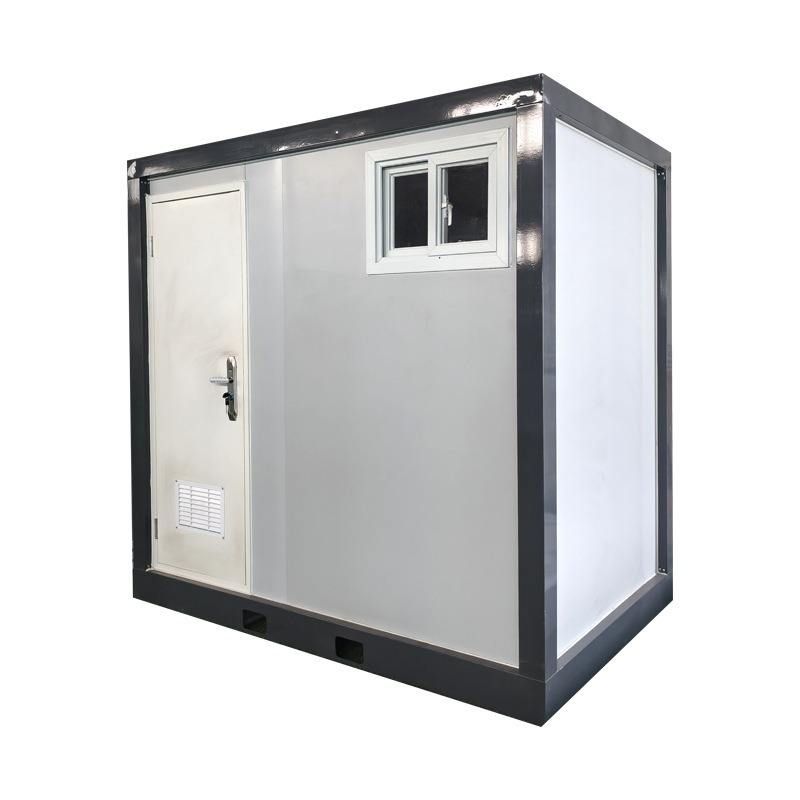
If the collapse only involves local damage to the floor tiles or waterproof layer, the repair should prioritize treating the surface structure. First, clean the damaged area, removing broken tiles, residual waterproof materials, and debris to ensure the base surface is clean and dust-free. Then, check if the base is loose. If there are hollow or loose parts, use tools to thoroughly remove them down to a solid layer to prevent separation between the repair layer and the base in the future. After base treatment, reapply waterproof coating, covering the damaged area and at least 10 centimeters around it to ensure the continuity of the waterproof layer. Allow the waterproof layer to dry completely (usually 24-48 hours, depending on the material instructions). Then, use new tiles that match the specifications of the original tiles for paving. Pay attention to uniform joint spacing during paving, and finally, fill the joints with joint filler and smooth them out to prevent moisture from penetrating the base.
If the collapse is caused by a broken pipe leading to ground subsidence, it is necessary to address the water source hazard first. Locate the position of the broken pipe through pressure testing or visual inspection, and turn off the water valve in the corresponding area to prevent continuous leakage during the repair process. Use professional tools to cut the damaged pipe section and replace it with a new pipe of the same specification. Ensure there are no leaks at the connections using sealant or hot-melt technology. After pipe repair, backfill the subsided area, selecting fine sand or gravel for layered compaction, with each layer not exceeding 20 centimeters in thickness to avoid uneven soil settlement. When backfilling reaches close to the original ground level, treat the surface layer according to the floor repair process, including redoing the waterproof layer and paving tiles.
If the collapse involves a large area affecting the walls or structural safety, immediately stop using the toilet to prevent the risk of collapse due to structural instability. Contact a qualified professional structural engineer for an on-site assessment, using instruments to detect key indicators such as wall tilt and deformation of load-bearing beams to determine the level of structural damage. Based on the assessment results, if the damage is minor, reinforcement measures can be taken, such as adding steel structure supports or粘贴碳纤维布 (applying carbon fiber sheets) to enhance the load-bearing capacity of the walls. If the damage is severe, demolition and reconstruction may be necessary to ensure the new structure complies with building safety regulations. Such repairs should be carried out by a professional team. Do not attempt to handle them yourself to avoid secondary hazards caused by insufficient technical skills.



