
How to Wire the Circuit for a Mobile Toilet
The wiring of a mobile toilet's circuit should adhere to electrical system standards, intelligent safety wiring requirements, socket installation specifications, and protective measures for special scenarios. The specific plan is as follows:
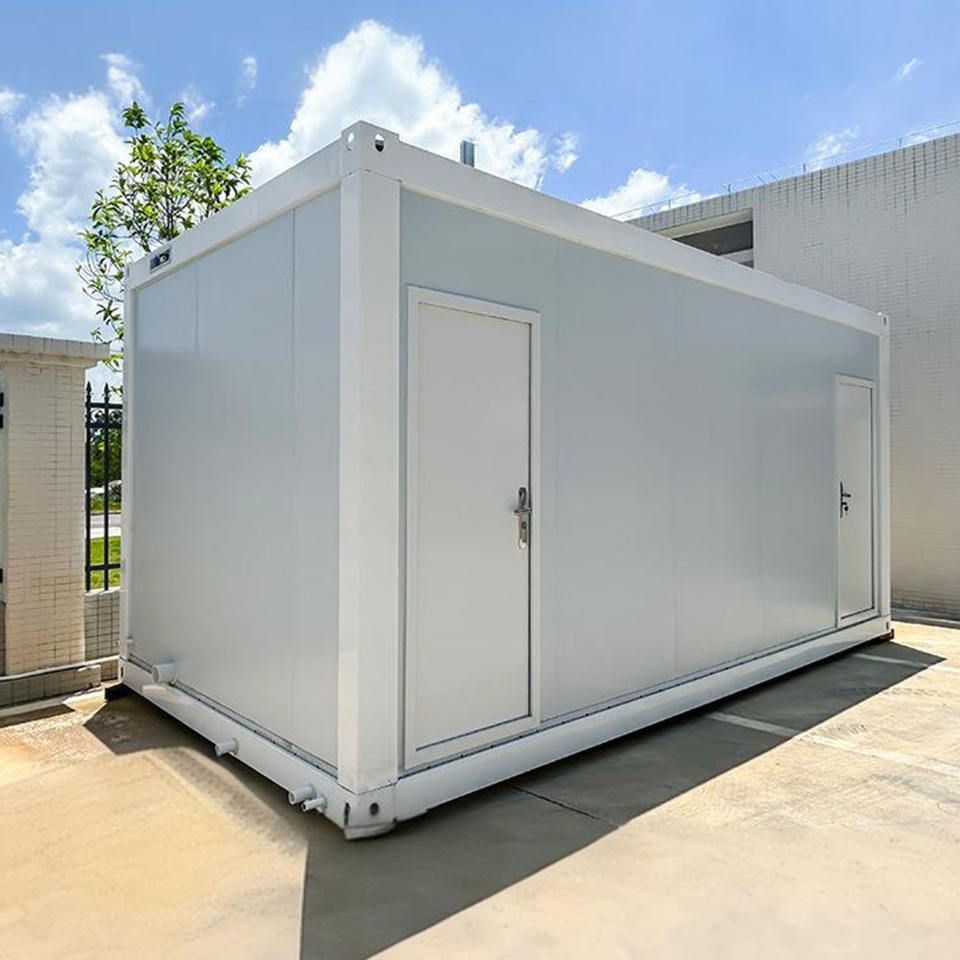
1. Electrical System Standards and Basic Wiring
The circuit of a mobile toilet should use an independent residual current circuit breaker with a rated current not exceeding 10A to ensure automatic power cutoff in case of equipment overload or leakage, enhancing safety. Wires should be laid through galvanized steel pipes buried underground, with a burial depth of no less than 0.5 meters, to prevent line aging due to external force damage or environmental corrosion. If the toilet is located in a humid environment, the connections of the steel pipes should be sealed to prevent water infiltration and short circuits.
2. Intelligent Safety Wiring Requirements
The circuit should be laid using waterproof cables, and all interfaces (such as sockets, switches, and equipment connections) should meet the IP65 protection rating, which means they are dustproof and can withstand low-pressure water jet spray, suitable for scenarios such as rainwater and cleaning water that mobile toilets may face. The cable routing should avoid sharp objects or high-temperature areas. If the cable needs to pass through walls, protective sleeves should be installed and filled with fireproof materials.
3. Socket Installation and Equipment Adaptation
High-power equipment such as smart toilets should have AC220V three-pin sockets reserved, equipped with residual current circuit breakers of 10A or above to ensure stable equipment operation. Sockets should be installed at least 30 centimeters above the ground to avoid the risk of electric shock due to water accumulation; their positions should be within 1.5 meters of the side of the equipment and not directly behind it for easy operation and reduced cable entanglement. If lighting and ventilation equipment are installed in the toilet, separate switches should be provided to control them to avoid overloading the circuit due to concentrated power usage.
4. Protective Measures for Special Scenarios
If the mobile toilet is located in a hazardous work area (such as a chemical industrial park or near a gas station), explosion-proof electrical equipment, including explosion-proof sockets, switches, and lighting fixtures, should be used to prevent explosion accidents caused by electrical sparks. Explosion-proof equipment should be certified by the state and regularly inspected for sealing performance and circuit integrity. In addition, all metal components in the toilet (such as steel pipes and equipment casings) should be reliably grounded to form an equipotential connection, further reducing the risk of electric shock.
Summary: The wiring of a mobile toilet's circuit should balance safety and practicality. By implementing independent residual current protection, waterproof and explosion-proof designs, standardized socket layouts, and protective measures for special scenarios, stable operation of electrical equipment and personnel safety can be ensured. Before construction, a detailed plan should be formulated based on the on-site environment and carried out by professional electricians. During acceptance, the residual current protection function and grounding resistance should be tested to ensure compliance with national standards.



