
Mobile Toilet Booth Assembly
The assembly methods for mobile toilet booths vary depending on design and manufacturer, with common approaches including general assembly steps and modular assembly. Details are as follows:
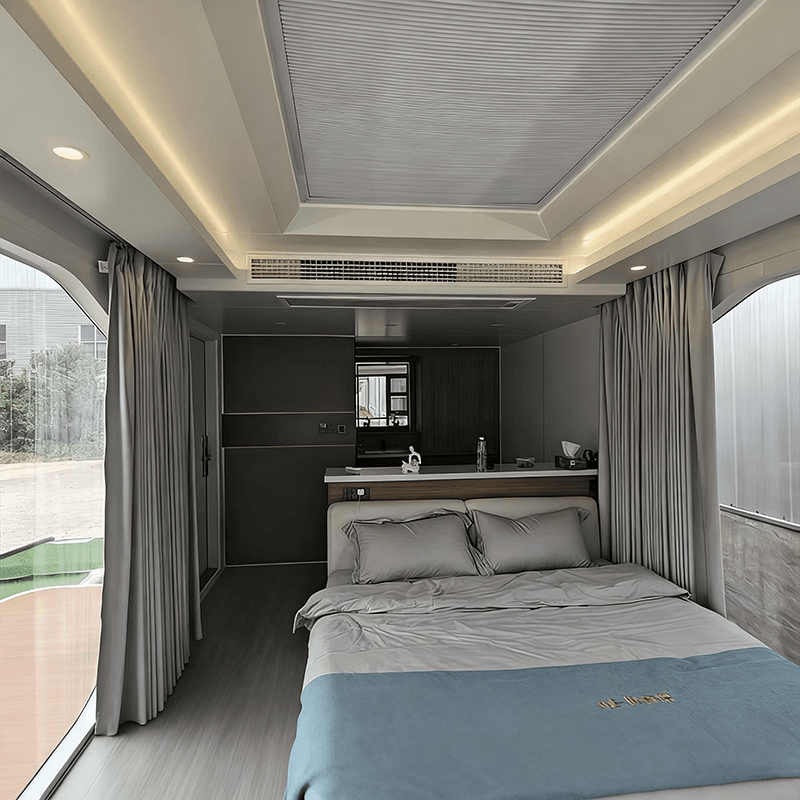
General assembly steps require tools such as an electric drill, a 4.2mm drill bit, and a rivet gun. First, install the inner corners sequentially, then insert the panels into the slots and align them. After ensuring the upper and lower panels are aligned, drill holes with the drill bit, and finally insert rivets and secure them with the rivet gun. This method is suitable for traditional mobile toilet booths with relatively simple structures, requiring lower tool and operational skill demands, but attention must be paid to alignment precision and the firmness of rivet fixation.
Modular assembly adopts a prefabricated production model and offers significant advantages:
Standardized structural design: The main frame is composed of aviation aluminum profiles and galvanized square tubes, while the walls use sandwich composite panels (filled with flame-retardant polyurethane foam material inside and covered with metal carved panels outside). Standardized interface design ensures module tolerances are controlled within ±0.5mm. Assembly requires only basic tools such as an electric wrench and a laser level, and technicians can master core skills after just 8 hours of training.
Strong environmental adaptability: The foundation system is equipped with adjustable-height screw piles, and the wind-resistant structure combines truss-type supports with ground anchoring devices. The electrical system uses quick-plug waterproof connectors, the water supply and drainage system is pre-installed with freeze-resistant companion heating tapes, the power module supports plug-and-play interfaces, and the LED lighting system uses magnetic mounting, enabling adaptation to complex climates and terrains.
Efficient scenario-based application: At the Xilingol Naadam Festival, 15 mobile sanitation units were assembled within 48 hours; in the Ordos coal mining area, deployment time was reduced from two weeks to three days; and the Bayannur Yellow River flood control headquarters achieved a 2-hour rapid relocation deployment, validating its emergency response capabilities.
Significant economic benefits: Taking a 40㎡ booth as an example, traditional construction requires 120,000 yuan in infrastructure costs and a 15-day construction period, while the modular solution costs only 80,000 yuan and takes 3 days to install. Over its full lifecycle, it can undergo more than 5 damage-free disassemblies and relocations, improving site adaptability by 300% and significantly reducing long-term usage costs.
Modular assembly has become the mainstream solution for modern mobile toilet booths through standardized design, environmental adaptability optimization, and efficient deployment capabilities, especially suitable for temporary, emergency, and high-frequency relocation scenarios.



