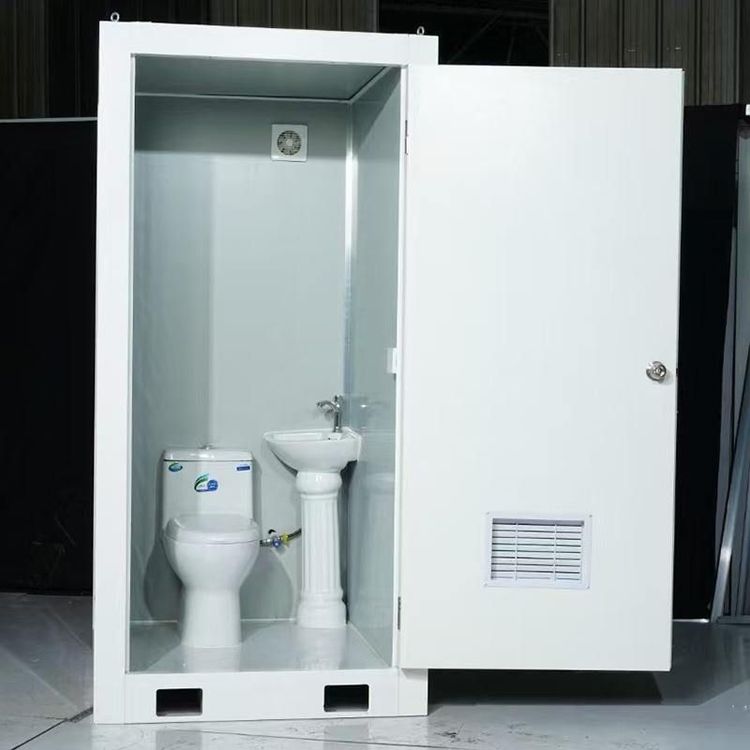
Mobile Toilet Base Floor Tiles
The selection of floor tiles for mobile toilet bases should be based on functional requirements and usage scenarios. Common materials and design considerations are as follows:
I. Common Materials and Design of Mobile Toilet Bases
The design of mobile toilet bases focuses on load-bearing capacity, rust resistance, and stability. Typically, they are integrally welded from steel structures and undergo rust-proof treatment (such as spraying anti-rust paint or galvanizing) to ensure durability during long-term outdoor use. The choice of floor materials for the base should consider slip resistance, ease of cleaning, and corrosion resistance. Common options include:
- Anti-slip checkered plates: Often used in industrial settings, the raised texture on the surface enhances friction, reducing the risk of slipping while facilitating sewage drainage.
- Anti-slip floor tiles: Some high-end mobile toilets use ceramic or stone tiles with anti-slip treatments (such as matte or textured finishes), suitable for venues with high aesthetic requirements.
- Special modified materials: For example, discarded tiles can be cut and fitted with casters to create simple movable toilet bases. However, such designs require attention to the sealing of sewage pipes to prevent leaks.
II. Analysis of Suitable Scenarios for Floor Tile Materials
- Outdoor mobile toilets:
- Priority should be given to anti-slip checkered plates or corrosion-resistant floor tiles (such as ceramic glazed tiles), as outdoor environments are prone to rain and dust erosion, requiring materials with anti-fouling and easy-rinsing properties.
- The edges of the base are usually rounded to reduce卫生死角 (hard-to-clean areas) and facilitate cleaning and maintenance.
- Indoor mobile toilets:
- Anti-slip floor tiles or PVC flooring can be selected, balancing slip resistance and aesthetics, while ensuring the materials are odorless and environmentally friendly.
III. Construction and Maintenance Recommendations
- Construction considerations:
- A waterproof cushion should be installed between the base and the ground to prevent structural rusting from long-term use.
- When laying floor tiles, a drainage slope (usually ≥1%) should be reserved to avoid water accumulation.
- Maintenance precautions:
- Regularly inspect the sealing of tile joints to prevent sewage leakage and corrosion of the base structure.
- Avoid using strong acid or alkali cleaners to prevent damage to the tile surface or the rust-proof layer of the steel structure.
For further information on specific material parameters or customized solutions, it is recommended to contact professional manufacturers who can provide tailored designs based on usage scenarios (such as outdoor events or temporary construction sites).