
Back Design of Mobile Toilet
The design of the back of mobile toilets primarily revolves around materials, environmental control, modularity, and functional integration, with the core goal of balancing durability, environmental adaptability, and ease of use.
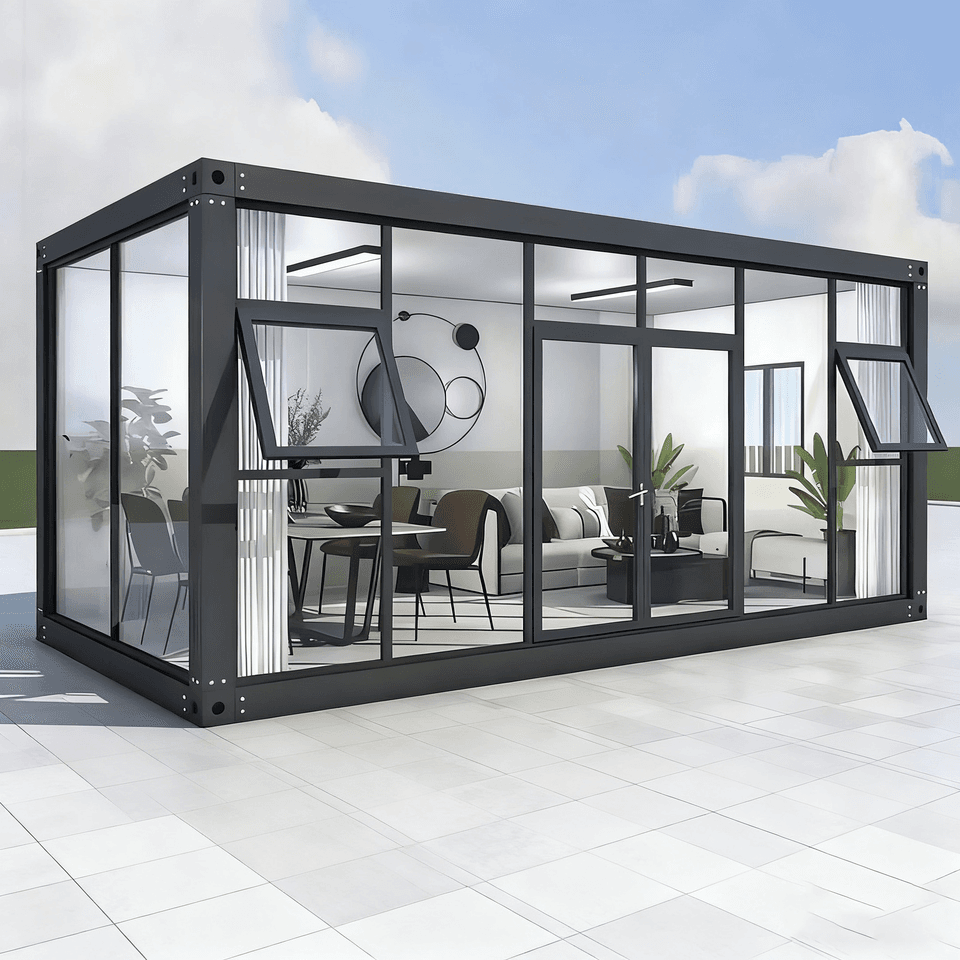
Materials and Structure: The Foundation of Weather Resistance and Stability
The back of mobile toilets typically employs high-performance materials consistent with the overall container, with common options including polymer composites (such as glass-fiber-reinforced materials used in a Jinzhou case study) or color-coated steel sheets. These materials must meet the following characteristics:
- Weather Resistance: The back is continuously exposed outdoors and must withstand ultraviolet radiation, temperature variations (such as low temperatures in winter and high temperatures in summer in northern regions), and humid environments to prevent material aging or deformation.
- Corrosion Resistance: For coastal or high-humidity areas, the back may utilize galvanized steel sheets or incorporate anti-corrosion coatings to prevent rust and maintain structural strength.
- Stability: As one of the supporting surfaces of the container, the back must be tightly connected to the frame to ensure no deformation occurs during transportation or use due to vibrations or external forces.
Environmental Control System: The Key to Ventilation and Air Circulation
The back often integrates a ventilation system to maintain internal air quality:
- Airflow Design: A combination of negative-pressure exhaust and natural convection is employed. Air inlets are located at the lower back of the container, introducing fresh external air; air outlets are positioned at the top, with fans accelerating the expulsion of stale air, creating a vertical airflow circulation that reduces odor retention.
- Rain and Insect Protection: Air inlets and outlets are equipped with louvers or filters to prevent rainwater ingress or insect entry while maintaining ventilation efficiency.
Modular Design: Flexibility in Transportation and Deployment
The back structure supports rapid disassembly and assembly to adapt to various scenarios:
- Standardized Modularization: The back can be disassembled into multiple standard-sized panels, stacked during transportation to save space, and quickly reassembled on-site using bolts or clips.
- Lightweight Optimization: While ensuring strength, the back materials may adopt honeycomb sandwich structures or hollow profiles to reduce overall weight, facilitating manual handling or lifting.
Concealed Functional Components: Intelligent Space Utilization
Some designs integrate functional equipment into the back or adjacent areas to enhance space utilization:
- Sewage Treatment Units: Small mobile toilets may position septic tanks or biological treatment modules beneath the back, connected to the interior via pipelines for concealed and easy maintenance.
- Solar-Assisted Power Supply: Solar panels can be installed on the back to power internal lighting, fans, or sensors, reducing reliance on external power sources and suitable for areas without grid coverage.
- Smart Monitoring Systems: Sensors (such as those for air quality or water consumption monitoring) may be embedded in the back, transmitting real-time data to a management platform for remote operation and maintenance.
For detailed information on the back construction of specific models, it is recommended to observe the actual product or consult the technical documentation provided by the manufacturer for more accurate information.



