
Mobile Toilet Automatic Processing System
The mobile toilet automatic processing system is an integrated solution that achieves efficient excretion treatment and resource recycling through physical, biochemical, or intelligent technologies. Common technical routes include independent ecosystems, waterless treatment technologies, and intelligent control systems.
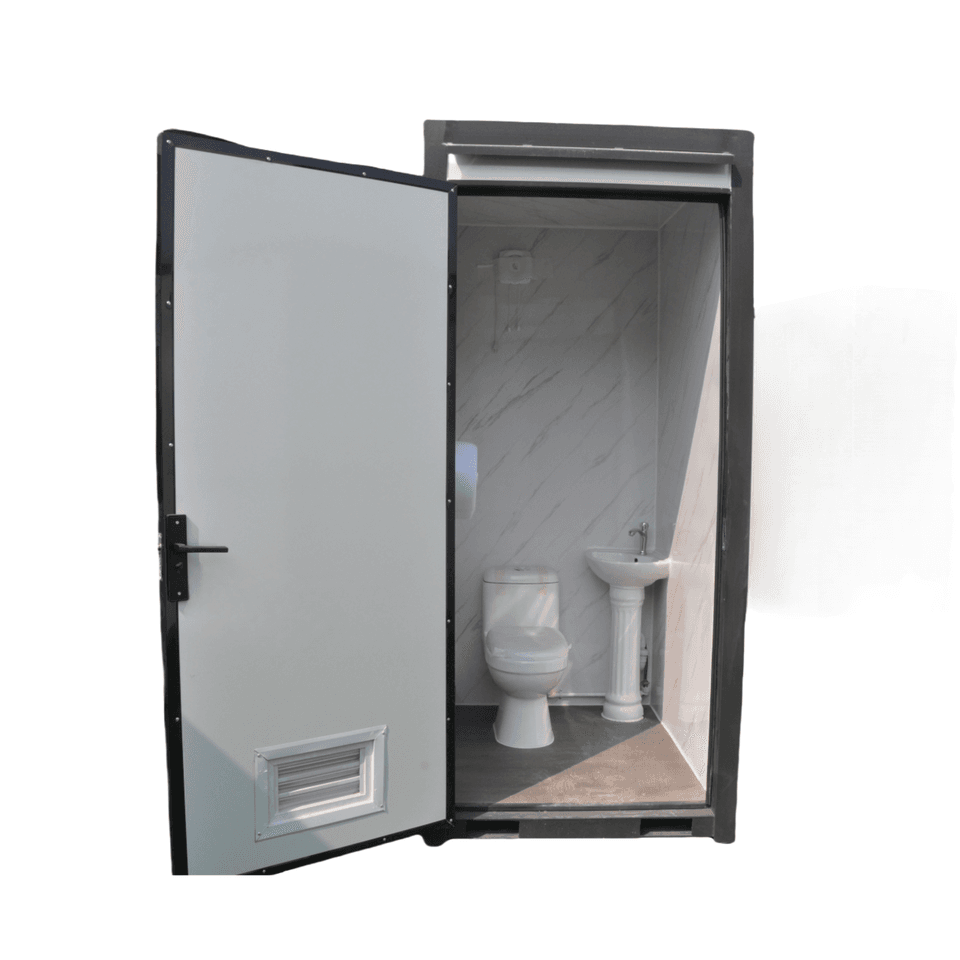
1. Independent Ecosystem Based on Space Compression and Resource Recycling
This system achieves instant conversion of excreta through a closed tank, relying on the collaborative work of two subsystems:
- Solid-Liquid Separation and Microbial Degradation Unit: Special filters are used to separate urine and feces. Urine is decomposed by microorganisms into water, carbon dioxide, and inorganic salts, with the treated water used for recirculating flushing; feces are converted into stable powder through drying and fermentation, reducing volume and eliminating odors.
- Fully Automatic Intelligent Control Network: Composed of sensors, controllers, and communication modules, it monitors parameters such as tank temperature, humidity, and gas concentration in real time, dynamically adjusting functions like door locks, ventilation fans, and heating power of the drying unit. All data is uploaded to a cloud platform, supporting remote operation and maintenance management to ensure stable system operation.
This type of system is suitable for scenarios without sewer access, such as field operations and temporary facilities for large-scale events, reducing dependence on external water sources through resource recycling.
2. Jiahe Innovative Processing System: A Typical Application of Waterless Treatment Technology
This system adopts biodegradation and solid-liquid separation processes to convert excreta into harmless substances, achieving zero pollution emissions:
- Technical Principle: Organic matter in excreta is decomposed by microorganisms without the need for water flushing, achieving a water-saving rate of up to 90%. The treated substances comply with national environmental protection standards, eliminating the risk of sewage seepage.
- Core Advantages:
- Environmental Friendliness: Built-in nanoscale air purification layers effectively adsorb odor molecules, providing an odorless toilet environment;
- Economy: Modular design reduces later maintenance costs, cutting operation and maintenance expenses by 90% compared to traditional toilets;
- Adaptability: It can be flexibly installed in various types of mobile toilets, suitable for water-scarce areas or temporary public facilities.
3. Intelligent Public Toilet System: Data-Driven Refined Control
Represented by Deyi Environment, this system achieves resource optimization and user experience enhancement through a hierarchical architecture:
- Perception Layer: High-precision sensors are deployed to collect real-time data such as toilet stall occupancy and ammonia/hydrogen sulfide concentrations;
- Decision Layer: Edge computing gateways process data locally, responding to control commands in milliseconds to avoid network delays;
- Execution Layer: It directly controls equipment such as solenoid valves and fans, automatically adjusting flushing intensity based on usage frequency (e.g., enhancing flushing during high-frequency usage periods) and fresh air strategies (e.g., increasing ventilation when odors exceed standards).
Such systems optimize resource allocation through data loops, significantly improving public toilet operation efficiency, suitable for urban public areas or high-traffic density scenarios.



