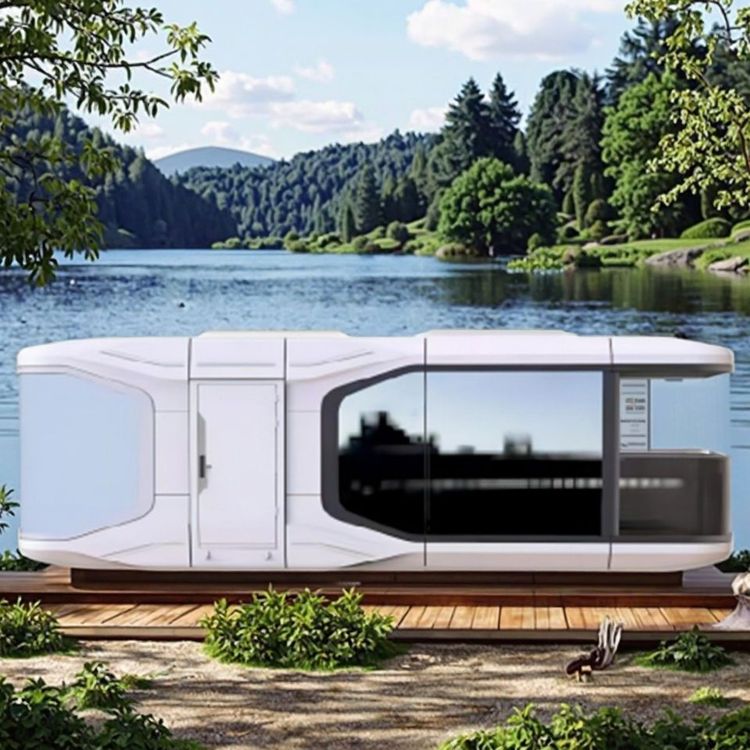
Mobile Toilet as a Flower Greenhouse
There are currently no publicly available cases of directly transforming mobile toilets into flower greenhouses, but the renovation experience of ordinary bathrooms can provide inspiration for design, requiring a combination of plant characteristics, space utilization, and environmental optimization to achieve functional adaptation.

Plant Selection Should Adapt to Enclosed Environments
Mobile toilets typically have weak light and high humidity inside, so priority should be given to selecting shade-tolerant, moisture-loving plants that adapt to low light conditions. For example, pothos, spider plants, ferns (such as maidenhair ferns), and monstera plants can maintain growth in low-light environments and have strong tolerance for high humidity. To increase ornamental value, a small number of shade-tolerant flowering plants, such as African violets or peace lilies, can be paired, but care should be taken to control the quantity to avoid competition for nutrients.
Space Utilization Can Rely on Existing Structures
The fixed facilities in mobile toilets (such as toilets, sinks, and storage cabinets) can serve as three-dimensional planting supports. For example, hanging flower pots can be placed above the toilet tank, small potted plants can be placed along the edge of the sink, or vertical planting racks can be installed on the walls. If space permits, some non-load-bearing partitions can be removed to increase the planting area. Care should be taken to avoid blocking ventilation openings or interfering with equipment operation, while ensuring that plants are securely fixed to prevent tipping.
Environmental Optimization Needs to Address Key Conflicts
Insufficient light is the main challenge, which can be addressed by installing low-energy LED grow lights (such as full-spectrum plant lights) to simulate natural light, with daily exposure of 8-12 hours to maintain photosynthesis. Humidity control requires balancing plant needs with mold prevention requirements: regularly open windows for ventilation (if the mobile toilet is openable), or use small exhaust fans to promote air circulation; lay waterproof membranes on the ground and set up drainage channels to prevent water accumulation and root rot. In terms of temperature regulation, if greenhouse functionality is required, portable heaters can be used in winter (kept away from plants and water sources), or materials such as double-glazed glass and thermal insulation cotton can be used to enhance thermal insulation performance.
Balancing Mobility and Functionality
The portability of mobile toilets may limit the depth of renovation. If frequent movement is required, it is recommended to use lightweight planting containers (such as plastic pots, coconut coir bags) and detachable planting racks to reduce the impact of fixed structures on movement. If used for long-term fixed purposes, the internal supports can be reinforced and waterproof layers added, and even automated irrigation systems (such as drip irrigation devices) can be introduced to reduce maintenance costs.
Currently, there are no cases that fully combine the warmth retention, mobility, and flower planting of mobile toilets, but through reasonable design, they can be transformed into temporary or semi-permanent mini plant greenhouses, especially suitable for northern winters or indoor scenes lacking sunlight. Before renovation, structural safety should be evaluated to avoid equipment damage caused by increased loads.