
Mobile Toilets Arrive
Mobile toilets are facilities that can be moved as a whole and provide toilet services to the public. They are suitable for a variety of locations, come in multiple types, and have various characteristics. In recent years, prefabricated public toilets, as one type of mobile toilets, have attracted significant attention.
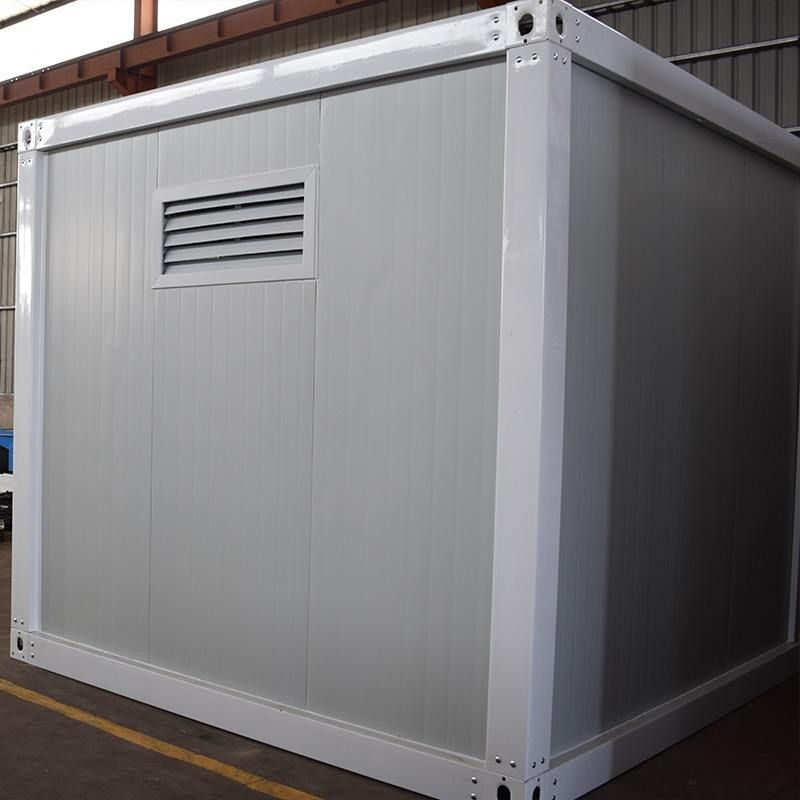
Suitable Locations
Mobile toilets are suitable for stations, docks, tourist attractions, villa areas, newly built residential communities, large construction sites, squares, densely populated public places, and bustling commercial streets. For example, in 2023, the Lanzhou Yellow River Scenic Area successively installed and put into use mobile toilets.
Composition Structure
Generally, they consist of a fecal sewage storage tank (or fecal sewage treatment device), floor slab, sanitary ware, walls, washing equipment, water tank, roof, and mobile device.
Type Classification
- By structural form: They can be divided into single-structure mobile toilets and composite-structure mobile toilets.
- By mobility method: They are classified into hoisting and handling mobile toilets, and powered and towed mobile toilets.
- By sewage treatment method: They are categorized into water-flush and waterless suction mobile toilets, circulating water-flush mobile toilets, and dry-packing mobile toilets.
Characteristics and Advantages
- Mobility: They can be conveniently transported to any location where toilets are needed and can be used repeatedly. They have the advantages of mobility, modularity, and ease of transportation.
- **Advantages of Prefabricated Public Toilets
- Site Selection and Infrastructure: They adopt waterless microbial degradation technology, eliminating the need for sewage pipe networks and significantly enhancing site selection flexibility. In core scenic areas, installation can be completed with just a hardened ground surface. The construction period is shortened from the traditional three months to one week, greatly reducing land and infrastructure costs.
- Operation and Maintenance, and Energy Consumption: Equipped with an intelligent system, they use 5G IoT technology to monitor toilet occupancy, energy consumption data, and the activity status of microbial degradation tanks in real-time. When ammonia levels exceed standards, the system automatically triggers bacterial inoculation and deodorization mechanisms. In case of equipment failure, the backend sends alerts within 30 minutes. Toilet attendants can complete remote inspections via a mobile app, reducing labor costs by about 70%, saving over 3,000 tons of water annually, and reducing energy consumption by over 30%, achieving "unmanned and low-carbon" operation and maintenance.
- Experience and Hygiene: They achieve the goal of "three nos": no water flushing, no odors, and no pollution. The squat toilets use gravity-sensing opening and closing mechanisms, with excreta directly entering the degradation tank and isolated from the air, completely eliminating odor overflow. Meanwhile, a three-stage microbial composite bacteria collaborative treatment technology achieves a pollutant degradation rate of over 96%, with toilet air quality approaching "bacteria-free, odor-free, and tasteless" standards.



