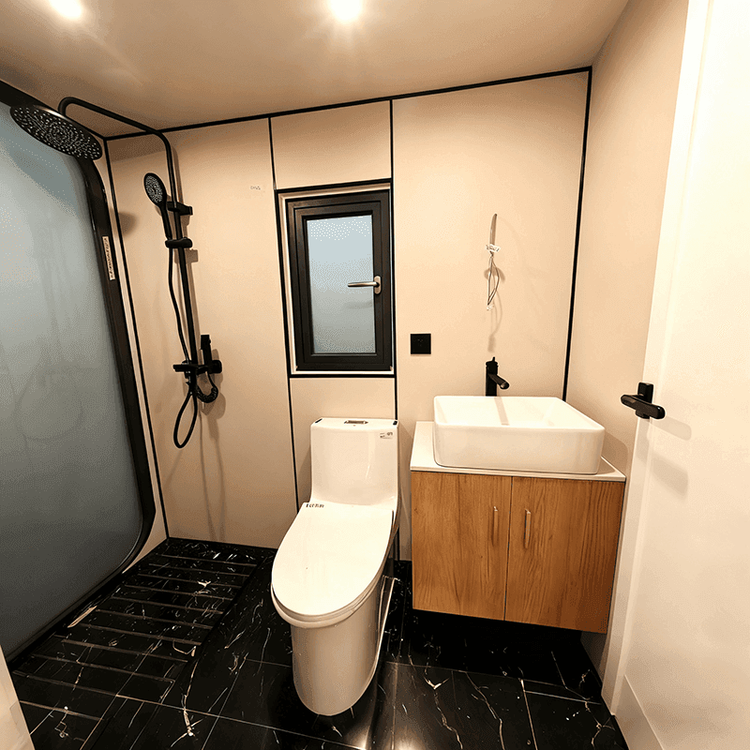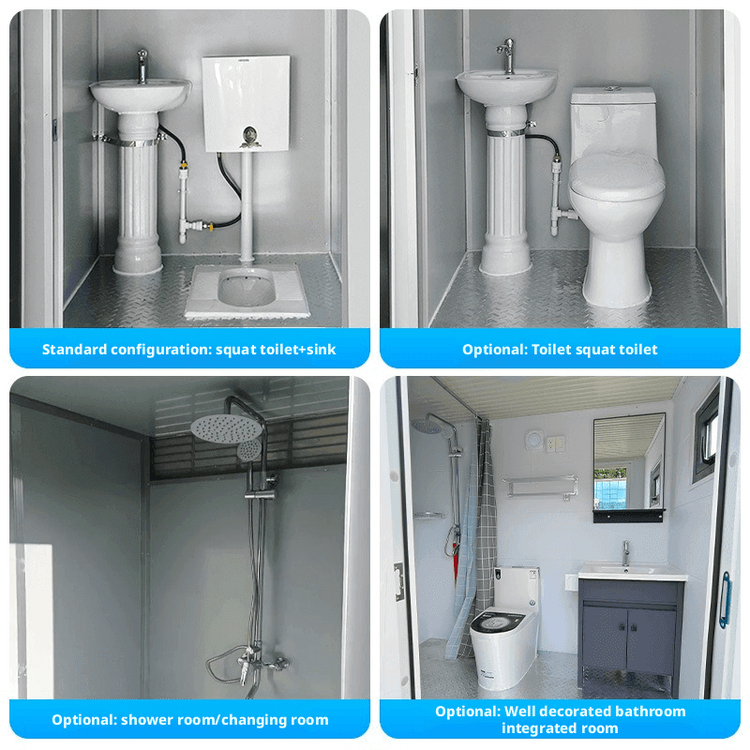
Mobile Toilet and Shower Integration
The mobile toilet and shower integration is a facility that combines toilet and shower functions into one unit, featuring mobility and integrated functionality, suitable for sanitation needs in temporary or mobile scenarios.

Structure and Functional Design
The mobile toilet and shower integration typically consists of multiple functional modules. The core structure includes a fecal sewage storage tank (or disposal unit), flooring, walls, roof, sanitary fixtures (such as toilets and sinks), shower equipment (such as showerheads and drainage systems), water tanks, and mobility devices. For example, some integrated units use silicon-rock composite panels for exterior walls, providing fire and flame resistance; internally, they are equipped with aluminum alloy glass single doors that ensure airtightness while enhancing natural light. Functionally, in addition to basic toilet and shower facilities, they may also integrate auxiliary features like light bulb sockets, air vents, and flush water tanks to meet lighting, ventilation, and cleaning needs.
Classification and Suitable Scenarios
Based on usage scenarios and design differences, mobile toilet and shower integrations can be classified into various types. By mobility method, they can be categorized as trailer-mounted or fully transportable units, suitable for temporary locations such as construction sites, disaster areas, and outdoor events. By functional complexity, they can be divided into basic models (containing only essential toilet and shower equipment) and luxury models (adding air conditioning, heating, storage cabinets, etc.). For instance, a mobile sanitation unit measuring 2 meters in length and width and 2.7 meters in height can be quickly assembled and disassembled through modular design, making it suitable for short-term, high-frequency use scenarios.
Advantages and Limitations
Advantages:
- Mobility: Through trailer-mounting or full transportation, they can be rapidly deployed to locations where they are needed, avoiding the construction cycle and costs associated with traditional fixed sanitation facilities.
- Functional Integration: By combining toilet and shower functions, they save space and enhance usage efficiency, particularly suitable for temporary locations with limited space.
- Environmental Friendliness: Some models are equipped with fecal sewage disposal units, enabling harmless treatment and reducing environmental pollution.
Limitations:
- Capacity Constraints: Due to volume and water/sewage storage capacity limitations, long-term, high-frequency use requires regular cleaning of the sewage tank or replenishment of water sources.
- Comfort: Basic models may lack optimized designs for temperature control and ventilation, resulting in poor user experience in extreme weather conditions.
- Cost: Luxury models, with higher configurations, may have higher initial purchase and maintenance costs compared to traditional fixed sanitation facilities.
Application Examples
In disaster relief efforts, mobile toilet and shower integrations can quickly provide sanitation guarantees for affected populations. On construction sites, their mobility allows them to be relocated according to project progress, meeting workers' daily needs. During outdoor music festivals and other events, their modular design enables flexible combination to accommodate different crowd sizes.