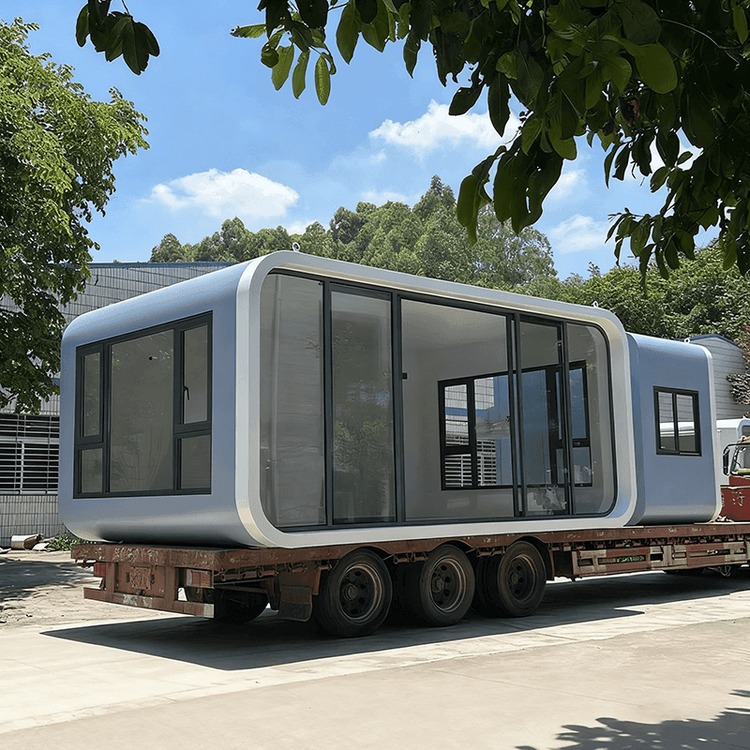
Mobile Toilet Accessories List
The accessories list for mobile toilets needs to be determined based on the specific type, usage scenario, and configuration requirements. The common core contents are as follows:

1. Basic Infrastructure Configuration
- Toilet Body and Structure: The main materials are usually high-density polyethylene (HDPE) or color-coated steel plates, which have wind-resistant and anti-corrosion properties. The structure should include a sturdy frame design to ensure safety during mobile or fixed use.
- Sanitary Ware System: Depending on the needs, ceramic or stainless steel squat toilets/sit toilets are equipped, along with flushing systems (such as foot-operated or sensor-operated flush valves). Some high-end models may be equipped with smart toilet seats or warm water flushing functions.
- Water Supply and Drainage System: Includes a water storage tank (for cleaning water), a sewage tank (for collecting waste), and a sewage outlet. Some environmentally friendly mobile toilets use microbial degradation technology, eliminating the need for external water sources or sewage pipes.
- Environmental Control System: Exhaust fans or ventilation windows are used for air circulation, and LED energy-saving lights provide illumination. Some models are equipped with temperature and humidity sensors to automatically adjust the environment.
- Auxiliary Facilities: Handwashing devices (which can be equipped with sensor-operated faucets), hooks, shelves, anti-slip floors (such as PVC materials), etc., to enhance convenience of use.
2. Supplementary List for Temporary Projects
For engineering mobile toilets (such as those used on construction sites or at temporary events), they are usually quoted based on the purchase price of finished products and market installation fees, with the following additional contents:
- Transportation and Installation: Includes hoisting, fixing, and commissioning fees.
- Water and Electricity Connection: If external water and electricity connections are required, the length of pipeline laying and interface specifications need to be clarified.
- Maintenance Services: Regular cleaning of the sewage tank, replenishment of cleaning water and consumables (such as toilet paper, hand soap), etc.
3. Humanized and Special Configurations
- Barrier-Free Facilities: Widen doors (width ≥ 90cm), handrails, low-position handwashing tables (height ≤ 80cm), etc., to meet the needs of disabled individuals or the elderly.
- Female-Specific Configurations: Sanitary napkin storage boxes, maternal and child care tables (in some models).
- Hygiene and Deodorization: Deodorizing air fresheners, ultraviolet disinfection lamps, handheld sprayers (for cleaning).
- Environmental Upgrades: Solar power systems, rainwater collection devices (to reduce resource consumption).
4. Industry Standard References
The configuration should comply with standards such as the "Waterless Flush Toilets" (GB/T 18092-2000) or the "Classification and Evaluation of Quality Grades for Tourist Toilets" (GB/T 18973-2003). The specific choice should be based on the following factors:
- Number of Users and Usage Cycle: High-frequency usage scenarios require larger sewage tank capacities.
- Site Conditions: When there is no access to water and electricity, waterless flush or microbial degradation models should be prioritized.
- Environmental Requirements: Scenic spots or ecologically sensitive areas require low-emission and low-noise models.
Tip: Before actual procurement, it is recommended to clarify the usage scenario, budget, and functional requirements, and request the supplier to provide a detailed configuration list and compliance certificates.