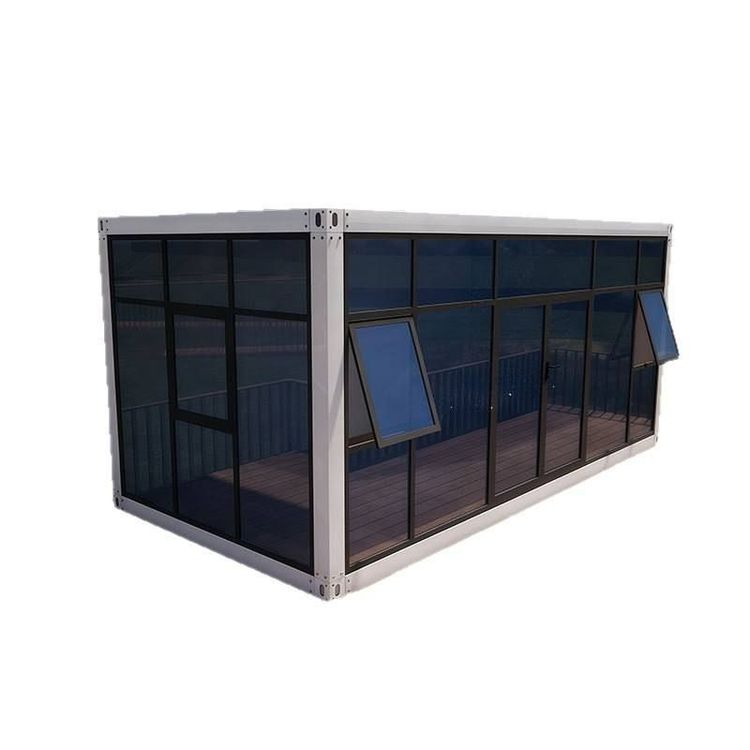
Mobile Thatch Toilet
Currently, there is no detailed introduction specifically for the 'mobile thatch toilet', but a general科普 (popular science explanation, here translated as 'explanation') can be provided by combining the common types of mobile toilets with examples of grassland-featured mobile restrooms.

Mobile toilets generally refer to facilities that can be moved as a whole, providing temporary or permanent restroom services to the public. They can be classified in various ways. By structural form, they can be divided into single-unit and composite structures: single-unit mobile toilets are mostly independent units, compact in space and easy to install, suitable for scenarios with low foot traffic; composite structures are composed of multiple units and can be flexibly expanded to meet the needs of large events or high-traffic areas. By mobility method, they can be divided into hoisting and transporting types and powered towing types: hoisting and transporting types rely on lifting equipment for position adjustment, suitable for places that are fixed for a long time but require occasional relocation; powered towing types have their own power systems or can be towed by vehicles, offering greater mobility and often used in emergency rescue or temporary events. By sewage treatment method, they can be divided into water-flush and waterless suction types, circulating water-flush types, and dry-packing types: water-flush types use clean water to flush excrement and require supporting septic tanks or sewage pipes; waterless suction types use vacuum pumps to suction excrement into storage tanks for regular removal; circulating water-flush types use biodegradation or membrane filtration technology to purify and reuse sewage, saving water and being environmentally friendly; dry-packing types use biodegradable plastic bags to package excrement, requiring no water source and suitable for water-scarce areas.
The mobile restroom kiosks on the Inner Mongolia grasslands are a characteristic example. Their design incorporates elements of the Mongolian yurt shape, with the exterior covered in weather-resistant and easy-to-clean environmentally friendly materials, adapting to the grassland climate and reducing maintenance costs. Internally, they are equipped with water-saving fixtures, barrier-free facilities, intelligent lighting, and efficient ventilation systems, balancing practicality and comfort. Their core advantage lies in integrated sewage treatment technology: achieving instant harmless treatment of excrement through biodegradation or chemical treatment, or adopting sealed storage for regular removal, avoiding pollution to the grassland environment. These facilities not only retain the cultural symbols of traditional architecture but also improve sanitary conditions through modern technology, providing a sustainable solution for grassland tourism and ecological protection.