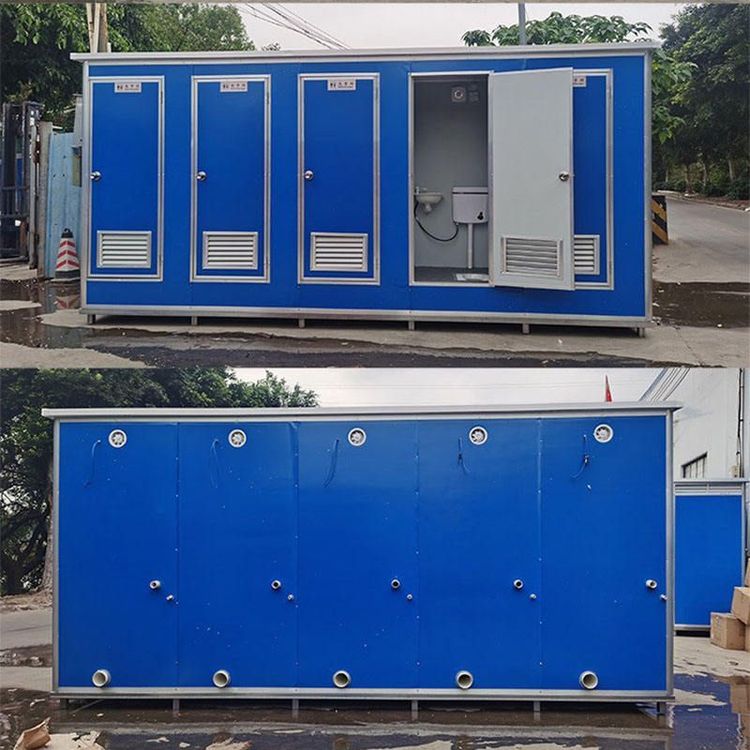
Mobile Temporary Toilet Fecal Treatment
Mobile temporary toilet fecal treatment typically employs methods such as chemical treatment, anaerobic digestion, compression and storage, multi-functional sewage outlets, mechanical treatment, water-flush and waterless-flush suction types, circulating water-flush types, dry-packing types, foam-sealing types, and microbial types.

Chemical treatment: Chemical agents are added to control odors and promote the decomposition of fecal matter. The treated fecal matter can be further processed through specialized equipment or discharged into the sewage system. This method is simple to operate, but attention must be paid to the selection and dosage of chemical agents to avoid secondary pollution to the environment.
Anaerobic digestion: Microorganisms are used to decompose fecal matter in an oxygen-free environment, producing biogas (usable for energy) and fertilizer (usable for agriculture or horticulture). This method not only reduces volume but also enables resource utilization. However, it requires the construction of a specialized anaerobic digestion system, with relatively high initial investment.
Compression and storage: The volume of fecal matter is reduced through compression, delaying the need for treatment. This method is suitable for scenarios such as camping or construction sites in the wild where there is a long absence of treatment facilities. It is simple and easy to implement, but regular cleaning of storage equipment is required to prevent overflow or odor diffusion.
Multi-functional sewage outlets: Equipped with fecal storage tanks or pre-buried septic tanks, manual cleaning and centralized treatment are required. This method is suitable for mobile toilets in fixed positions, but regular maintenance is necessary to ensure cleanliness and hygiene.
Mechanical treatment: Specialized equipment is used for solid-liquid separation, decomposition, and disinfection, reducing the impact on the environment. This method has high treatment efficiency, but the equipment cost and maintenance cost are relatively high.
Water-flush and waterless-flush suction types: Water-flush types require timely suction of the sewage tank, while waterless-flush types require more frequent suction. Both require suction equipment and are suitable for scenarios with a sewage system or where regular suction is possible.
Circulating water-flush types: Biological bacteria are used to accelerate the fermentation and decomposition of fecal sewage, which is then recycled for toilet flushing, saving water resources and reducing the frequency of suction. This method is environmentally friendly and efficient, but regular supplementation of biological bacteria and maintenance of filtration devices are required.
Dry-packing types: Biodegradable plastic bags are used to collect fecal matter, with a new bag automatically replaced after each use. The collected waste is then transported to a treatment plant. This method saves water resources and facilitates waste collection, but the biodegradability of the plastic bags must be ensured.
Foam-sealing types: Foam generated by a foaming liquid mixture is used instead of water for flushing, saving water resources and eliminating odors. This method is suitable for water-scarce areas, but regular supplementation of the foaming liquid is required.
Microbial types: Microorganisms are used to decompose fecal matter into gas and water. The gas can be collected and utilized or purified and discharged, while the liquid can be used as organic fertilizer. This method is environmentally friendly and has a high degree of resource utilization, but the decomposition conditions of the microorganisms must be controlled to ensure effectiveness.