
Mobile Temporary Toilet Cubicle
A mobile temporary toilet cubicle is an independent facility that can be moved as a whole, providing toilet services to the public. It features solid materials, customization options, and wide applicability.
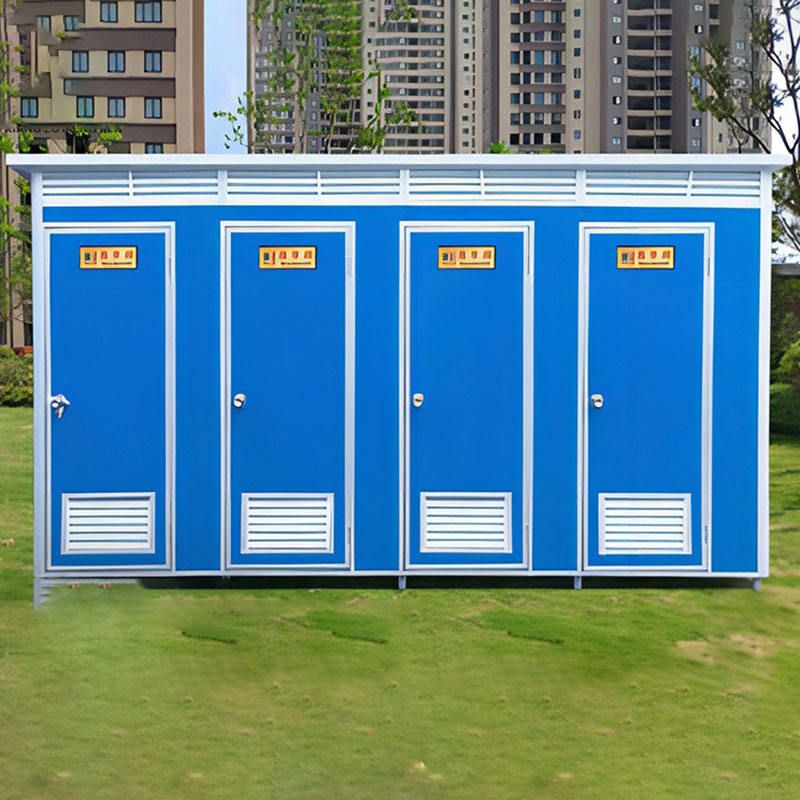
Materials and Structure: Some mobile temporary toilet cubicles are welded using 100*100 galvanized square steel, ensuring a sturdy structure that guarantees stability during long-term use. The overall design adheres to the principles of being lightweight and durable, facilitating easy movement while withstanding external forces to adapt to different environmental needs.
Customization Services: Colors and internal facilities can be customized according to customer requirements. Basic equipment such as squat toilets, exhaust fans, and lights can be installed inside. Some models also include additional features like sinks and rain-proof corridors. For example, the Apple Cabin model features a grille design at the front and a spacious rain-proof corridor in the middle, making it suitable for parks, scenic spots, and campsites, enhancing comfort and aesthetics.
Applicable Occasions: It covers both fixed and temporary demand scenarios, including stations, docks, tourist attractions, newly built residential areas, large construction sites, squares, densely populated public places, and bustling commercial streets. For temporary projects lasting a few months, such as construction sites and exhibition events, its mobility advantage is particularly prominent, enabling rapid deployment and withdrawal to reduce resource waste.
Structural Classification:
- By structural form: It is divided into single-unit mobile toilets (independent units with high flexibility) and composite-structure mobile toilets (multi-unit combinations with large capacity).
- By mobility method: It includes lifting and handling types (relying on mechanical handling), powered and towed types (capable of self-movement or towed transportation).
- By sewage treatment method: It is categorized into water-flush and waterless suction types (relying on water sources or regular pumping), circulating water-flush types (water-saving and environmentally friendly), and dry-packing types (no water required, with feces packed for disposal).
Design Principles: Emphasis is placed on mobility convenience and cost-effectiveness, using lightweight materials to reduce transportation costs. Attention is given to environmental protection and ecology, minimizing environmental impact through sewage treatment methods. At the same time, humanitarian principles are upheld by optimizing internal space and facilities to enhance the user experience and meet the needs of different populations.



