Mobile Small Toilet
A mobile small toilet, also known as a mobile toilet, is a facility that can be moved as a whole and provides public toilet services. Here is an introduction from different aspects:

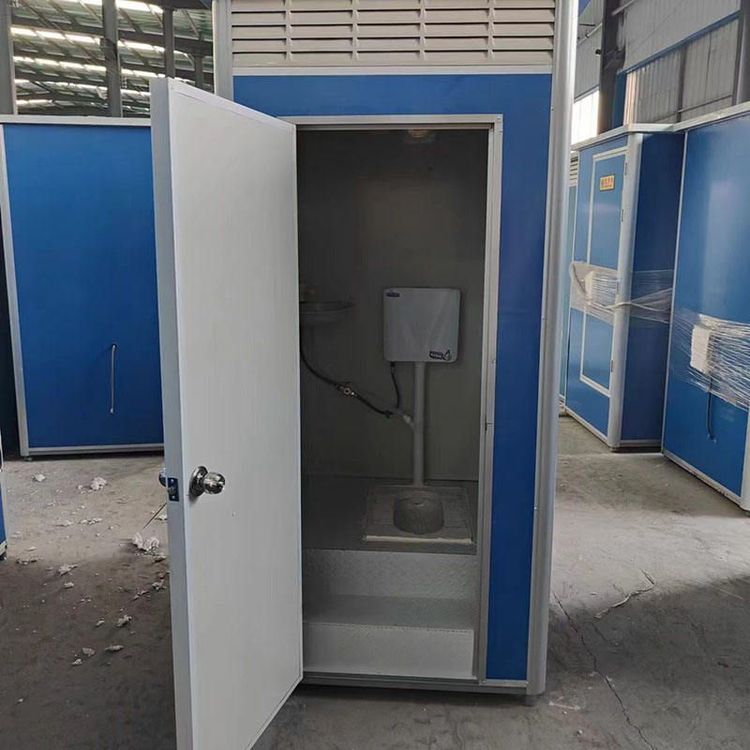
I. Basic Characteristics The small gray mobile toilet is cost-effective and comes with complete internal facilities. Its exterior is made entirely of sheet metal painting, with thickened and reinforced multi-silver square steel welding, making it sturdy and durable. It can be placed outdoors for more than 15 years without any issues. It also features a steel structure double door for easy access.
II. Composition Structure A mobile toilet generally consists of multiple parts. The fecal sewage storage tank (or fecal sewage treatment device) is used to collect and treat fecal sewage; the floor provides a stable standing and activity space for users; sanitary ware, including toilets or squat pans, meets basic toilet needs; walls serve to divide the space and protect privacy; washing facilities such as sinks allow users to clean their hands; water tanks are used to store water for flushing; the roof provides shelter from wind and rain; and the mobile device enables the toilet to be moved as a whole to meet usage needs at different locations.
III. Classification Methods
- By structural form: Mobile toilets can be divided into single-structure mobile toilets and composite-structure mobile toilets. Single-structure mobile toilets are relatively independent and have a simpler structure; composite-structure mobile toilets may be composed of multiple parts and may have more diverse functions.
- By moving method: There are lifting and handling-type mobile toilets, which require lifting equipment or manual handling for movement; and powered and towed-type mobile toilets, which can be moved by power drive or towing, making movement more convenient.
- By sewage treatment method: There are water-flushing and non-water-flushing suction-type mobile toilets. Water-flushing types use water flow to flush feces, while non-water-flushing suction types use suction to treat feces; circulating water-flushing mobile toilets can recycle water for flushing, saving water resources; and dry-packing mobile toilets pack feces in a dry form for easy subsequent cleaning and transportation.