Internal Facilities of Mobile Single Toilets
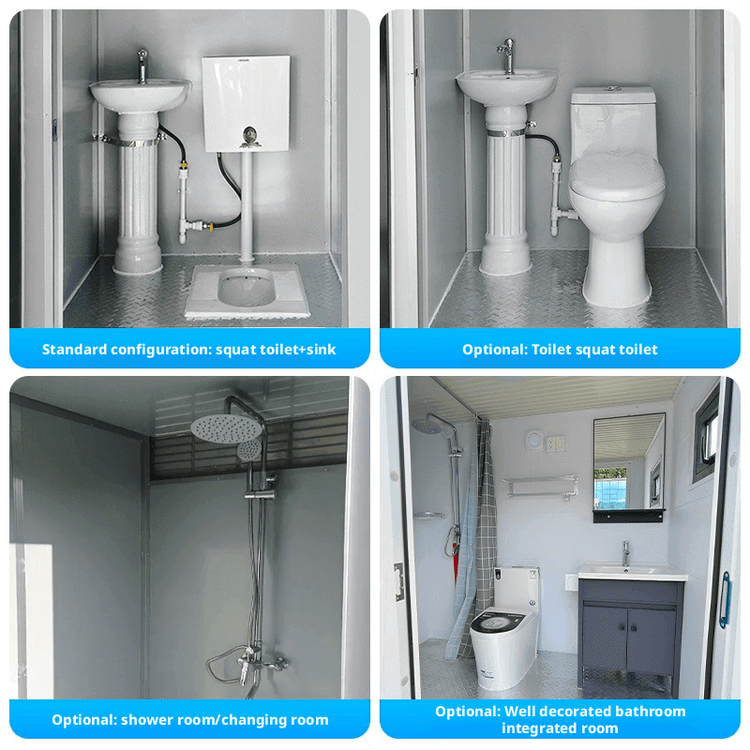
The internal facilities of mobile single toilets vary depending on their design and purpose. Common configurations include ceramic flush toilets, pedestal sinks, light switches, ceiling exhaust fans, or stainless steel grab bars, sinks, and urinals, among others. Some standard models come fully equipped and can be used directly.
Some steel single-stall independent toilets feature high-end configurations, with internal facilities focused on enhancing the user experience. The ceramic flush toilet is the core equipment, equipped with a flushing function to effectively handle waste and maintain hygiene. The pedestal sink is usually made of ceramic or stainless steel and comes with a faucet, facilitating hand cleaning for users. The light switch often features a waterproof design to ensure safe use in humid environments and provides basic lighting functions. The ceiling exhaust fan reduces internal odors through forced ventilation, and some models are further equipped with activated carbon filters for additional air purification.
Another type of mobile restroom is designed with durability and ease of maintenance in mind, primarily using stainless steel materials. Grab bars are typically installed on the side of the door or next to the toilet to provide support for individuals with mobility issues. The sink is often a one-piece stainless steel structure, highly resistant to corrosion and easy to clean. The urinal design comes in two types: squat and seated. Squat urinals are commonly found in public places, while seated urinals are more often equipped in high-end models. Some products also integrate foot-operated flushing mechanisms to reduce contact contamination.
The configurations of standard mobile toilets emphasize the "ready-to-use" feature. In addition to the basic functions mentioned above, some models incorporate user-friendly designs. For example, some products are equipped with paper towel holders and trash cans to meet basic hygiene needs. The non-slip floor uses special materials or textures to reduce the risk of slipping in wet conditions. The ventilation window works in tandem with the exhaust fan to form a dual ventilation system, improving air circulation efficiency. The power outlet provides electricity for special-need scenarios, such as medical monitoring equipment.
Requirements for facilities vary across different scenarios: mobile toilets in scenic areas may include emergency call buttons and barrier-free access; models for construction sites focus more on collision-resistant structures and high-temperature-resistant materials; and toilets for temporary events may have simplified configurations to reduce transportation costs. Selection should be based on a comprehensive consideration of usage frequency, population characteristics, and budget.