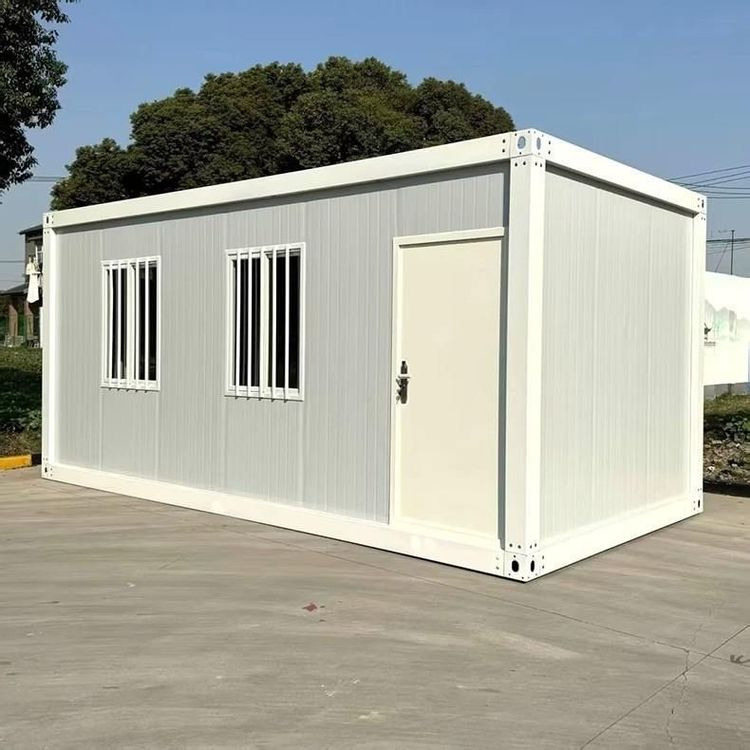
Mobile Sanitary Toilet
A mobile sanitary toilet, also known as a mobile toilet, is a facility that can be moved as a whole and provides public toilet services.

Composition Structure
Mobile toilets are generally composed of fecal sewage storage tanks (or fecal sewage treatment devices), floor slabs, sanitary ware, walls, washing equipment, water tanks, roofs, and mobile devices. These components work together to achieve the basic functions of mobile toilets, such as storing fecal sewage, providing toilet space, and ensuring sanitary conditions.
Development History and Materials
Initially, mobile toilets were made of materials such as wood, with simple structures and functions, and were prone to absorbing odors. With technological advancements, they gradually evolved to use materials such as fiberglass-reinforced plastic and polyethylene. These new materials offer better durability, odor resistance, and ease of cleaning, enhancing the user experience and lifespan of mobile toilets.
Classification Methods
- By structural form: Mobile toilets can be divided into single-structure mobile toilets and composite-structure mobile toilets. Single-structure toilets are relatively simple and suitable for limited spaces or temporary needs; composite-structure toilets are more complex and offer comprehensive functions, suitable for long-term or high-traffic use scenarios.
- By mobility method: They can be classified as lifting and handling mobile toilets and powered and towed mobile toilets. Lifting and handling types are suitable for short distances or hard-to-reach locations; powered and towed types can be pulled by vehicles for long-distance rapid movement.
- By sewage treatment method: They can be divided into water-flush and waterless suction mobile toilets, circulating water-flush mobile toilets, and dry-packing mobile toilets. Water-flush types are closer to traditional toilets but require a water source; waterless suction types use suction equipment to treat feces; circulating water-flush types save water through a circulating water system; dry-packing types directly pack feces for treatment without requiring a water source.
Features and Suitable Locations
Mobile toilets have the advantages of being movable, combinable, and easy to transport. They can be conveniently transported to any location where toilets need to be installed and can be used repeatedly. They are suitable for stations, docks, tourist attractions, villa areas, newly built residential areas, large construction sites, squares, densely populated public places, and bustling commercial streets, meeting toilet needs in various scenarios.