
Back to blog
Article
Mobile Restroom Toilet Maintenance
Admin October 12, 2026
Mobile restroom toilet maintenance requires segmented testing of the water circulation, waste treatment, ventilation, structural, and electrical systems, combined with reverse diagnosis and systematic verification to complete repairs.
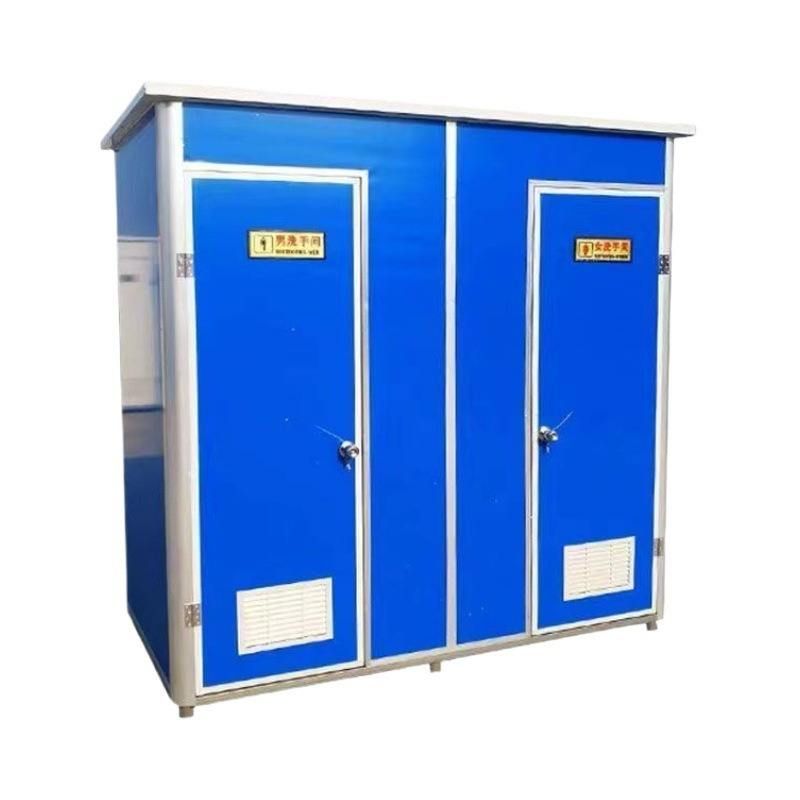
Water Circulation System Maintenance Points
- Water Supply: For external connections, check the seals at the inlet pipe joints, focusing on whether the rubber gaskets are aged and leaking; for self-contained water tanks, test the sensitivity of the water level sensor and the closing accuracy of the float valve, and calibrate the reading deviation in low-temperature environments.
- Drainage Channels: Blockages may be caused by foreign objects being thrown in or excessive pipe bending angles, requiring the removal of deposits and optimization of the bend design to prevent solid matter deposition.
Waste Treatment Unit Maintenance Points
- Biodegradation Device: Maintain a specific temperature range to ensure microbial activity, check whether the power of the heating element meets the standard, and replace or repair it if it is insufficient.
- Physical Separation Device: The interception efficiency of the filter layers depends on the match between the mesh size and the water flow rate. After long-term use, if the mesh is deformed, replace the filter to restore the separation function.
Ventilation System Maintenance Points
- Exhaust Fan Failure: Damage to the insulation layer of the motor winding can lead to insufficient speed. Measure the working current to determine whether the motor needs to be replaced; insect nests in the air duct can block the airflow, requiring cleaning and detection of the end air pressure value to confirm the fault type.
Structural Component Maintenance Points
- Visible Damage: Issues such as broken hinges or malfunctioning door locks can be repaired through visual inspection by replacing parts with matching models.
- Hidden Damage: Corrosion of the floor joists or collapse of the insulation material in the wall sandwich layer requires positioning with specialized detection instruments. During repair, consider the coefficient of thermal expansion and contraction of the materials, and select fasteners with the same expansion parameters as the original parts to avoid secondary damage caused by temperature differences.
Electrical System Maintenance Points
- External Power Supply: First, confirm the stability of the interface voltage, then check whether the internal connection terminals of the waterproof distribution box are oxidized, and finally test the actual load power of the electrical terminals.
- Solar Power Supply: Clean the dust on the surface of the photovoltaic panels, detect the attenuation rate of the battery's storage capacity, and replace the battery if the attenuation exceeds the standard.
Maintenance Methodology
- Reverse Diagnosis: Treat surface phenomena such as flushing failure and obvious odors as 'fault signals', construct a system association diagram, understand the interfaces between modules from the hidden internal structure, and locate the root cause of the fault.
- Systematic Verification: After completing component repairs, simulate the usage cycle of the entire facility, test the coordinated state of each subsystem under continuous load, and ensure the repair effect.



