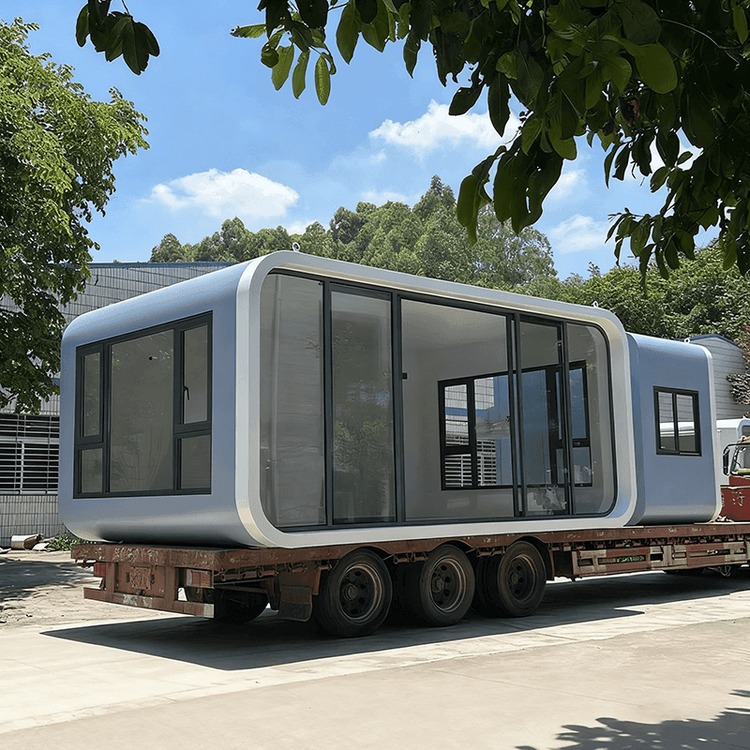
Mobile Restaurant with Toilet
No practical cases or mature design solutions have been found for mobile restaurants equipped with toilets so far. Mobile restaurants typically exist in the form of food trucks or mobile stalls, with their core function being to provide convenient catering services. However, the design of incorporating toilets has not become mainstream or standardized due to various limitations in technology, hygiene, and regulations. The following analysis is conducted from three aspects: feasibility, challenges, and alternative solutions.

I. Low Technical Feasibility
The spatial layout of a mobile restaurant needs to accommodate cooking equipment, storage areas, and customer dining areas. If a toilet is added additionally, key issues such as water circulation, sewage disposal, and odor control need to be addressed. For example, traditional toilets rely on sewer systems for sewage disposal, while mobile restaurants lack fixed pipeline connections and need to adopt septic tanks or biodegradable technologies. However, these technologies have high space requirements and costs, which may exceed the carrying capacity of mobile restaurants. In addition, the water demand of toilets (such as flushing and hand washing) will significantly increase the water tank capacity of mobile restaurants, further compressing the space for catering operations.
II. Strict Hygiene and Regulatory Restrictions
Hygiene standards for catering establishments have clear requirements for toilet design, including independent ventilation, non-slip floors, and disinfection facilities. If a mobile restaurant adds a toilet, it needs to meet the same hygiene standards as fixed restaurants, which may increase design complexity and operational costs. At the same time, some regions have strict restrictions on sewage disposal from mobile catering, such as prohibiting direct sewage discharge or requiring regular cleaning of septic tanks. Improper operation may result in fines or business suspension. In addition, the cleaning and maintenance of toilets require dedicated personnel, which poses a significant labor cost pressure for small mobile restaurants.
III. Alternative Solutions More in Line with Practical Needs
To balance convenience and practicality, mobile restaurants usually solve customers' toilet needs through the following methods:
- Collaborate with surrounding public facilities: Establish partnerships with nearby shopping malls, gas stations, or public toilets to provide guidance or discounts for customers;
- Optimize service processes: Reduce customers' stay time in the restaurant by shortening meal preparation time and providing takeout services, thereby reducing toilet needs;
- Explore modular designs: Some conceptual designs attempt to separate the toilet from the mobile restaurant, such as using detachable toilet modules or temporarily building sanitary facilities. However, these solutions have not been widely adopted and require additional approvals.
Conclusion
The design of mobile restaurants equipped with toilets remains at the conceptual stage due to technological, hygiene, and regulatory limitations. To enhance the customer experience, it is recommended to prioritize solving toilet needs by optimizing service processes or collaborating with surrounding facilities rather than forcibly adding toilet functions. In the future, with the development of environmental protection technologies (such as waterless toilets) and modular construction, this need may be met with more efficient solutions.