
Mobile Public Toilet
Mobile public toilets are movable facilities designed to meet the basic sanitation needs of people in specific situations, featuring flexible deployment, diverse functions, and environmental protection and energy efficiency.
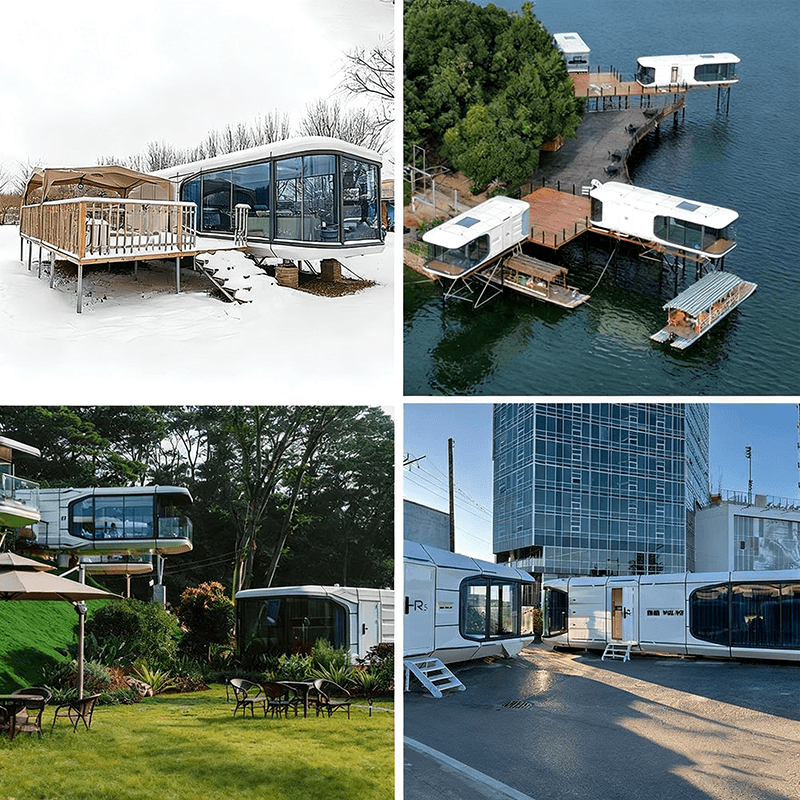
I. Core Functions and Design Features
The core function of mobile public toilets is to provide excreta treatment and personal cleaning conditions in areas lacking fixed sanitation facilities. Their design is based on mobility, with frame structures often using lightweight steel to ensure stability while facilitating overall hoisting. Wall materials balance thermal insulation, sound insulation, and privacy, with options such as color-coated steel plates and metal carved panels, which are eco-friendly. The internal configuration is standardized, including toilet bowls (urinals), lighting fixtures, exhaust fans, etc., and can be supplemented with air conditioners, air purifiers, and other equipment as needed.
II. Technical Types and Environmental Protection Treatment
Mobile public toilets are classified into various technical types based on sewage treatment methods:
- Circulating Water Flush Type: This type decomposes excreta through biofilm technology, with the treated water recycled for flushing, achieving water reuse and suitable for scenarios with limited water supply.
- Dry Packaging Type: This type uses biodegradable plastic bags to encapsulate excreta, eliminating the need for water flushing, and is suitable for water-scarce or highly environmentally conscious areas.
- Foam Sealing Type: This type reduces odors by covering the toilet bowl surface with foam, combined with a small amount of water for flushing, resulting in significant water savings.
- Intelligent Water-Saving Type: This type integrates technology for automatically collecting urine and hand-washing water. After adding a water-saving agent, the flushing water volume per person can be as low as 0.46 liters.
III. Site Selection and Spatial Layout
The placement should be based on pedestrian flow analysis. For example, during large-scale events, density and location adjustments should be made according to regional planning and pedestrian flow directions. The internal space design should comply with barrier-free access standards, ensuring that channel widths, handrail settings, etc., meet basic needs. In parks and other venues, the toilet design can blend with the surrounding environment, with the number of stalls determined by visitor volume.
IV. Maintenance Management and Hygiene Standards
Maintenance management includes establishing cleaning and disinfection cycles, selecting specialized cleaning agents, and ensuring the supply of consumables. Odor control relies on the synergistic effect of ventilation systems and chemical deodorants to ensure efficient air exchange. In terms of material selection, priority is given to recyclable eco-friendly panels to extend service life and reduce environmental impact.



