Mobile Public Toilet Structure
The structure of a mobile public toilet mainly consists of the outer shell and frame, wall materials, internal configurations, and other structural features.
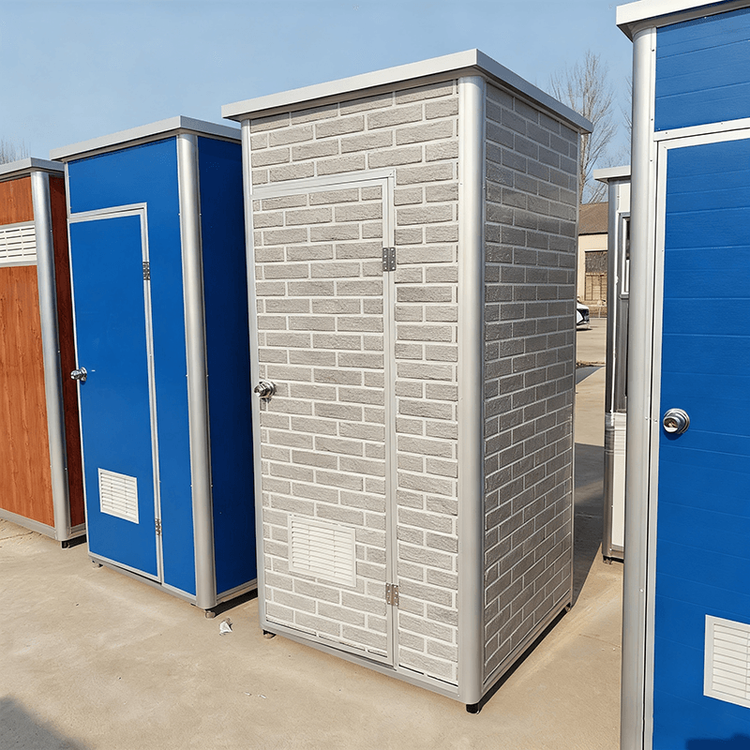
In terms of the outer shell and frame, mobile public toilets adopt an integrated outer shell with a reinforced chassis. This design enhances the stability and durability of the toilet. The frame is welded from national standard steel, meeting the requirements for overall lifting, which facilitates easy movement and installation.
There is a wide variety of choices for wall materials, which can be selected based on customer requirements or the surrounding environment of the usage location. Common exterior wall materials include color-coated steel plates, metal carved panels, anti-corrosion wood, stainless steel plates, and aluminum-plastic panels. These materials are not only aesthetically pleasing but also possess good durability and corrosion resistance, enabling them to adapt to different usage environments.
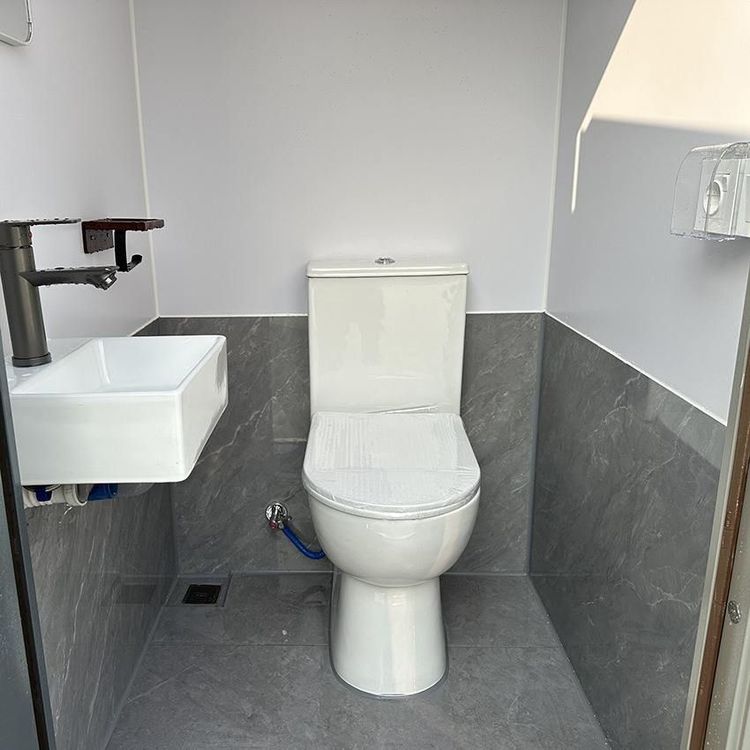
The internal configuration is a crucial component of mobile public toilets. It is equipped with an independent toilet pit partition treatment system. The urine channel utilizes gravity for self-flow, while the feces channel is cleaned using a piston-type scraper mechanical device, ensuring the hygiene and cleanliness of the toilet. Additionally, it is furnished with anti-slip floors, automatic flushing toilet bowls, and ventilation and lighting systems, enhancing the comfort and safety of use. The standard configuration also includes toilet bowls (urinals), coat hooks, vanity mirrors, paper baskets, lighting fixtures, exhaust fans, door locks, and occupancy indicator lights, meeting people's basic needs. Furthermore, depending on actual requirements, options such as heating and cooling air conditioners, air purifiers, anti-freeze systems, heating systems, background music, hand basins, and water-saving faucets can be selected to further improve the toilet usage experience.
In addition to the aforementioned structural features, mobile public toilets also incorporate other designs. For example, some adopt a steel frame structure with a ridge-shaped design and metal carved panels for the walls, which are both aesthetically pleasing and practical. At the same time, they utilize intelligent control systems, insulation systems, and are equipped with upper and lower water tanks, achieving automated management and energy conservation and environmental protection.