
Mobile Public Toilet Revolution
Mobile public toilets are crucial facilities for enhancing the quality of public health services in the 'Toilet Revolution'. Through technological innovation and flexible deployment, they have significantly improved the toilet environment and promoted the inclusive development of public health services.
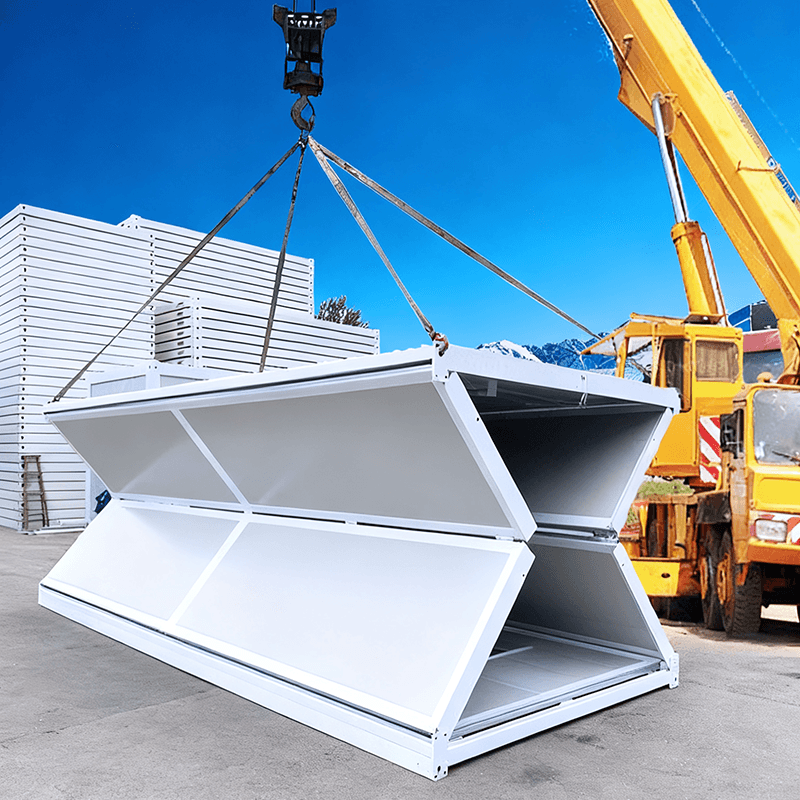
I. Technological Innovation Enhances Resource Utilization Efficiency Mobile public toilets employ new materials and water-saving technologies, forming multiple technological routes. For example, by automatically collecting hand-washing water and adding special agents, they achieve a flushing effect with only 0.46 liters of water per person, saving over 80% of water compared to traditional public toilets, and the equipment has a service life of more than 20 years. Additionally, waterless flushing and foam sealing technologies further overcome water resource limitations, making them suitable for water-scarce areas or temporary scenarios. These technologies not only reduce operational costs but also decrease sewage discharge, aligning with the core goals of environmental protection and sustainability in the 'Toilet Revolution'.
II. Scenario Adaptation Meets Diverse Needs Mobile public toilets cover various subcategories such as antique-style, temporary construction site, and marine types, supporting vehicle-mounted and traditional public toilet renovations, with product forms extending to trailer-type and box-type transformer cabinet styles. For instance, the modular mobile public toilet in the park north of Mingguang Bridge in Haidian District, Beijing, adds barrier-free toilet compartments equipped with children's toilets, baby care stations, and emergency call devices, providing safe and convenient spaces for the elderly, disabled individuals, and families with young children. In scenarios such as alleys, rural areas, and industry-specific public toilets, the flexible deployment of mobile public toilets compensates for the shortcomings of fixed facilities, significantly improving service coverage.
III. Smart Management Drives Service Upgrades Some regions have introduced smart public toilet management systems, enabling dynamic management through real-time environmental monitoring, facial recognition paper dispensers, and母婴室 (nursing rooms) and other intelligent devices. For example, the system can monitor air quality, foot traffic, and other data to optimize cleaning frequencies; facial recognition paper dispensers reduce waste and improve resource allocation efficiency. These innovations not only enhance user experience but also provide data support for managers, facilitating the 'Toilet Revolution' towards refinement and intelligence.
IV. Policy-Driven Acceleration of Nationwide Promotion Since Nanjing advocated for the 'Toilet Revolution' in 2003, the national level has continuously promoted it. In 2015, the National Tourism Administration proposed plans for constructing and renovating public toilets and revised standards, providing policy support for the popularization of mobile public toilets. From technological breakthroughs to scenario implementation and then to smart management, mobile public toilets have become key tools for solving public health challenges in the 'Toilet Revolution', continuously promoting the advancement of social civilization and public service levels.
You may also like

Portable Toilet Eco-Friendly: MOQ, Samples & Quotation Guide
Read More
Top Portable Toilet Color Steel Manufacturers: How to Choose a Factory Partner
Read MorePortable Toilet Picture: Types, Features & Buying Tips
Read More