
Back to blog
Article
Mobile Public Toilet Partition
Admin October 09, 2026
Mobile public toilet partitions are key structures used to divide the internal space of mobile public toilets, provide privacy protection, and optimize the user experience. Their design must balance functionality, durability, and convenience.
Material Selection
The materials for mobile public toilet partitions need to meet requirements such as being lightweight, durable, and easy to clean. Common materials include:
- Plastic: Primarily high-density polyethylene (HDPE) or polypropylene (PP), which are lightweight, moisture-resistant, and corrosion-resistant, making them suitable for outdoor environments. Some plastic partitions adopt a hollow structure to further reduce weight and cost.
- Metal: Aluminum alloy or galvanized steel sheet are the main choices. Metal materials have high strength and good fire resistance but require anti-rust treatment (such as spraying or electrophoresis). Aluminum alloy partitions, being lightweight and easy to process, are often used in high-end mobile public toilets.
- Composite Materials: Such as fiberglass-reinforced plastic (FRP) or honeycomb panels, which combine the advantages of metal and plastic, offering high strength, lightweight properties, sound insulation, and heat insulation. However, they are more costly and are mostly used in scenarios with stringent performance requirements.
Design Features
- Modular Structure: Partitions usually adopt a detachable modular design for easy transportation, installation, and maintenance. Some partitions support rapid assembly, shortening the construction period.
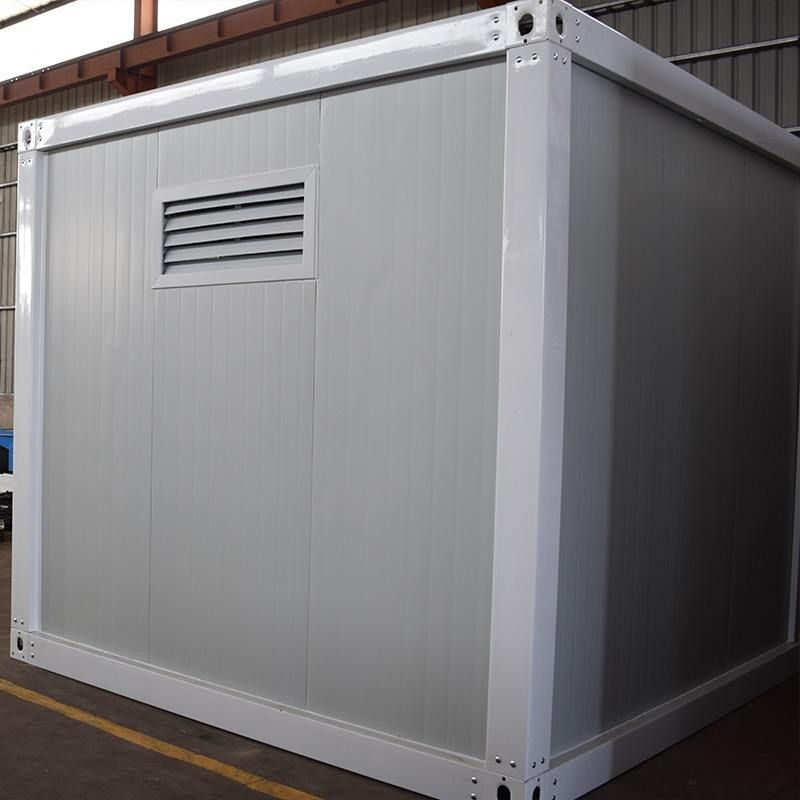
- Ventilation and Lighting: To improve the internal air quality of public toilets, partitions may be designed with ventilation openings or hollow patterns. At the same time, semi-transparent materials (such as frosted plastic) are used to balance privacy and lighting needs.
- Corrosion Resistance Treatment: For outdoor environments, the surface of partitions needs to undergo corrosion resistance treatment, such as metal spraying or plastic UV additives, to extend their service life.
- Humanized Details: The height of partitions is usually between 1.8 and 2.2 meters to ensure privacy. The edges are rounded to prevent scratches. Some designs integrate handrails or hooks to enhance user convenience.
Functional Requirements
- Privacy Protection: The core function of partitions is to divide independent spaces, prevent visual penetration, and ensure user privacy.
- Space Optimization: By reasonably arranging partitions, the limited space can be maximized while meeting barrier-free design requirements (such as wheelchair turning space).
- Hygiene Management: Easy-to-clean materials and a design without dead corners (such as integrated molding) can reduce dirt residue and lower maintenance costs.
Installation Methods
The installation of mobile public toilet partitions needs to consider stability and convenience. Common methods include:
- Bolt Fixing: Connecting the partition to the ground or wall with metal bolts, suitable for long-term fixed scenarios.
- Snap-on Connection: Using plastic or metal snaps for rapid assembly without tools, suitable for temporary or movable public toilets.
- Suspended Installation: Some partitions are suspended from the toilet frame through top brackets, reducing ground contact and facilitating cleaning and drainage.
Related
You may also like

30Oct
Portable Toilet Rental for Construction Sites: What to Consider
Read More
30Oct
Portable Toilet Rental Price Guide: Budget, Mid-Range & Premium
Read More
30Oct
Portable Toilet Color Steel: A Practical Buyer's Guide
Read More
30Oct